The U.S. labor market is holding up better than the anxiety around it suggests, even as hiring demand cools and job-seeker sentiment turns sharply fearful. Nonfarm payrolls are still rising, unemployment remains close to historic norms and staffing-related shares have bounced, but the underlying picture is one of slower churn, tighter margins for recruiters and a market that is increasingly sensitive to any sign the soft landing is slipping.
U.S. labor market stays resilient as hiring cools

That matters because jobs remain the backbone of consumer spending, wage growth and Federal Reserve policy. A labor market that is still expanding, even modestly, supports household income and keeps recession risks contained. But the combination of slower openings, uneven hiring and a collapse in sentiment shows how fragile confidence has become, especially for workers and firms tied to discretionary recruitment, payroll processing and outsourced HR services.
Sentiment IndicatorsⓘProprietary · adalytica.com · October 22, 2026
This is a snapshot — live sentiment, awareness and momentum for 130+ markets update continuously in the dashboard.Open AlphaPulse
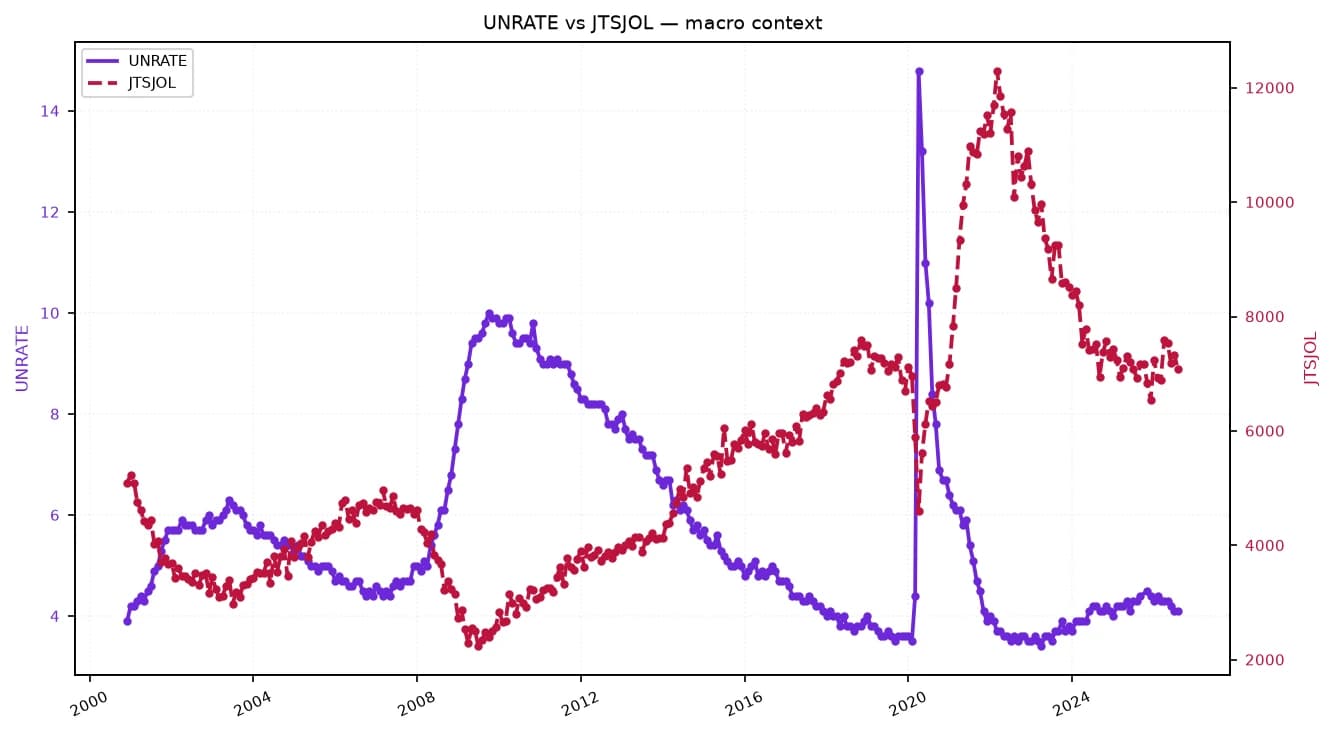
The latest labor data in the context points to a U.S. unemployment rate of 4.2%, with the next reading forecast at 4.09%, far from the 2020 pandemic spike and still consistent with a broadly resilient economy. Payrolls are expected to edge up to 159,085.5 from 159,044, a gain too small to call strong but enough to indicate the labor market has not rolled over. Job openings, meanwhile, have drifted to 7.08 million from 7.24 million, reinforcing the picture of normalization after the post-pandemic hiring frenzy.
That softer backdrop is exactly where the earnings power of human-capital firms becomes more cyclical. ADP and Paychex, two of the best-known payroll and HR providers, have seen their shares recover sharply in recent months after steep spring selloffs, suggesting investors are still willing to pay for defensive cash flows and recurring revenue. ADP has surged to 307.98 from 258.06 at the end of September, while Paychex has rebounded to 118.79 from 100.84. Both names have also pushed well above their 200-day moving averages, a conventional technical sign that momentum has improved even after recent volatility.
The move in those shares reflects two competing views. The bull case is that a steadier labor market keeps client employment bases intact, supports payroll volumes and preserves the pricing power of outsourced HR platforms. The bear case is that slower hiring eventually reduces transaction growth, while wage pressure, competition for skilled employees and investment in technology weigh on margins. ADP’s own filing warned that competition for skilled workers in its markets is “increasingly intense,” a reminder that labor softness in one part of the economy does not necessarily ease costs everywhere.
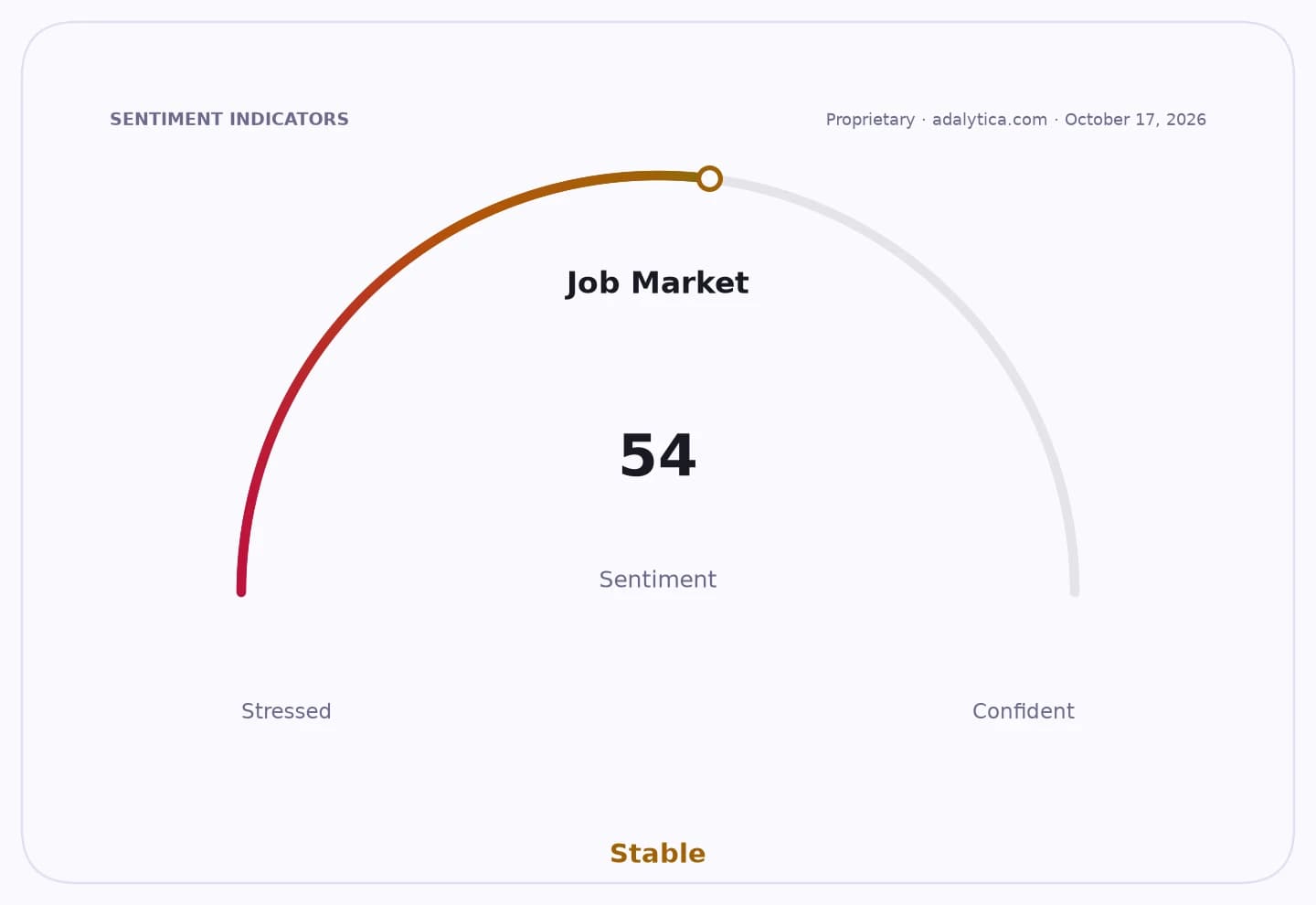
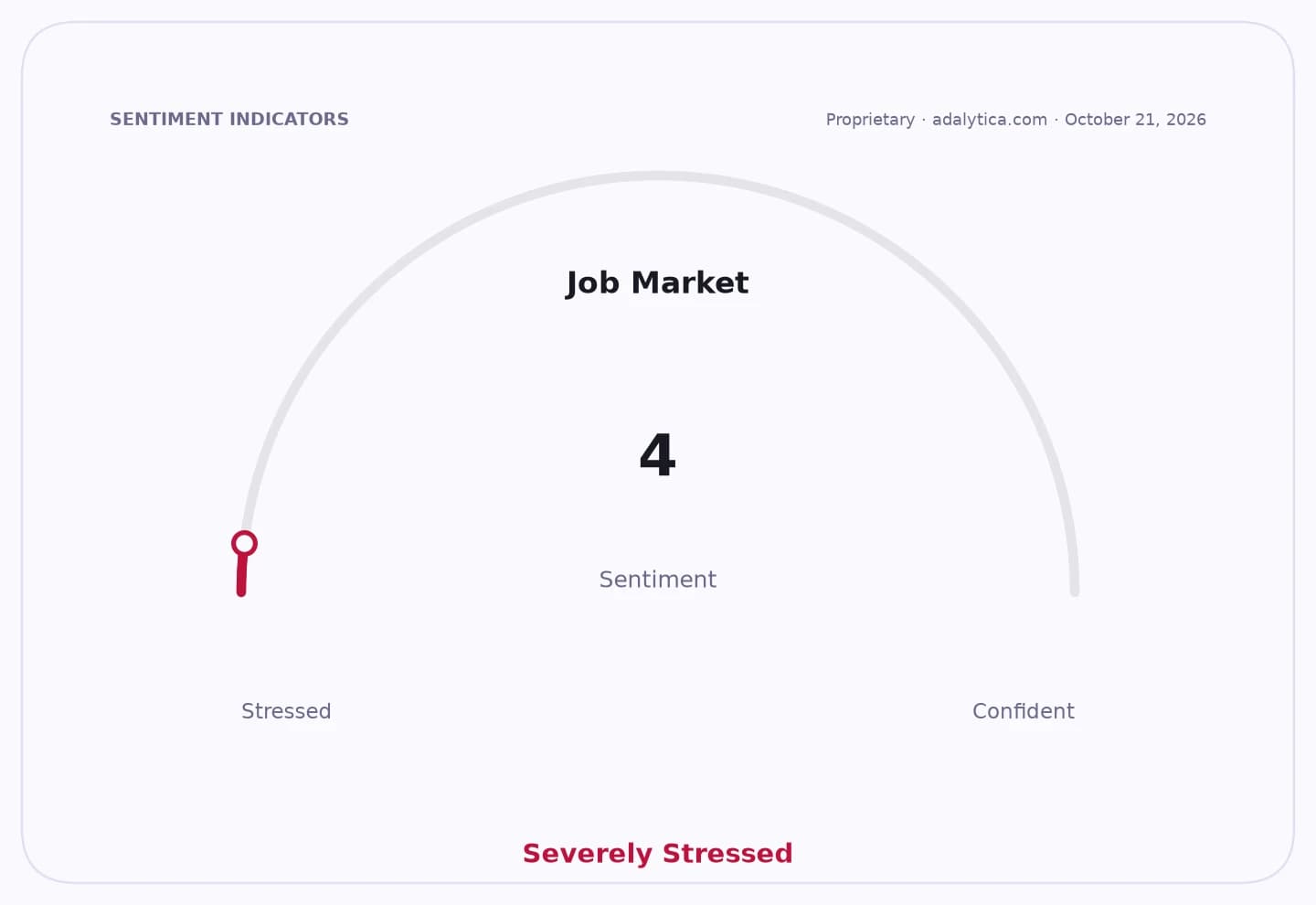
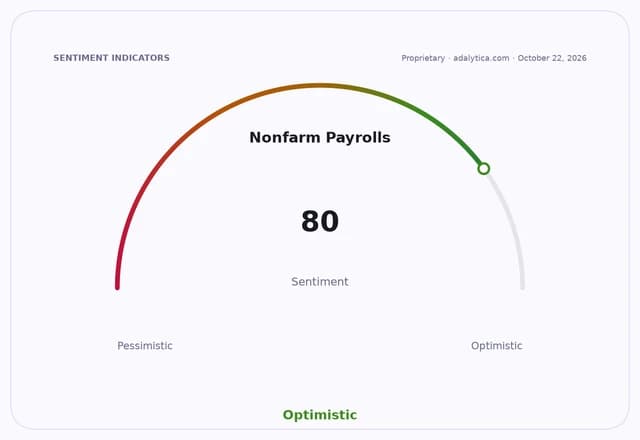
Market sentiment around jobs has swung hard. Adalytica’s Job Market Sentiment gauge sits at 14, labeled “Extreme Fear,” after falling sharply over the past month, even as a separate payroll sentiment measure is at 80, or “Greed.” That divergence captures the current tension: workers are worried, but the aggregate payroll machine is still turning. For investors, that gap matters because sentiment can depress hiring, spending and turnover before the hard data fully cracks.
The broader implication is that the labor market is moving from shortage to balance, not from balance to collapse. That is usually constructive for the economy, but less so for companies that thrived on the post-pandemic scramble for labor. If payroll growth keeps flattening and openings keep edging lower, staffing and HR vendors will increasingly have to rely on pricing, software adoption and cross-selling rather than raw employment growth to drive earnings.
The next test is whether softer hiring starts feeding into unemployment and wage growth, or whether the labor market stabilizes around current levels. For now, the U.S. employment backdrop still looks strong enough to support consumption and corporate earnings, but not strong enough to prevent sharp sector rotations when investors get nervous about growth.
| Entity | Gains | Losses |
|---|---|---|
| Consumers | ▲Stable paychecks | ▼Wage bargaining power |
| ADP and Paychex | ▲Recurring payroll demand | ▼Slower hiring growth |
| Employers | ▲Easier labor availability | ▼Weaker pricing power on talent |
| Workers | ▲Lower layoffs risk | ▼Higher job insecurity sentiment |