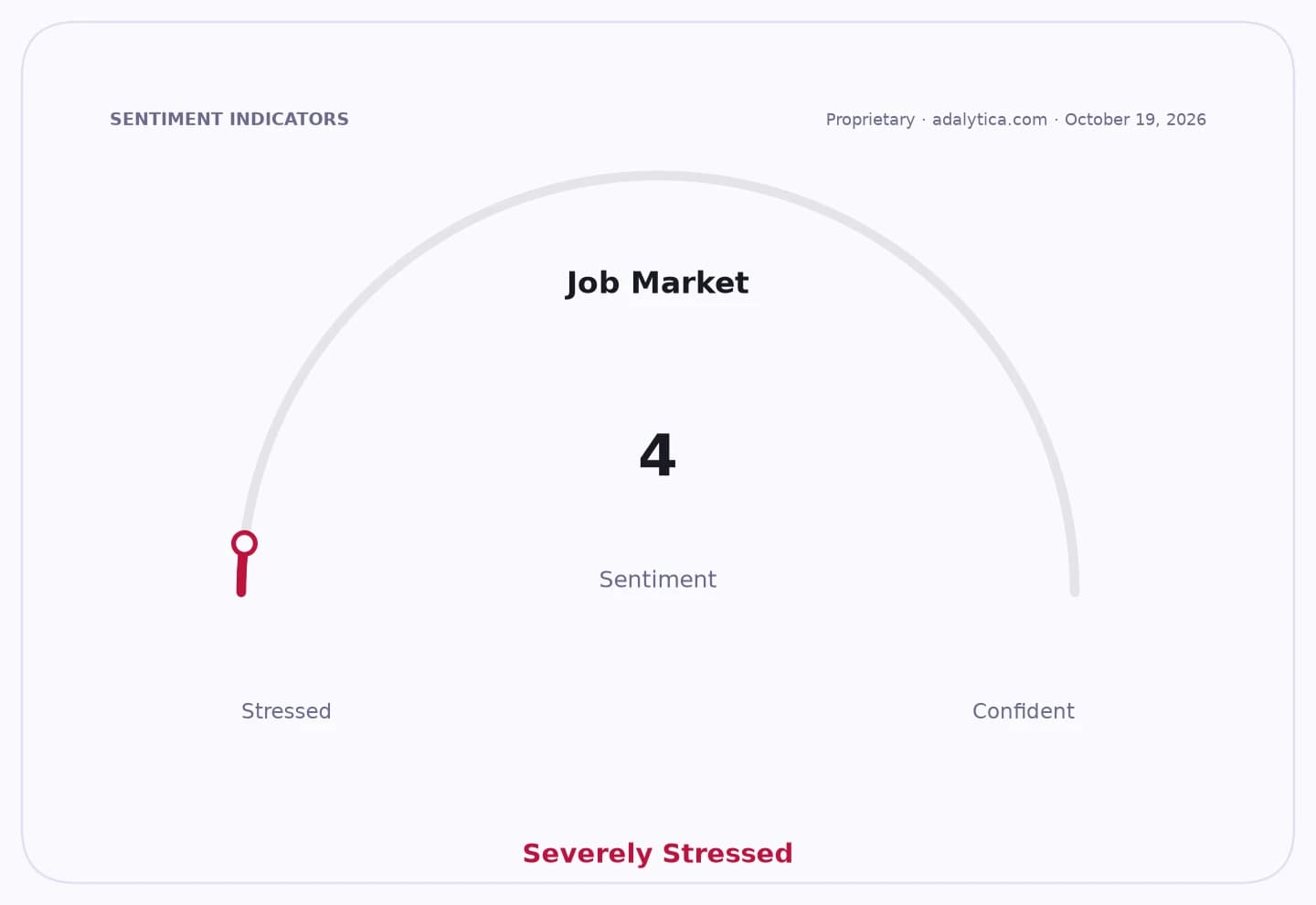
A stronger labor market is not solving a quieter but costly problem for employers: many are still better at recruiting new staff than keeping experienced workers engaged, a mismatch that can inflate turnover, raise wage costs and erode productivity.
Labor market retention costs pressure employers
That is the thrust of the Spanish commentary anchored by psychologist Rafa Alonso, who argues that companies often confuse job stability with employee satisfaction and end up treating long-tenured staff as invisible. In practical terms, the problem matters because retention is not just a culture issue; it is a balance-sheet issue. When veteran employees stop seeing a path to higher pay, growth or transparent evaluation, the cost shows up in lost institutional knowledge, lower execution quality and more expensive rehiring.
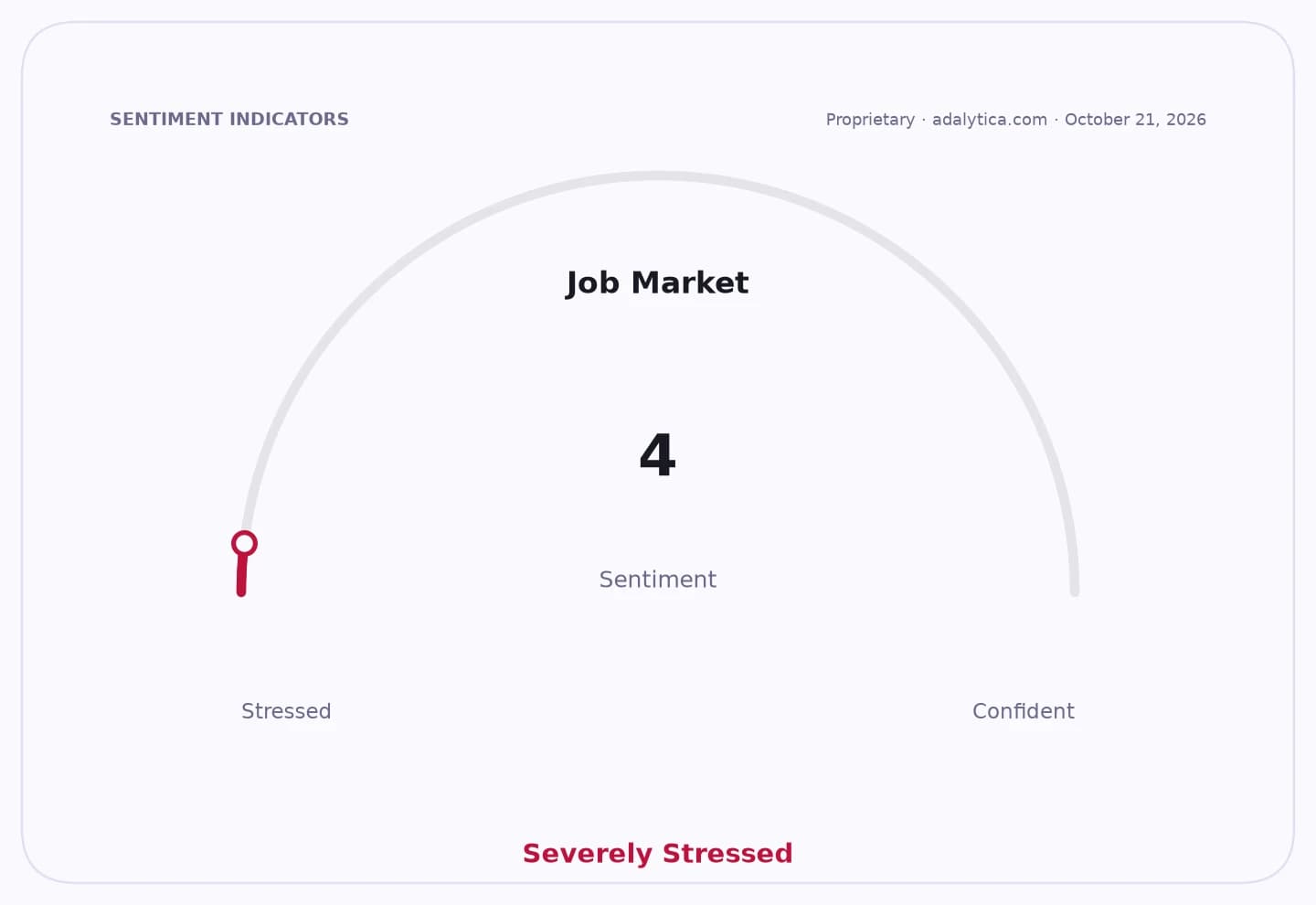
Sentiment IndicatorsⓘProprietary · adalytica.com · October 21, 2026
This is a snapshot — live sentiment, awareness and momentum for 130+ markets update continuously in the dashboard.Open AlphaPulse
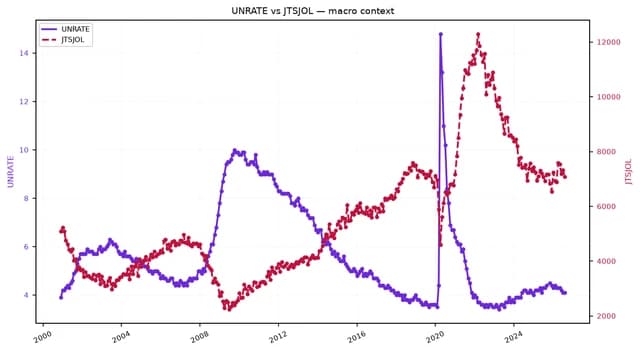
The backdrop is a labor market that remains resilient but is no longer as forgiving for employers as it was during the post-pandemic scramble. U.S. nonfarm payrolls sit near 159.0 million, while unemployment has hovered around 4.1% to 4.2% in recent months, leaving companies with fewer easy replacements for departing workers. Job openings, at about 7.1 million, remain elevated by historical standards even after cooling from the 2022 peak, which means competition for qualified staff is still intense even as hiring appetite has normalized.
That tension helps explain why firms can spend heavily on recruitment while underinvesting in retention. Human capital providers have repeatedly warned that skilled workers remain hard to attract and expensive to replace. ADP, in its latest annual filing, said competition for skilled employees in the markets it serves is “increasingly intense,” while Robert Half pointed to the economics of permanent placement and contract talent as a business driven by candidate availability and client demand. In other words, the labor market continues to reward companies that can both hire and hold talent.
For investors, the story is less about workplace etiquette than about operating leverage. Retention problems tend to show up first in administrative overhead and staffing firms, then in margins at companies that rely on specialist labor. Higher churn means more recruiting spend, more training time and lower productivity per employee. It also increases the odds that businesses respond with selective wage adjustments rather than broad-based improvement, which can protect short-term cash flow but deepen long-term morale problems.
The market reaction in staffing shares reflects that split. ManpowerGroup, ADP and Robert Half have all seen notable moves this year, but the more important signal is not momentum in the stock chart; it is that investors continue to price the sector around labor tightness, margin sensitivity and the quality of management execution. Conventional technical indicators on those names have swung sharply, underscoring how sentiment can whipsaw around macro data and company-specific outlooks, but the underlying business issue remains the same: recruiting alone does not create durable workforce stability.
There is also a broader macro angle. Spain’s recent employment trend has been improving, with September employment up 113,000 from a year earlier and youth inactivity declining for an eighth straight month, according to the news context. That kind of resilience can make executives complacent, assuming that a stable headcount means a satisfied workforce. It often does not. Stability may buy time, but without salary progression, regular career reviews and clearer performance standards, the most experienced employees are the ones most likely to drift away.
For investors, the key takeaway is that labor markets may be cooling in the aggregate while retention risk remains high inside individual firms. The companies most exposed are those with thin margins, high training intensity or heavy dependence on institutional knowledge. The winners are employers that treat retention as a strategic investment rather than an afterthought to hiring.
| Entity | Gains | Losses |
|---|---|---|
| Experienced employees | ▲Better pay and promotion leverage | ▼Stagnation and invisibility |
| Employers that retain staff | ▲Lower turnover costs | ▼Less short-term flexibility |
| Staffing firms | ▲More client demand for replacement hiring | ▼Margin pressure from churn |
| Investors in efficient operators | ▲Stronger productivity and margins | ▼Exposure to rehiring costs |