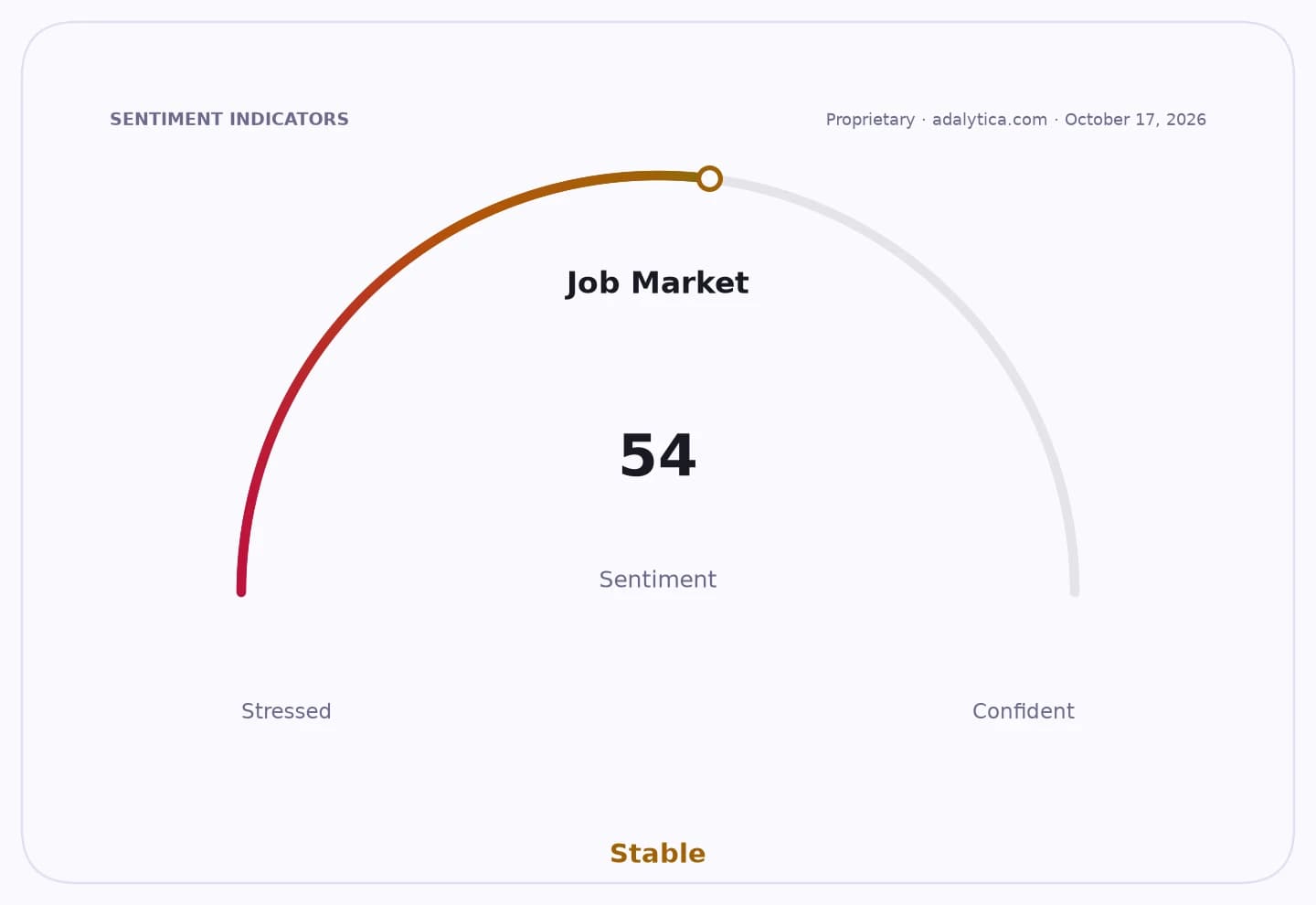
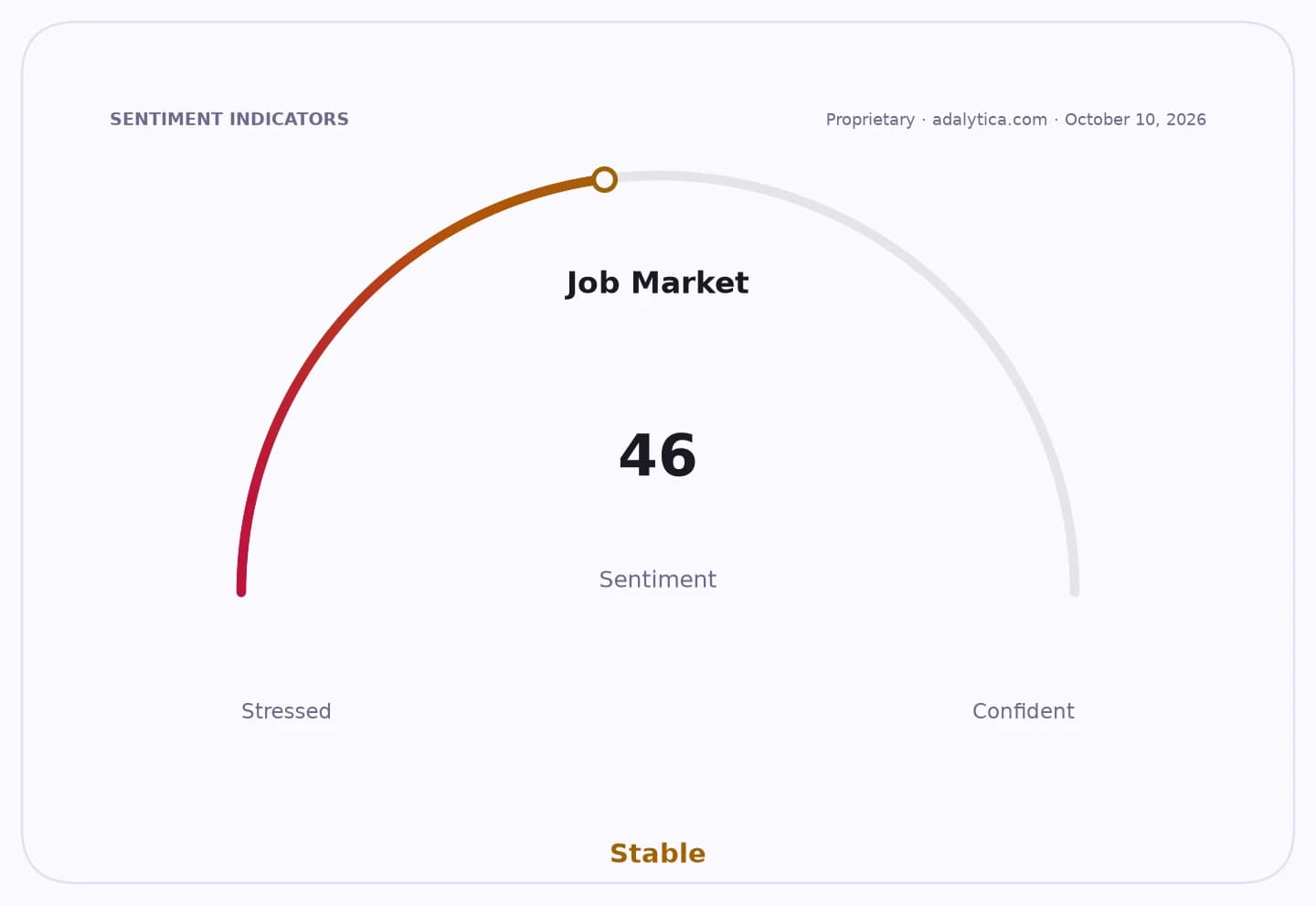
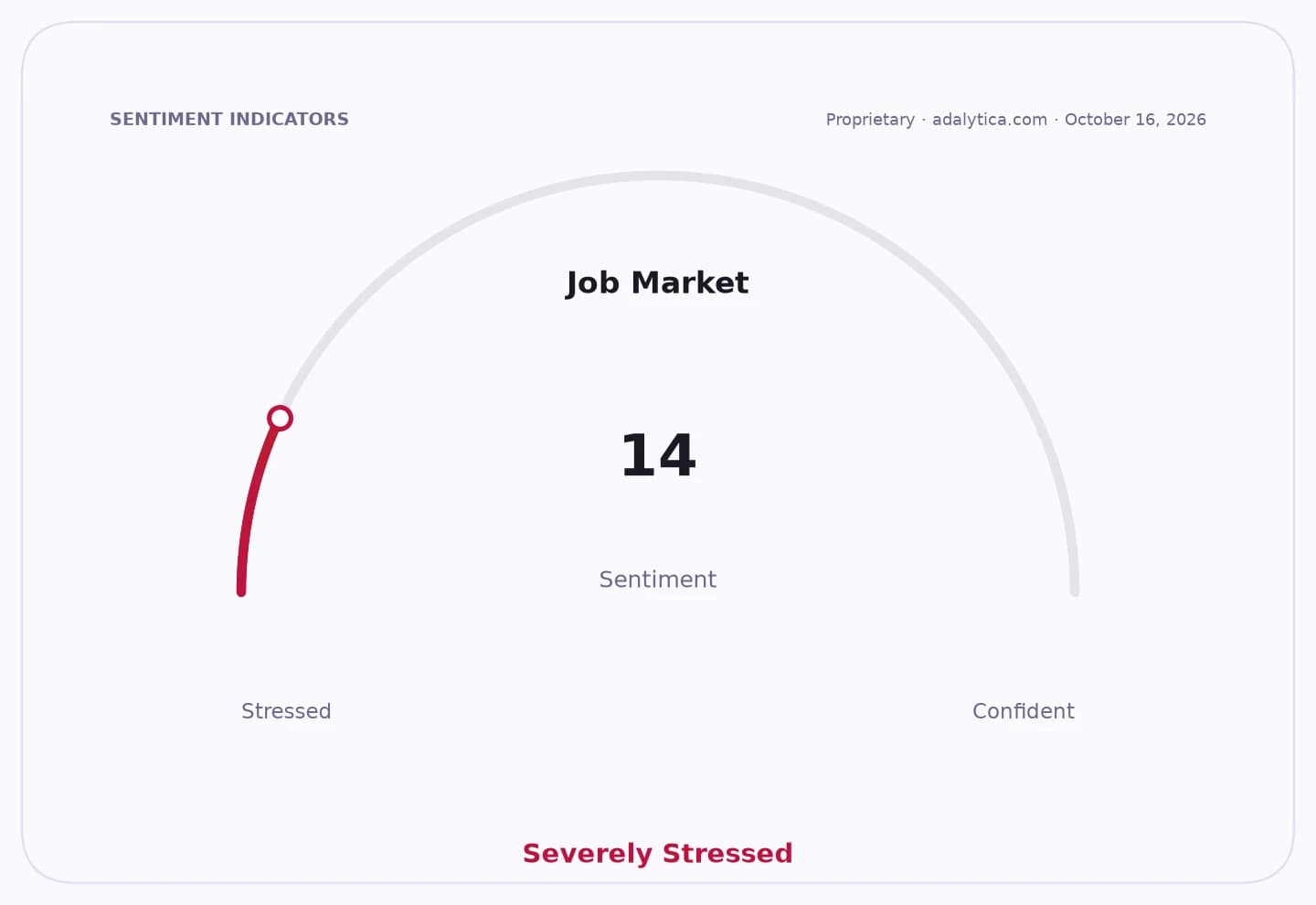
Small businesses are being squeezed by a labor shortage that is forcing owners to raise pay, scale back hours and leave jobs unfilled, even as the broader U.S. economy keeps adding workers and consumers keep spending.
U.S. Small Businesses Face Labor Shortage Pressure
That mismatch matters because small firms are the engine of local employment and one of the main channels through which wage gains, hiring and community investment spread across the economy. If they cannot staff up, the drag shows up quickly in service quality, operating costs and growth plans — especially for retailers, restaurants, logistics firms and other labor-intensive businesses that do not have the pricing power of big-box chains.
Sentiment IndicatorsⓘProprietary · adalytica.com · October 18, 2026
This is a snapshot — live sentiment, awareness and momentum for 130+ markets update continuously in the dashboard.Open AlphaPulse
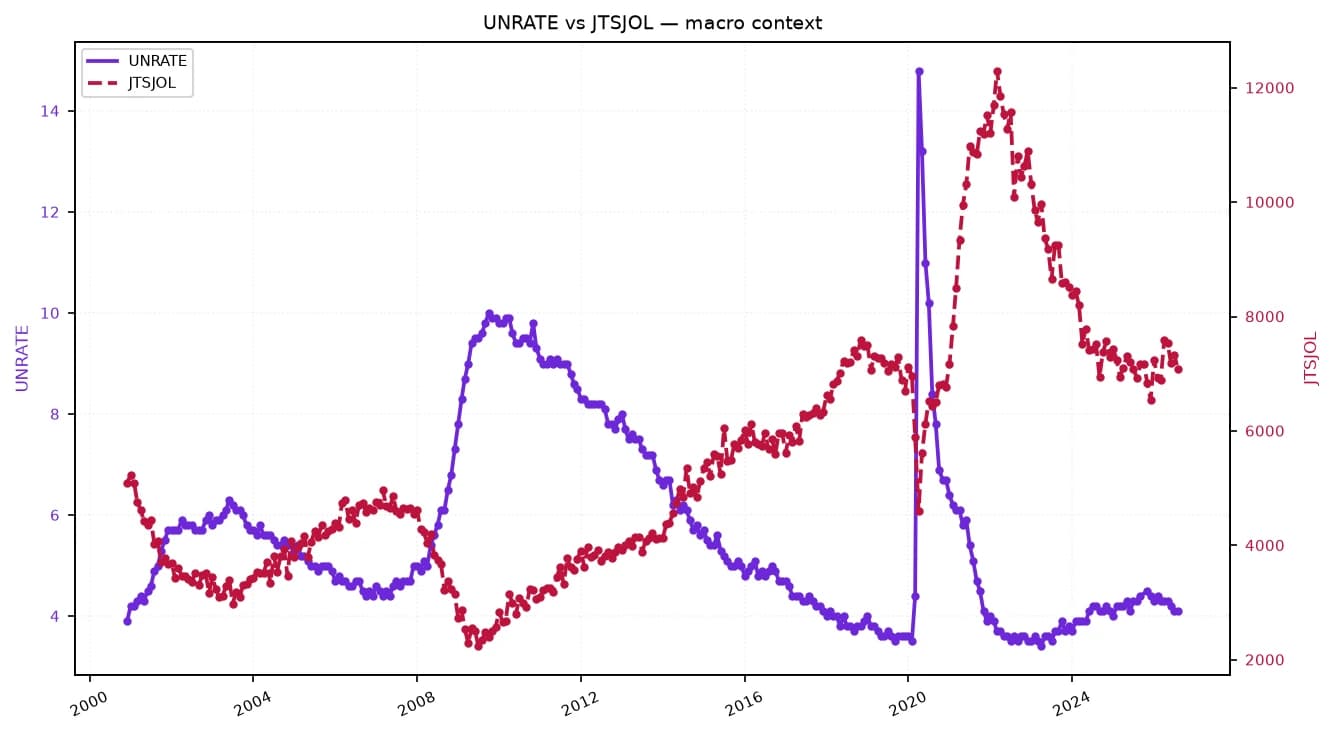
The backdrop is a U.S. labor market that remains historically tight. The unemployment rate is hovering around 4.2%, near levels that still look full-employment by post-crisis standards, while nonfarm payrolls have held near 159 million. Job openings, meanwhile, remain elevated at roughly 7 million, signaling that demand for labor is still outpacing supply even after the pandemic-era disruption eased.
For small businesses, that is a harsher equation than it looks on paper. Larger companies can lean on automation, broader recruiting networks and better benefits. Smaller operators often cannot. That leaves them competing for the same workers with chains that can offer steadier schedules, higher starting wages and better perks. The result is a persistent squeeze on margins at the exact moment many owners are trying to rebuild from pandemic losses.
Investor implications are straightforward: the labor crunch is a tax on the small-business ecosystem, and that has second-order effects across retail, consumer spending and local services. Companies that sell staffing tools, payroll software, scheduling technology, automation and productivity software stand to benefit as employers try to do more with fewer workers. So do larger consumer names with scale advantages, while smaller operators face the steepest pressure on earnings power.
The market is already hinting at that divide. Consumer discretionary stocks have been more volatile, while staples have held up better as investors favor businesses with more predictable demand and stronger pricing leverage. That split reflects a simple truth: in a labor-starved economy, scale is an advantage and labor efficiency becomes a competitive moat.
The next catalyst is whether wage growth and hiring continue to cool enough to give small businesses breathing room, or whether the shortage remains entrenched. If labor supply stays constrained, expect more consolidation, more automation spending and a wider gap between the winners that can absorb higher labor costs and the smaller firms that cannot.
| Entity | Gains | Losses |
|---|---|---|
| Large retailers | ▲staffing scale | ▼small independents |
| Payroll and HR software firms | ▲automation demand | ▼manual hiring processes |
| Workers | ▲higher wages | ▼owners’ margins |
| Small businesses | ▲none | ▼hiring flexibility |