Virtus Diversified REIT’s plan to acquire Abington Court Retirement Residence in Hamilton, Ontario is another sign that income-focused investors are still willing to back senior housing, even as the broader commercial REIT trade sits in a deep slump.
Virtus Diversified REIT plans Hamilton retirement residence deal
The deal matters because retirement housing sits at the intersection of two durable trends: an aging population and the growing need for private capital to modernize care assets. For long-term investors, that makes this more than a simple property purchase. It is a bet on a niche real estate segment where occupancy, pricing power and operating efficiency can compound over time if the operator gets the execution right.
Sentiment Indicators
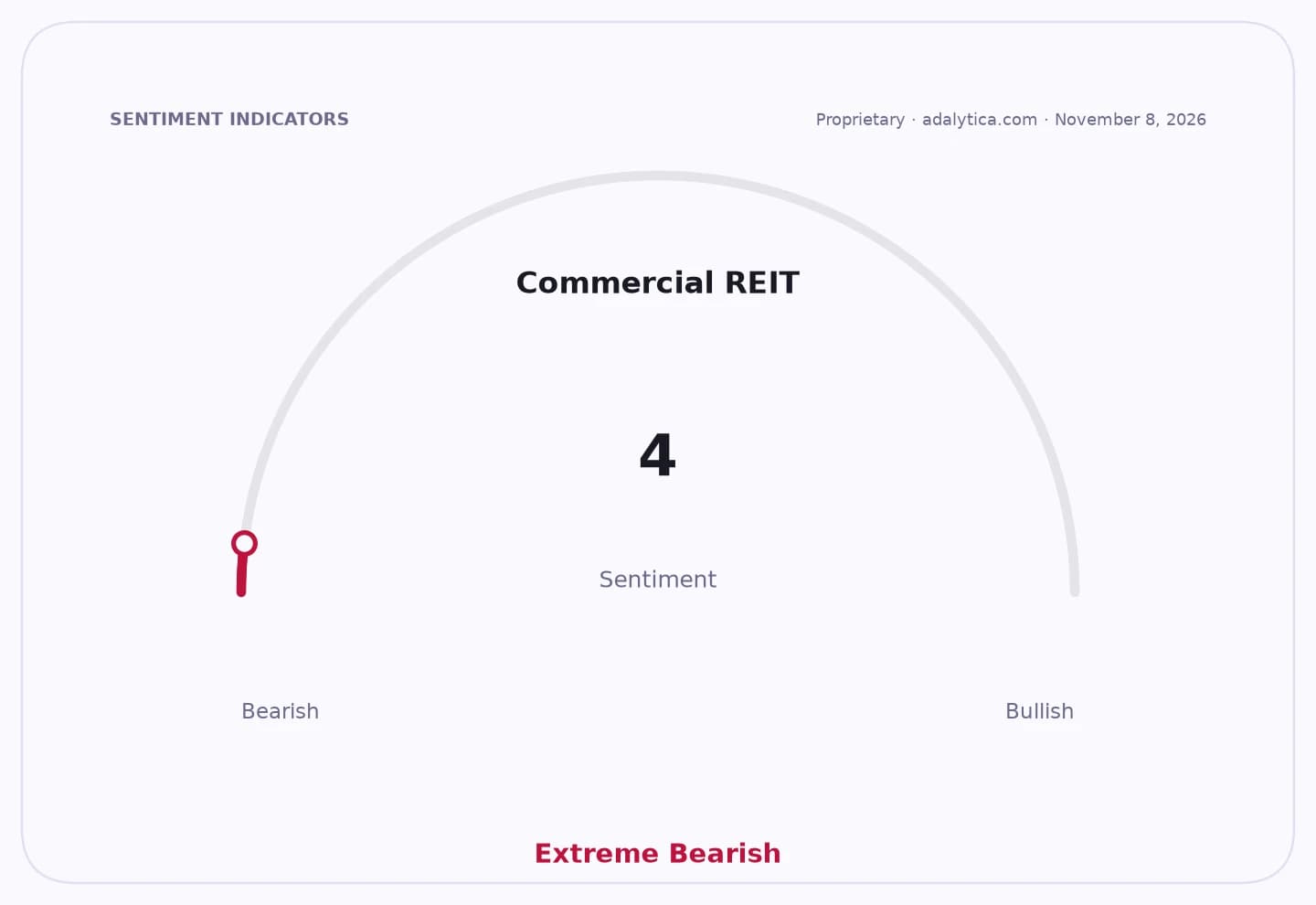
That broader sector backdrop is not exactly cheerful. Commercial REIT sentiment, as tracked by Adalytica.com, is sitting at “Extreme Fear,” while awareness remains elevated, a combination that often reflects investors’ anxiety about interest rates, refinancing risk and softer capital markets. In that kind of environment, acquisitions that add stable, necessity-based cash flow can stand out. They do not eliminate risk, but they can help a portfolio tilt toward assets with more resilient demand than office or discretionary retail.
The timing also fits the Canadian retirement housing market, where rising care costs are squeezing families and forcing operators to defend affordability while still funding labor, maintenance and regulatory compliance. That tension is the economic story here: seniors housing can be essential, but it is also capital intensive, and every acquisition has to earn its keep through occupancy, rent growth and disciplined financing.
Investors should also notice how differently the related names have been trading. Welltower and Ventas, two large senior housing owners, have both shown stronger momentum than the broader REIT complex, suggesting that capital still rewards scale, diversification and exposure to aging demographics. ACV, by contrast, has been drifting lower and remains below both its 50-day and 200-day moving averages, a reminder that market participants are still cautious about smaller, less liquid REIT stories.
For shareholders, the key question is not whether senior housing is a good idea in general. It is whether Virtus can buy assets at valuations that leave room for predictable cash generation after financing costs, operating expenses and capex. If it can, acquisitions like Abington Court can be the kind of slow-burn compounding story patient investors want. If it cannot, the sector’s appeal can disappear quickly in a higher-cost capital market.
In other words, this is a watchlist story, not a day-trading one. Senior housing remains one of the more durable real estate themes available to investors, but the winners will be the owners who pair demographic tailwinds with balance-sheet discipline and strong local operations.
| Entity | Gains | Losses |
|---|---|---|
| Virtus Diversified REIT | ▲Senior housing exposure | ▼Cash strain if financing costs rise |
| Abington Court / seller | ▲Asset monetization | ▼Future upside from the property |
| Long-term senior housing investors | ▲Demographic tailwind | ▼Near-term REIT volatility |
| Broader commercial REIT sector | ▲Portfolio diversification story | ▼Capital-market skepticism |