Singapore’s labour market kept expanding in the second quarter even as retrenchments climbed and vacancies fell, a combination that says the island economy is still creating jobs but with less breadth and less cushion for workers than earlier in the year.
Singapore labour market adds jobs as retrenchments rise
That matters because Singapore is one of Asia’s most trade-sensitive economies, and its labour data often gives an early read on whether corporate demand is broadening or simply being carried by a few sectors. The headline number was still healthy: total employment rose by 11,400 in the quarter, extending growth to a 19th straight quarter. But the composition was less comforting. Resident employment added just 2,200 jobs after a 5,400 increase in the first quarter, while non-resident employment jumped by 9,200, led by work permit holders in construction and manufacturing.
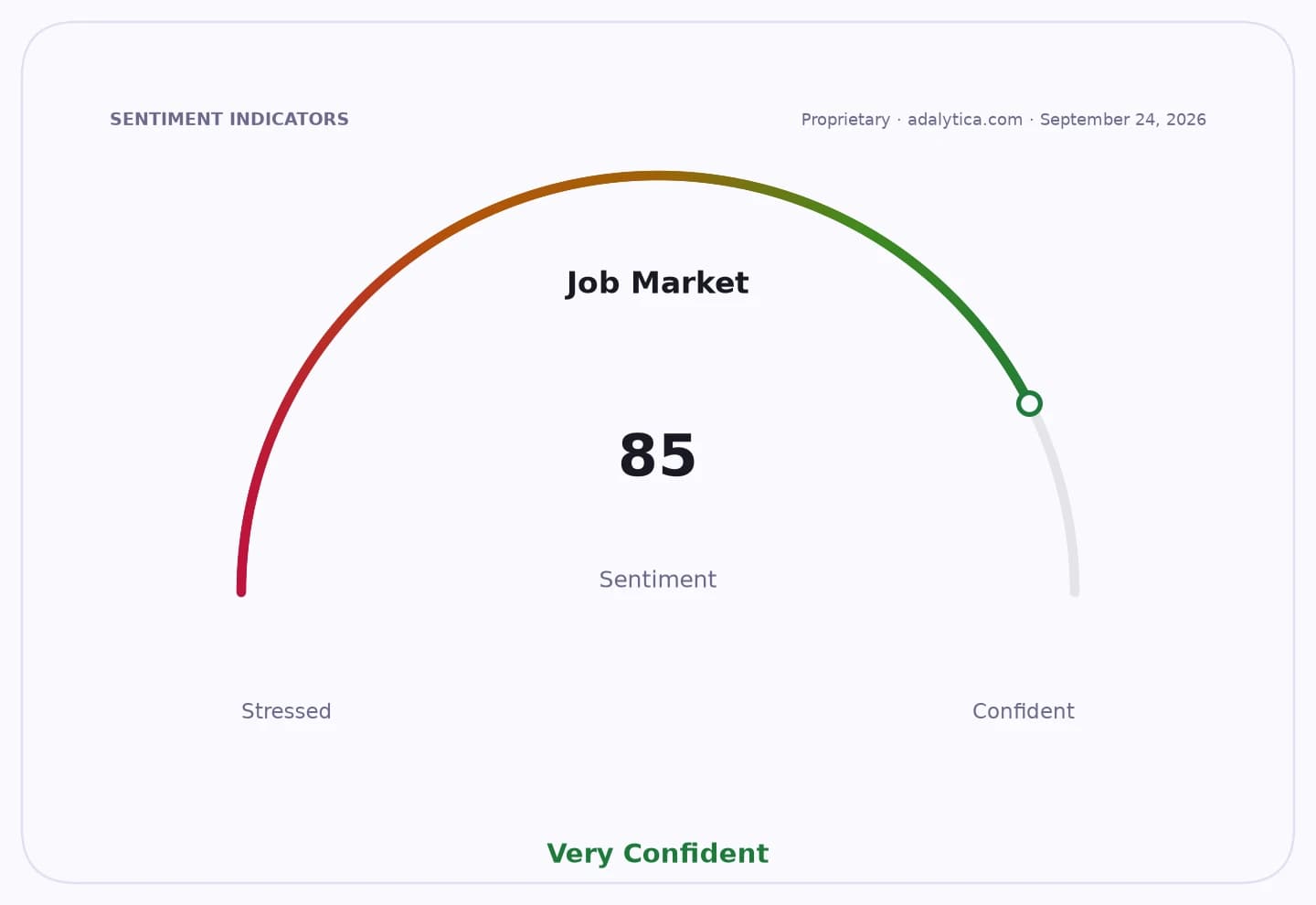
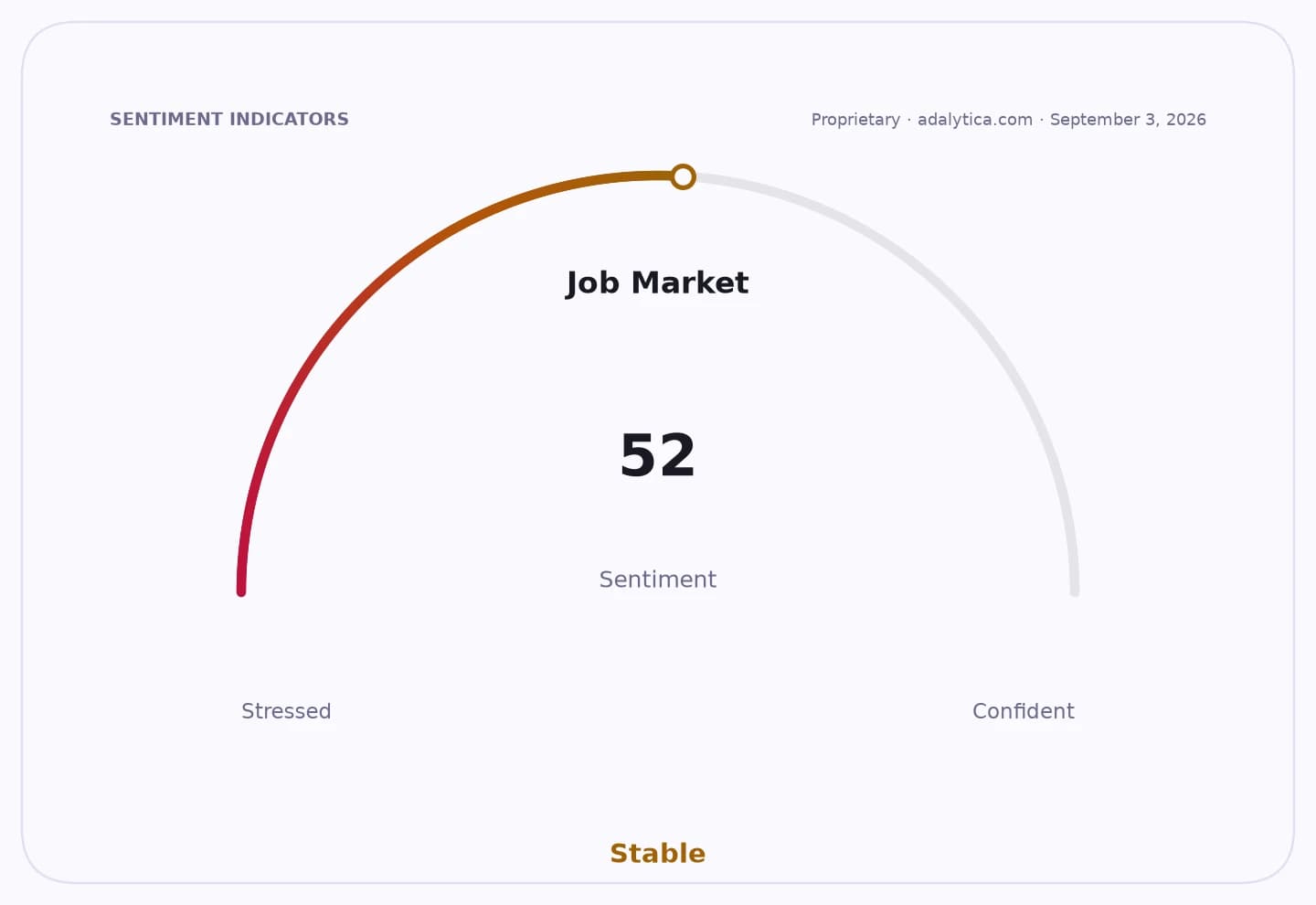
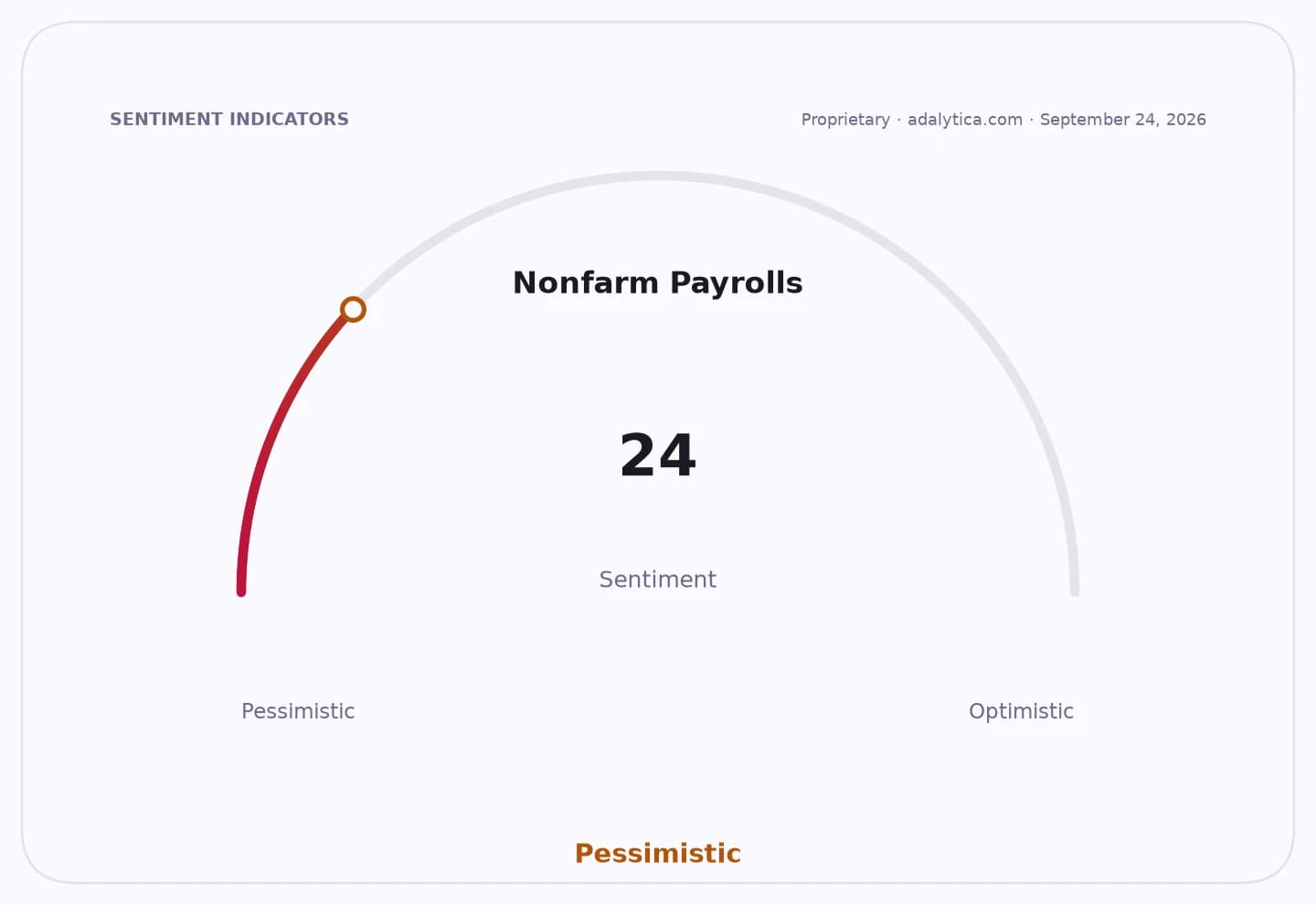
Sentiment IndicatorsⓘProprietary · adalytica.com · September 24, 2026
This is a snapshot — live sentiment, awareness and momentum for 130+ markets update continuously in the dashboard.Open AlphaPulse
For investors, that split is the key story. It suggests the labour market is growing, but not evenly. Domestic-oriented sectors such as transportation and storage, public administration, education and health added jobs, while outward-facing industries such as professional services, financial services and information and communications also contributed. At the same time, retrenchments rose to 4,620, or two retrenched workers per 1,000 employees, from 3,830 in the previous quarter. The ministry said the increase was driven by business reorganisations and restructuring in manufacturing, information and communications, and financial services.
That is economically important because it shows Singapore’s recovery is no longer being powered by a simple rebound in hiring. Employers are becoming more selective, and workers are taking longer to find new roles. Just 54.9% of retrenched residents found jobs again within six months, down from 60.7% in the first quarter, even though the 12-month re-employment rate edged up to 69.8%. Long-term unemployment also inched higher to 1% in June from 0.9% in March, a reminder that a low headline unemployment rate can still mask strain beneath the surface.
The vacancy data reinforce that message. Open jobs fell to 68,600 in June from 73,300 in March, largely because PMET openings weakened in financial services and information and communications. Yet the labour market remained tight enough that there were still 1.48 vacancies for every unemployed person. That balance helps explain why Singapore is not flashing recession alarms, but it also explains why wage growth may stay more restrained than in the post-pandemic boom. In July, 48.7% of firms said they planned to hire in the next three months, up from June, but the share expecting to raise wages slipped to 27.9%, below February levels.
The broader narrative is one of resilience, not exuberance. Singapore is still adding jobs, but the engine is shifting toward construction, manufacturing and government-related services, while some high-skilled private-sector areas are cooling. For long-term investors, that usually means two things: domestic consumption should hold up, but earnings growth in cyclical and export-linked sectors may be more uneven, and companies with strong balance sheets and pricing power will be better placed than those relying on aggressive hiring or easy labour availability.
The policy backdrop is designed to cushion that transition. Singapore says it will keep investing in workforce transformation through programmes such as the Career Conversion Programme and Mid-Career Pathways Programme, while fresh graduates and displaced workers can tap GRIT traineeships and temporary financial support under SkillsFuture Jobseeker Support. That should help limit scarring if the labour market softens further.
For investors, the takeaway is simple: Singapore’s labour market is still expanding, but the quality of that growth is becoming more uneven. That makes the country worth watching, not chasing. The economy is resilient, but the data argue for patience, selectivity and a long-term lens.
| Entity | Gains | Losses |
|---|---|---|
| Singapore employers in construction/manufacturing | ▲More work permit labour | ▼Tighter wage pressure eases |
| Retrenched residents | ▲Govt support programs | ▼Slower re-employment |
| Export-oriented sectors | ▲Continued hiring base | ▼Restructuring and layoffs |
| Investors in resilient firms | ▲Stable macro backdrop | ▼Broader earnings breadth weakens |