Small-business owners trying to pay down credit card balances are still fighting an expensive financing environment, with benchmark Treasury yields near 4.6% keeping borrowing costs elevated even as credit risk in the high-yield market has eased from spring stress.
Small Business Credit Card Costs Stay High
The 10-year Treasury yield was last around 4.67% and the two-year note at 4.20%, levels that matter because they anchor the funding costs of banks and card issuers and help set the floor for interest rates on revolving business credit. For owners carrying balances, that means little relief from rate-driven interest charges, even if they are only making minimum payments. For lenders, it preserves attractive net interest income, but also leaves borrowers more vulnerable if sales slow or delinquencies rise.
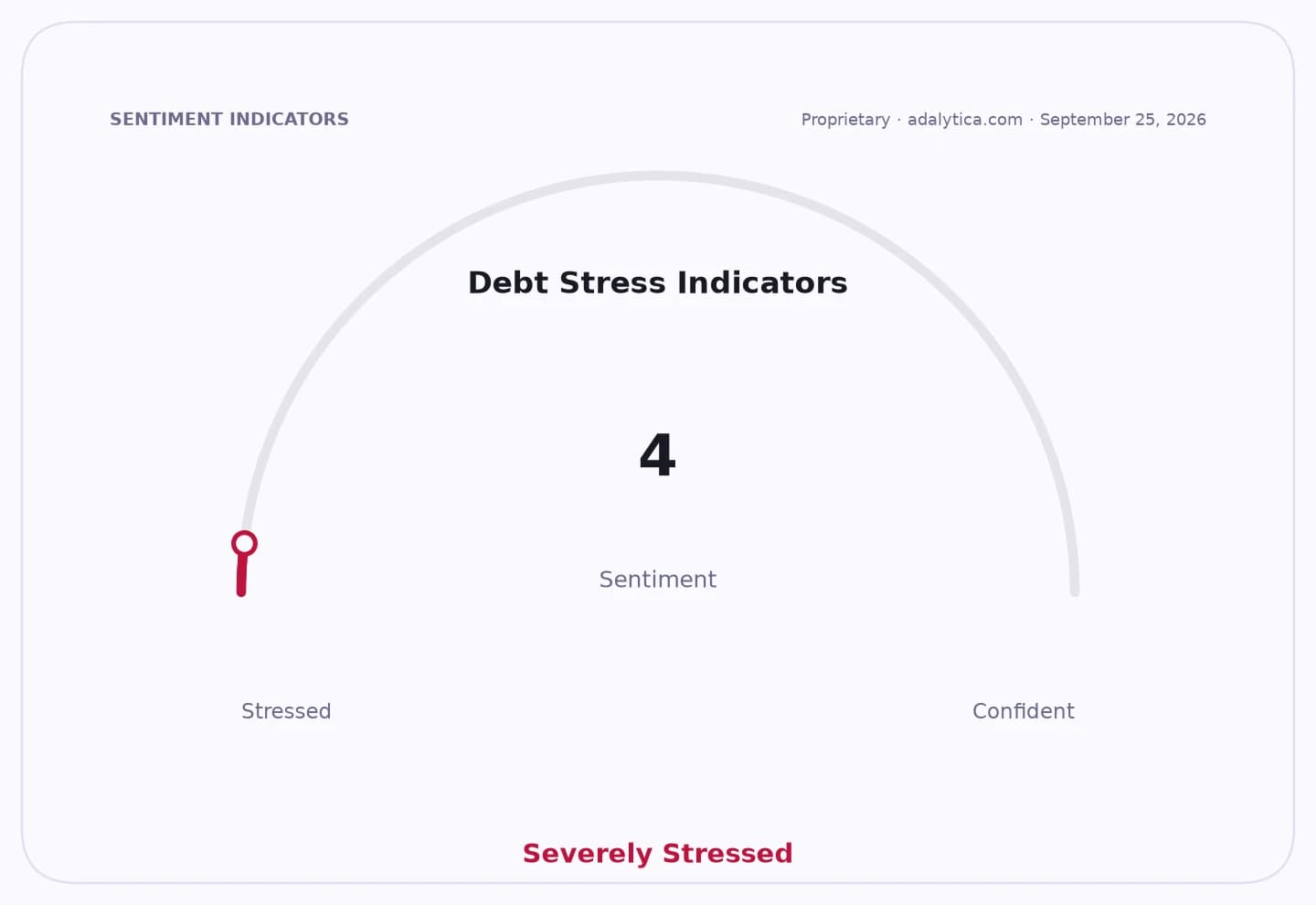
Sentiment IndicatorsⓘProprietary · adalytica.com · August 30, 2026
This is a snapshot — live sentiment, awareness and momentum for 130+ markets update continuously in the dashboard.Open AlphaPulse
That backdrop is why tactics that attack principal fast — from refinancing to balance transfers, trimming card spend, and redirecting cash flow to the highest-rate account — remain economically important. The higher the risk-free rate, the less room there is for card issuers to cut pricing without sacrificing returns, and the more valuable every extra dollar of repayment becomes for businesses trying to preserve margins.
There are early signs credit markets are less anxious than they were earlier in the year. The ICE BofA U.S. high-yield spread has narrowed to about 2.63 percentage points from above 4 percentage points in April, suggesting financing conditions outside consumer and small-business cards have improved. But that is only part of the picture. Card debt remains one of the most expensive forms of working capital, and companies that rely on it are still exposed to the same pressures that hit households: high APRs, compounding fees and the risk that a temporary cash-flow shortfall turns into a longer balance-sheet problem.
That tension is visible in the shares of major card lenders. Capital One Financial, which has a large credit card franchise, has seen its stock recover to around $215.67 after a volatile year, while American Express trades near $333.20. Technical readings on both names suggest the recent rebound has cooled rather than accelerated, with Capital One’s relative strength index around 46 and American Express around 42, a sign investors are neither panicking nor aggressively bidding up the sector.
For borrowers, the message is more urgent than for lenders: in a 4%-plus Treasury world, waiting is expensive. Businesses that use credit cards to bridge inventory purchases, payroll timing or seasonal cash gaps are effectively paying a premium for flexibility, and that premium compounds quickly when rates stay high. The best-case scenario is that income growth and easing spreads gradually improve refinancing options. The bear case is that debt service remains sticky even if the broader economy avoids a hard landing, forcing more owners to cut spending or seek restructuring.
What happens next will depend less on one-off rate moves than on whether short-term funding costs and bank lending standards soften enough to let businesses replace revolving card debt with cheaper financing. Until then, paying down balances quickly is not just prudent financial hygiene; it is a direct defense against an interest-rate structure that still favors the lender.
| Entity | Gains | Losses |
|---|---|---|
| Banks and card issuers | ▲Higher interest income | ▼Fewer borrowers if delinquencies rise |
| Business borrowers | ▲Lower debt burden from fast paydown | ▼High APRs and fee drag |
| Refinancing lenders | ▲New loan demand | ▼Balance-transfer competition |
| Equity investors in lenders | ▲Stronger card spreads | ▼Credit losses if stress deepens |