Bezalel Smotrich’s offer to hand a far-right rival a ministerial job if he drops out of the race underscores how Israel’s looming election is being shaped not just by Gaza and security policy, but by hard-right factional maneuvering that could affect the next government’s room to act.
Smotrich Offers Winter Gaza Role If He Drops Out

The finance minister publicly urged Ofer Winter, leader of the Amcha Yisrael list, to quit the election and accept a post in the Defense Ministry with authority over Gaza “voluntary emigration” and ultra-Orthodox enlistment. The pitch is politically significant because it highlights an attempt to consolidate the nationalist camp ahead of a vote in which even small shifts in turnout or party fragmentation could influence coalition math.
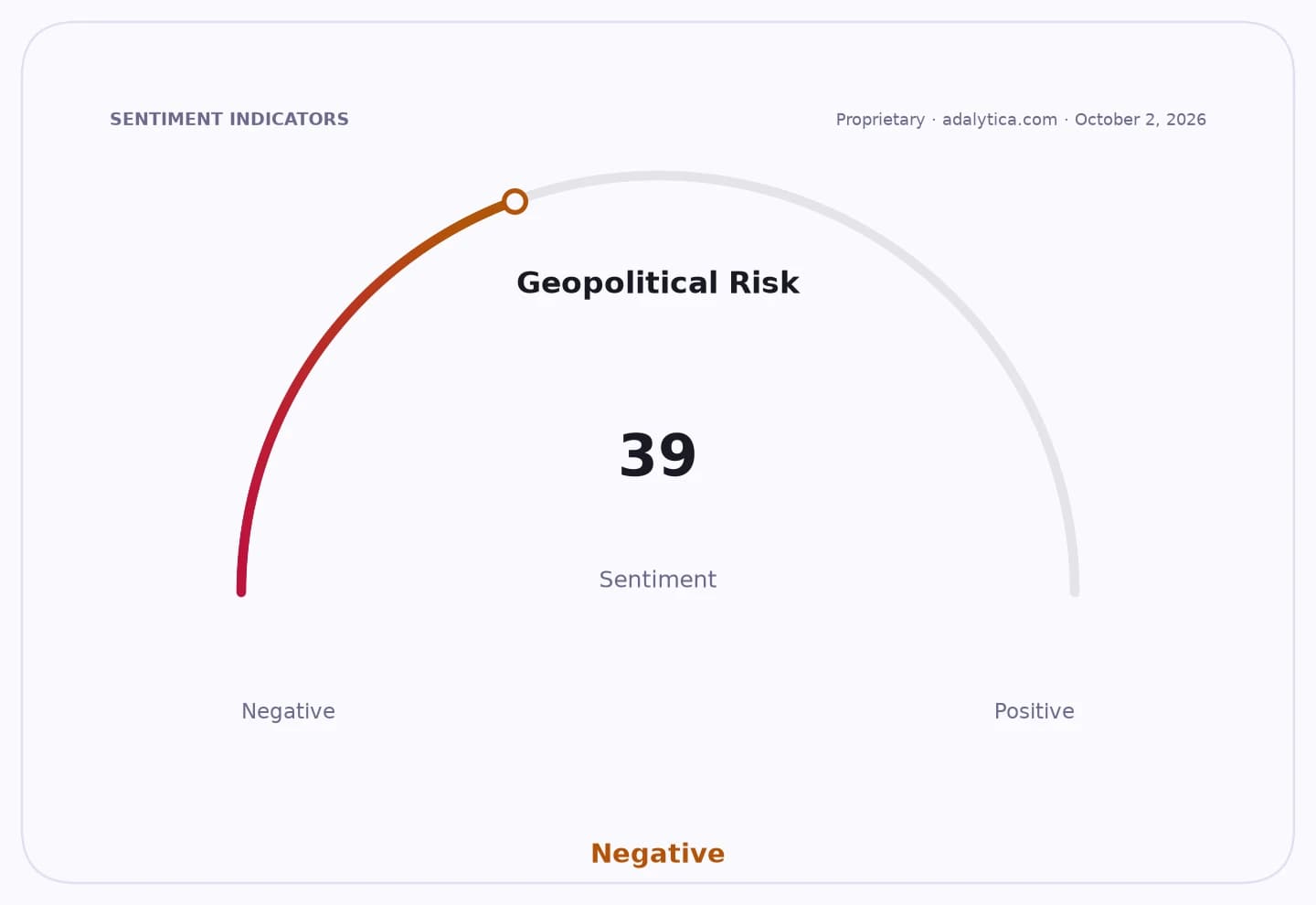
Sentiment IndicatorsⓘProprietary · adalytica.com · October 27, 2026
This is a snapshot — live sentiment, awareness and momentum for 130+ markets update continuously in the dashboard.Open AlphaPulse

For investors and policymakers, the message is less about the personalities involved than the policy agenda behind the offer. Smotrich is signaling that issues at the center of Israel’s security and governance debate — the conduct of the war in Gaza, the future of civilian administration there, and the long-running dispute over military service exemptions for ultra-Orthodox Israelis — remain live bargaining chips in coalition politics. That raises the odds that the next government, if it includes hard-right factions, could pursue more aggressive positions on Gaza and domestic military service, both of which carry fiscal, security and diplomatic consequences.
The reference to Gaza “voluntary emigration” is especially sensitive internationally. Any move toward incentivizing or facilitating Palestinian departure would draw sharp scrutiny from allies and humanitarian groups, potentially complicating Israel’s external relations at a moment when the war already sits under intense global attention. The enlistment issue is equally fraught at home: shifting the burden of service has become a major political fault line and a recurring test of social cohesion, with implications for manpower, defense spending and relations between secular and religious communities.
The broader market backdrop remains one of elevated geopolitical risk. Adalytica’s Global Stability Sentiment gauge shows neutrality at 61, but awareness remains in fear territory at 18, reflecting how quickly regional headlines can alter investor caution. In Israeli assets, the equity proxies have been comparatively steady, with EIS closing at 122.19 on Oct. 26 and trading around its 50-day moving average, while ISRA ended at 67.44, near its short-term trend line. That suggests markets have not yet priced a major new shock, but they also leave little margin for error if the political campaign turns into a wider security or policy confrontation.
For Netanyahu’s allies, the calculation is straightforward: fewer right-wing rivals means a cleaner path to a governing bloc. For investors, the risk is that the same consolidation could produce a more ideologically rigid coalition, with policy priorities that widen Israel’s geopolitical exposure and keep defense, currency and risk premia sensitive to the next political twist.
| Entity | Gains | Losses |
|---|---|---|
| Smotrich / hard-right bloc | ▲Greater coalition discipline | ▼Electoral fragmentation risk |
| Ofer Winter / Amcha Yisrael | ▲Cabinet access, policy leverage | ▼Independence, vote share |
| Netanyahu-led right-wing camp | ▲Easier coalition math | ▼More hardline policy baggage |
| Israel’s investors and allies | ▲Predictability if race narrows | ▼Higher geopolitical and policy risk |