Solana’s move to take a majority stake in CoinGecko matters less for the undisclosed price tag than for what it could do to the plumbing of crypto markets: one of the industry’s most widely used neutral data portals is now majority-controlled by the organization behind a single blockchain.
Solana Foundation Takes Majority Stake in CoinGecko

The Solana Foundation said via product chief Vibhu Norby that it now holds a majority interest in CoinGecko, a deal disclosed at the end of Solana’s Breakpoint conference in London. CoinGecko and the foundation did not disclose the purchase price, the size of the stake or how the transaction was structured, leaving investors to judge the deal by strategy rather than valuation. What is clear is the ambition: Solana wants CoinGecko, GeckoTerminal and its app to evolve beyond market data into a venue for Solana-based trading.
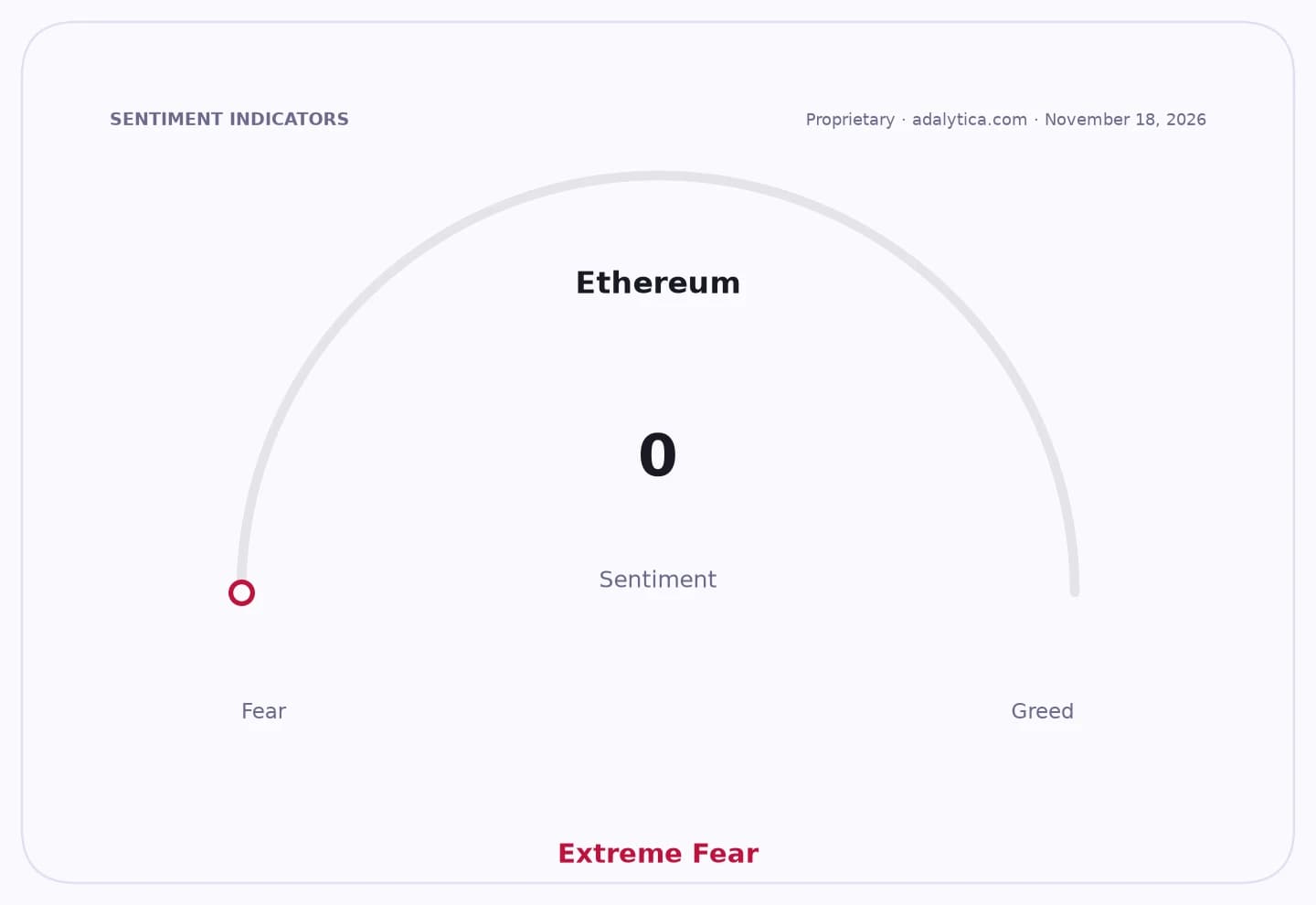
Sentiment Indicators
That shift matters economically because discovery drives execution. If users can move from checking a token price to placing a trade inside the same interface, the owner of that interface gains leverage over order flow, user acquisition and fee capture. In crypto, where distribution is as important as product, controlling a high-traffic data portal can become a funnel into trading, DeFi and tokenized assets. Solana’s pitch is that this can make crypto easier to use; the market’s concern is that a supposedly neutral price list could start to favor the ecosystem that owns it.
The deal also speaks to intensifying consolidation in crypto information infrastructure. Binance bought CoinMarketCap in 2020, tying another major pricing site to a large exchange ecosystem. If Solana eventually builds trading into CoinGecko, the two biggest independent market-data brands would both sit inside broader crypto power centers rather than stand fully apart from them. That raises governance questions for CoinGecko, whose data feeds about 180,000 apps and firms, and whose methods have been marketed as market-wide and public. No governance framework has been disclosed to show how editorial independence, token listings or ranking methodology would be protected from owner influence.
For investors, the immediate impact is on sentiment rather than fundamentals. SOL rose on the announcement to about $73.48 on CoinGecko, after trading between $69.96 and $73.72 in a 24-hour window, but the token remained roughly 13% lower over seven days. The broader market backdrop is weak: Bitcoin was around $65,000 and fear readings across crypto remain elevated. On the technical side, SOL is still well below its 50-day moving average and the relative strength index remains deeply depressed, suggesting the rally is more a reaction to the headline than evidence of a trend reversal.
The bigger question is whether the deal can translate into real usage. Solana says the plan spans data, market analysis and trading, with talk of broader DeFi tools and coverage of equities and tokenized real-world assets. But there is no timetable, no disclosed trading partner and no fee model yet. That leaves the stock and token angle unresolved: if the integration works, Solana could create a distribution advantage that boosts network activity; if users resist the loss of neutrality, the transaction may amount to branding with little commercial lift.
For now, the transaction looks like an attempt to own the first click in crypto. Investors will be watching whether that first click becomes a trade, and whether CoinGecko can keep enough distance from Solana to preserve the trust that made it valuable in the first place.
| Entity | Gains | Losses |
|---|---|---|
| Solana Foundation | ▲distribution control | ▼neutrality concerns |
| CoinGecko users | ▲tighter trading access | ▼less independent pricing |
| SOL holders | ▲higher network usage optionality | ▼no immediate buy pressure |
| Coinbase and Binance rivals | ▲none | ▼more competition for first-click traffic |