Solana’s drop into oversold territory is the bigger story for investors, because it usually tells you the selling pressure may be nearing exhaustion even as the trend remains broken for now.
Solana falls to oversold after seven-day decline

SOL fell 3.3% on Nov. 20 to about $68.75 after losing 10.6% over the prior seven days, and its relative strength index sank to 18.9, a conventional oversold reading that often appears near the end of sharp declines. That does not mean the bottom is in, but it does mean the market is stretched. Solana still trades well below its 20-day average of $82.67 and its 50-day average of $97.33, so the short-term trend has not turned higher yet.
Sentiment Indicators
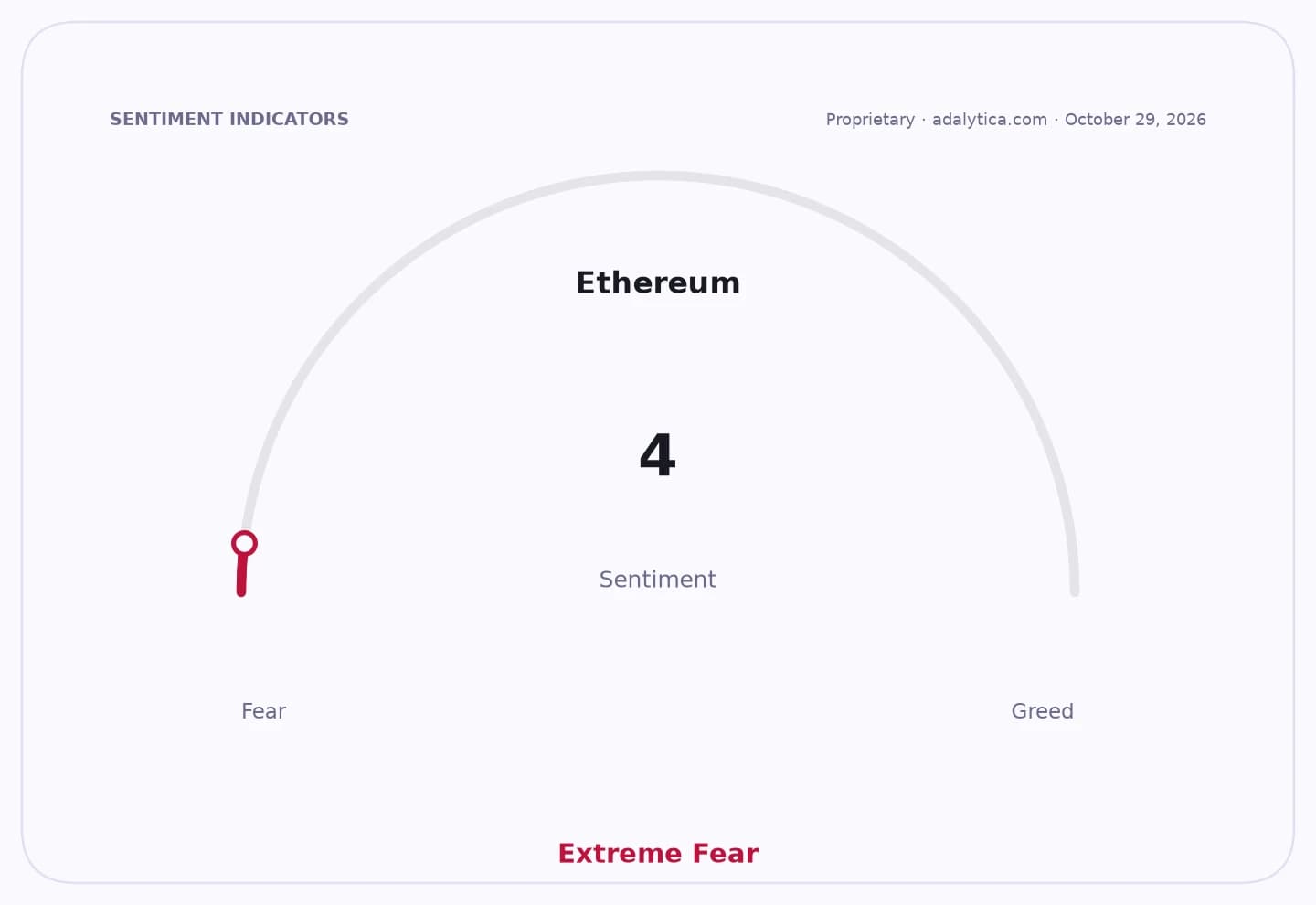
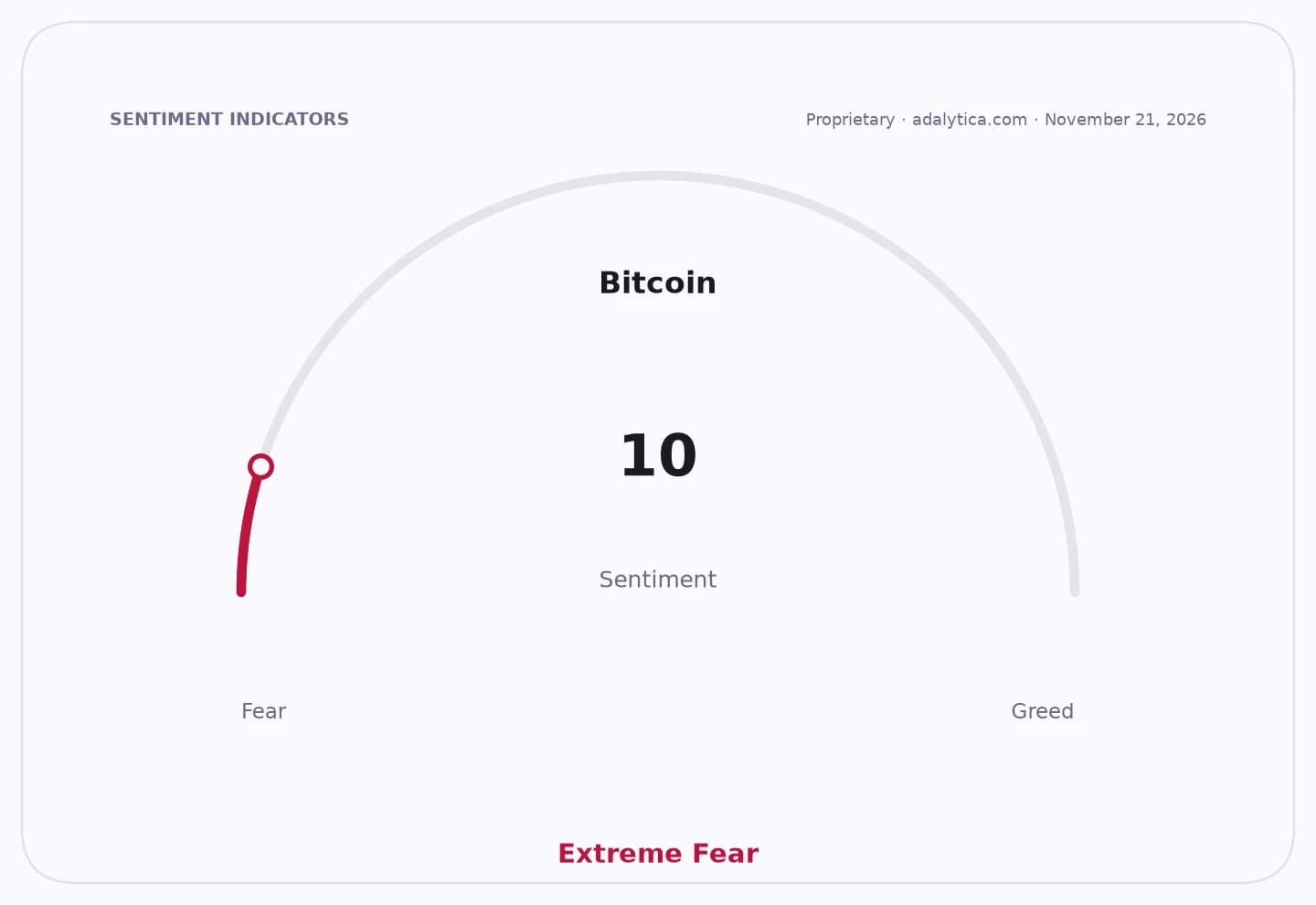
For long-term investors, that distinction matters. Oversold conditions can create opportunity, but only if the underlying network keeps attracting users, developers and capital through the volatility. Solana is still one of crypto’s most important smart-contract platforms, and the current selloff is occurring alongside a broader risk-off move across digital assets rather than a Solana-specific collapse. Bitcoin fell into extreme fear, Ethereum was battered even harder, and about $710 million in crypto positions were wiped out in a single day as traders cut leverage.
That kind of deleveraging can be painful, but it also tends to reset the market. When forced selling fades, stronger networks often recover first because patient capital starts hunting for discounted exposure to the next cycle. In that sense, Solana’s current weakness is less a verdict on the project and more a reminder that crypto remains a high-beta asset class where sentiment can swing violently.
It is also why speculative money is spilling into earlier-stage tokens. Pepeto, a presale meme coin marketing a zero-fee exchange and an AI scanner, says it has raised more than $11.3 million while Solana was sliding. The appeal is obvious: investors who think the next leg higher in crypto will reward infrastructure plays and retail-friendly narratives are willing to take a shot on very early capital formation. Pepeto’s pitch includes staking and a planned exchange listing, but like any presale, it is still a far more speculative bet than Solana itself.
That makes the comparison useful, not because Pepeto is a substitute for Solana, but because it shows where risk appetite goes during drawdowns. Some traders are looking for a rebound in SOL once forced liquidation passes. Others are reaching for smaller, higher-upside names while the market is in the red. Both reactions are classic late-cycle behavior.
The key levels on Solana are straightforward. A failure to hold the $68 to $70 zone would leave $65, then $60 and $50 as the next downside markers. If SOL can reclaim $75 and then move back above $80, the case for a more durable recovery improves. Until then, this is still a damaged chart, even if it is an oversold one.
For investors with a multi-year horizon, the takeaway is simple: Solana looks washed out, not washed up. The better question is not whether it can bounce, but whether you are buying a short-term trade or a long-term platform. If you believe crypto adoption keeps expanding, a pullback like this is worth watching closely and, for disciplined investors, adding to the watchlist.
| Entity | Gains | Losses |
|---|---|---|
| Solana buyers | ▲Lower entry point | ▼More downside if $68 fails |
| Solana sellers | ▲Near-term cash preservation | ▼Missed rebound if oversold bounce starts |
| Pepeto presale buyers | ▲Early-stage upside optionality | ▼High speculative risk |
| Leveraged crypto traders | ▲Short sellers and volatility traders | ▼Longs forced out by deleveraging |