Rising borrowing costs are once again undercutting the economics of solar power, pressuring developers and rooftop installers even as the broader case for cheaper energy and lower upfront costs remains intact. With the US 10-year Treasury yield hovering around 4.8% and West Texas Intermediate crude back above $91 a barrel, investors are re-pricing the capital intensity of renewable projects and the funding burden behind them.
Solar stocks fall as rates stay high

That matters because solar is still a financing business as much as a hardware business. The sector’s pitch rests on reducing power bills without requiring households, businesses or utilities to absorb large installation costs upfront. But when long-duration rates stay elevated, the present value of those future savings falls, financing becomes more expensive and the payback period stretches. That is a direct hit to demand for solar manufacturers, inverters and project developers.
Sentiment IndicatorsⓘProprietary · adalytica.com · September 4, 2026
This is a snapshot — live sentiment, awareness and momentum for 130+ markets update continuously in the dashboard.Open AlphaPulse

The market response has been clear. NextEra Energy, a bellwether for US clean power and utility-scale renewables, has drifted below both its 50-day and 200-day moving averages, with its relative strength index near 38, a sign that buyers remain cautious. First Solar has fallen sharply from its summer highs and now trades below its 200-day average, while Enphase Energy has been hit even harder, with RSI readings close to 39 after a prolonged collapse from above $70 in June. Those moves reflect more than technical weakness: they point to an industry still vulnerable to rates, policy uncertainty and customer hesitation.
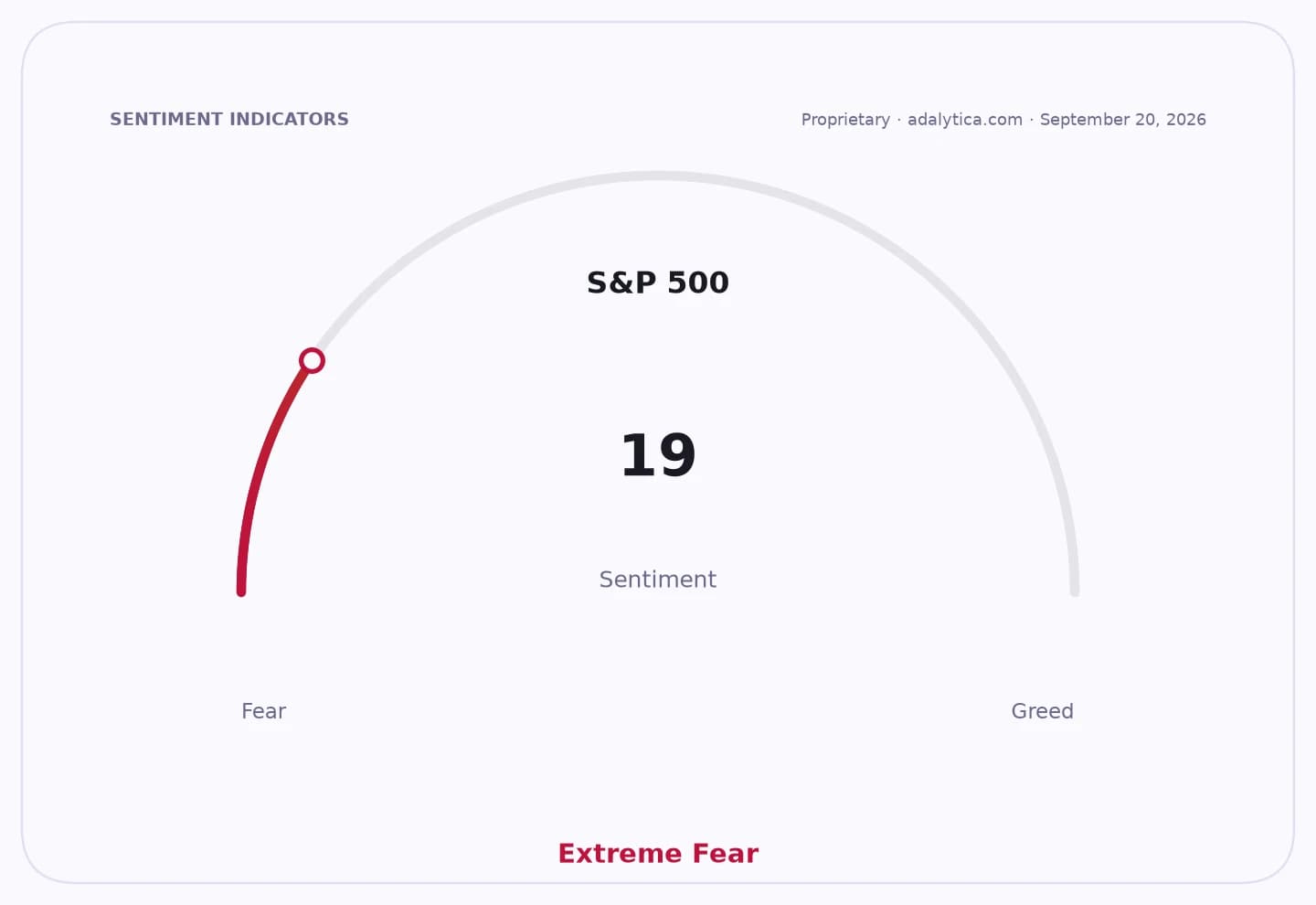
The macro backdrop is not helping. Adalytica’s S&P 500 trade signals show “Extreme Fear,” while US Treasury bond signals still sit in fear territory despite a short-term pickup in bond awareness. That combination suggests investors are not yet willing to pay for long-duration growth stories, especially those dependent on cheap capital. At the same time, higher oil prices should, in theory, improve the economics of alternative power sources by lifting the cost of fossil-fuel generation. In practice, the rate shock is dominating the argument for now.

For solar manufacturers, the divide is becoming more pronounced. First Solar remains better positioned than many peers because of its utility-scale focus and stronger balance sheet, which makes it less exposed to retail financing conditions. Enphase, by contrast, is more tied to the US residential market, where customer financing and installer economics have been strained by higher rates. NextEra sits in the middle: its regulated utility base offers stability, but its renewable growth engine still depends on project-level funding conditions that are now more demanding.
The bull case is that the current selloff overstates the damage. If rates ease, solar should regain its cost advantage quickly because the industry’s operating model has already brought down equipment costs and widened adoption. Lower financing rates would also revive rooftop demand and support utility-scale project economics. The bear case is that even if solar panels keep getting cheaper, the cost of capital remains the binding constraint, limiting how much end-user bills can fall without subsidies, tax credits or easier credit.
For investors, the key question is not whether solar remains structurally competitive, but whether it can convert that competitiveness into near-term earnings growth while the 10-year yield stays elevated. Until financing costs retreat, the market is likely to favor balance-sheet strength, utility exposure and companies with less dependence on subsidized consumer demand.
| Entity | Gains | Losses |
|---|---|---|
| Oil and gas producers | ▲Higher fuel-price parity | ▼Solar adoption economics |
| Utility-scale solar leaders | ▲Better relative resilience | ▼Retail financing-sensitive peers |
| Residential installers and inverter makers | ▲Lower rates, if they arrive | ▼Current borrowing-cost pressure |
| Long-duration growth investors | ▲Rate relief trade | ▼Capital-intensive clean energy names |