South Africa’s central bank is getting a little more room to manoeuvre, but the comfort may not last long as geopolitical shocks and weather risks threaten to re-ignite inflation. Reserve Bank Governor Lesetja Kganyago said the country is entering this wave of price pressure from a stronger base than in 2022, allowing policymakers to move more cautiously on interest rates even as crude oil, wheat and food costs are jolted by conflicts and El Niño fears.
South Africa inflation risks rise as rand weakens
That matters because South Africa’s inflation outlook is still highly exposed to imported shocks. Oil prices have been pushed higher by escalating tensions around Iran, while Ukraine’s strikes on Russian wheat infrastructure add another layer of risk to grain markets. If El Niño tightens South African food supplies, the Reserve Bank could be forced to keep policy restrictive for longer, even if domestic demand is soft. For households and businesses, that means the cost of borrowing may not fall as quickly as hoped.
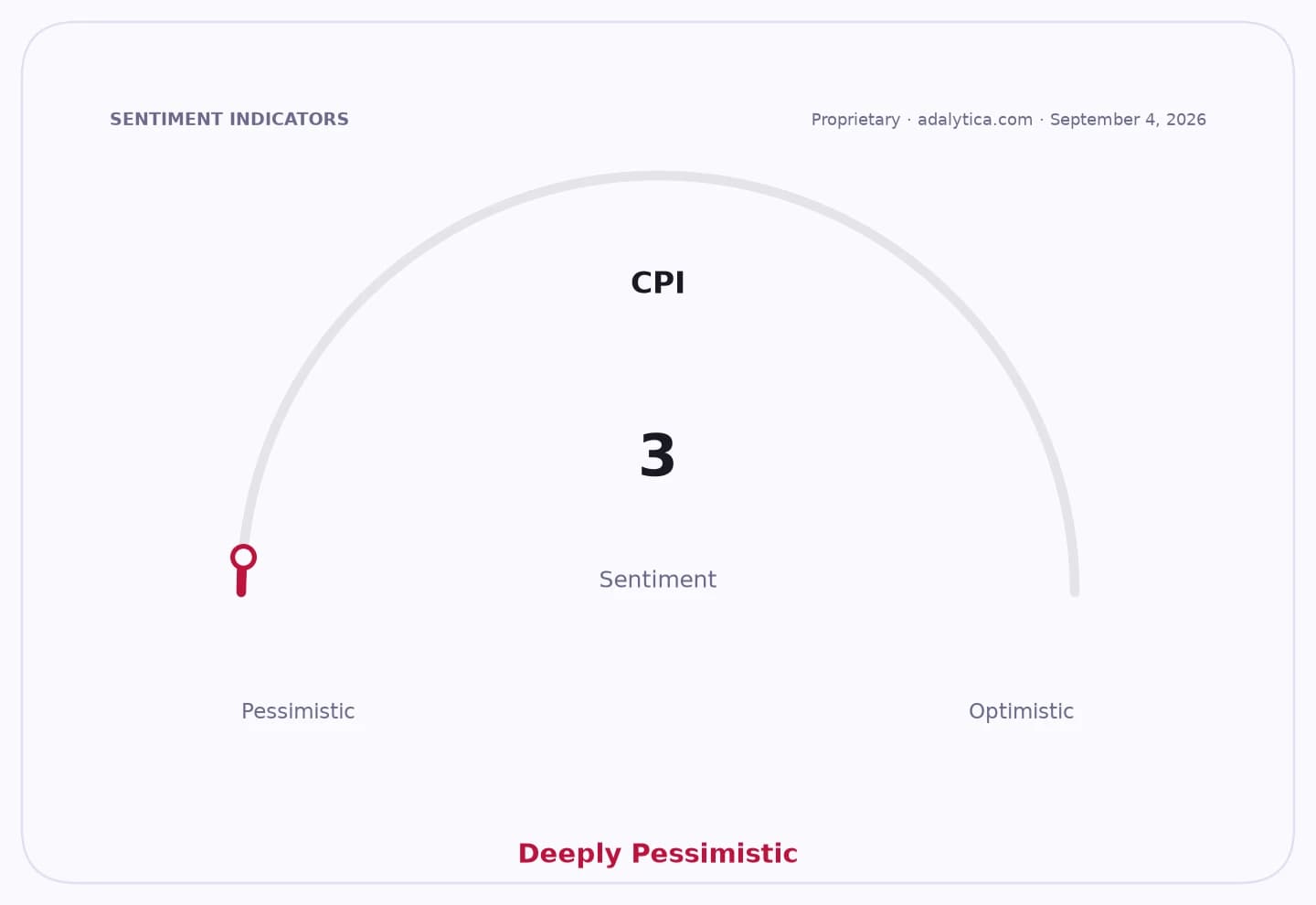
Sentiment IndicatorsⓘProprietary · adalytica.com · September 4, 2026
This is a snapshot — live sentiment, awareness and momentum for 130+ markets update continuously in the dashboard.Open AlphaPulse
The market signal is already clear: the rand has weakened to about 15.99 per dollar, below both its 50-day and 200-day moving averages, and recent RSI readings point to a currency under pressure rather than one ready for a clean rebound. That is the kind of backdrop that makes imported inflation more dangerous. A softer rand amplifies every move in oil and food, and South Africa remains a price taker in those global markets.
The global rate backdrop is also unhelpful. The U.S. 10-year Treasury yield is around 4.84%, keeping global financial conditions tight and limiting how much room emerging-market central banks have to ease aggressively. In that environment, Kganyago’s message is important: the Reserve Bank may still be able to cut or hold rates with caution, but it is not about to launch an aggressive easing cycle while external inflation risks remain alive.
For investors, the opportunity is to focus on businesses that can absorb inflation rather than those that simply suffer from it. Retailers with scale and pricing power, food distributors, and cash-generative consumer franchises are better positioned than rate-sensitive borrowers or import-heavy businesses. Shoprite stands out in that camp: the group continues to gain share through its Sixty60 platform and is now deepening its grocery ecosystem with the acquisition of Vida e Caffè, adding more than 400 coffee stores to an already formidable retail footprint.
That combination — defensive consumer demand, delivery scale and adjacency expansion — is exactly what works when macro volatility rises. Shoprite and Checkers are already the top two retailers in South Africa by sales, and management is still seeing momentum in Sixty60. In a country where inflation shocks can move quickly from the oil market to the dinner table, the best businesses are the ones that control more of the basket.
My view is that the market underestimates how persistent this inflation regime can be, and how long central banks may have to stay disciplined. If El Niño worsens food inflation or Middle East tensions keep crude elevated, South African assets that benefit from pricing power and local scale should outperform. That makes selective exposure to essential retail, cash-rich balance sheets and inflation-resistant operators the cleaner trade — while rand-sensitive and debt-heavy names remain vulnerable.
| Entity | Gains | Losses |
|---|---|---|
| Shoprite | ▲Bigger consumer ecosystem | ▼Smaller grocers |
| Essential retailers | ▲Pricing power | ▼Margin pressure |
| South African households | ▲None | ▼Higher food and fuel costs |
| Rand borrowers/importers | ▲None | ▼Weaker currency, higher input costs |