South Korea has moved to temporarily loosen a key credit-market safeguard after a sharp stock selloff tied to rising concern over AI data center regulation, aiming to slow forced liquidation and cool volatility in local shares.
South Korea loosens credit collateral rule after selloff
Authorities said securities firms will be exempt for three months from the obligation to keep credit-loan collateral at 140%, starting Nov. 9, as steep price declines triggered excessive forced selling that officials feared would amplify the rout. The finance ministry said the measure is intended to curb “excessive” margin call selling and stabilize markets after domestic equities overreacted to policy uncertainty around AI and weaker global risk appetite.
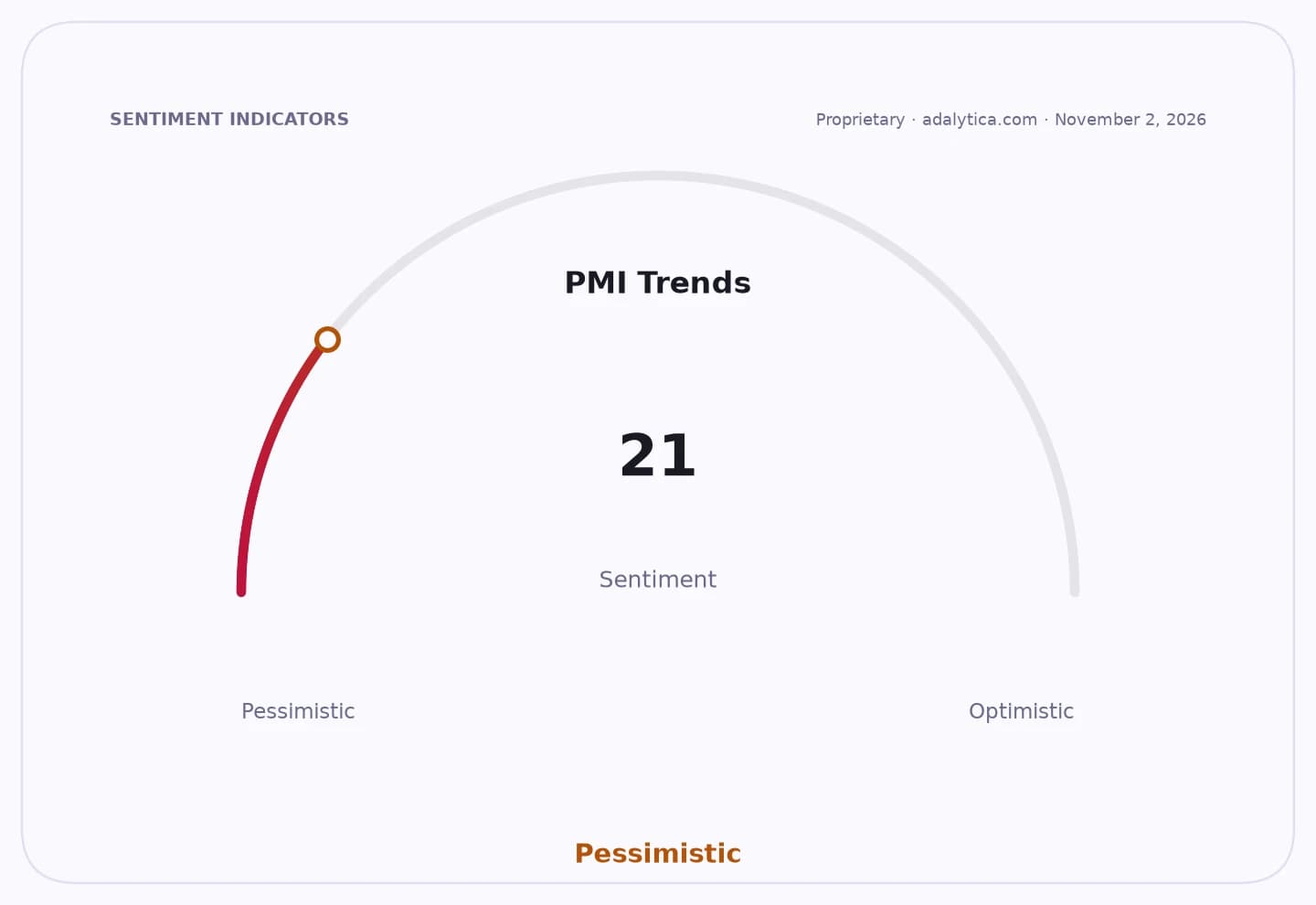
Sentiment Indicators
The decision underscores how quickly leverage can worsen market stress when sentiment turns. In South Korea, credit trading is a major feature of retail participation, and when stocks fall fast, collateral breaches can force brokerages to liquidate positions into a falling market, deepening losses for leveraged investors and potentially creating a feedback loop across the broader market.
Officials signaled the move is not the last line of defense. They said they are preparing additional stabilizing measures if volatility worsens, while continuing to monitor semiconductor shares, foreign policy developments and capital flows in real time.
The backdrop is a broader wobble in global risk assets as traders reassess the outlook for AI spending and regulation after the U.S. midterm elections. The S&P 500’s Adalytica trade snapshot still shows “neutral” sentiment, but “awareness” remains at an “extreme greed” reading of 95, suggesting crowded positioning could leave markets vulnerable to abrupt swings.
For investors, the exemption reduces near-term forced-selling risk in Korean broker stocks and leveraged retail accounts, but it also signals that authorities see enough stress to intervene. The next catalyst is whether the selloff stabilizes or broadens further, which would determine if regulators extend support or add new market measures.
| Entity | Gains | Losses |
|---|---|---|
| Korean leveraged investors | ▲Fewer forced liquidations | ▼Less protection discipline |
| Securities firms | ▲Lower margin-call pressure | ▼Higher credit risk exposure |
| South Korean equity market | ▲Short-term volatility relief | ▼Signals market stress |
| Regulators | ▲More time to stabilize markets | ▼Less room to stay hands-off |