South Korea’s industrial production and consumer spending stalled in July, signaling that a five-month surge powered by semiconductor investment was losing momentum and leaving a growth engine that had been supporting the broader economy less potent.
South Korea July industrial output stalls on chip slowdown
The latest figures matter because Korea’s rebound has increasingly rested on chips, export-linked manufacturing and the spending that follows it. If that cycle cools, it can ease pressure on overheating parts of the economy, but it also raises the risk that growth broadens more slowly than policymakers would like. In an economy still leaning on trade and capital expenditure, a pause in production and demand is more than a monthly wobble.
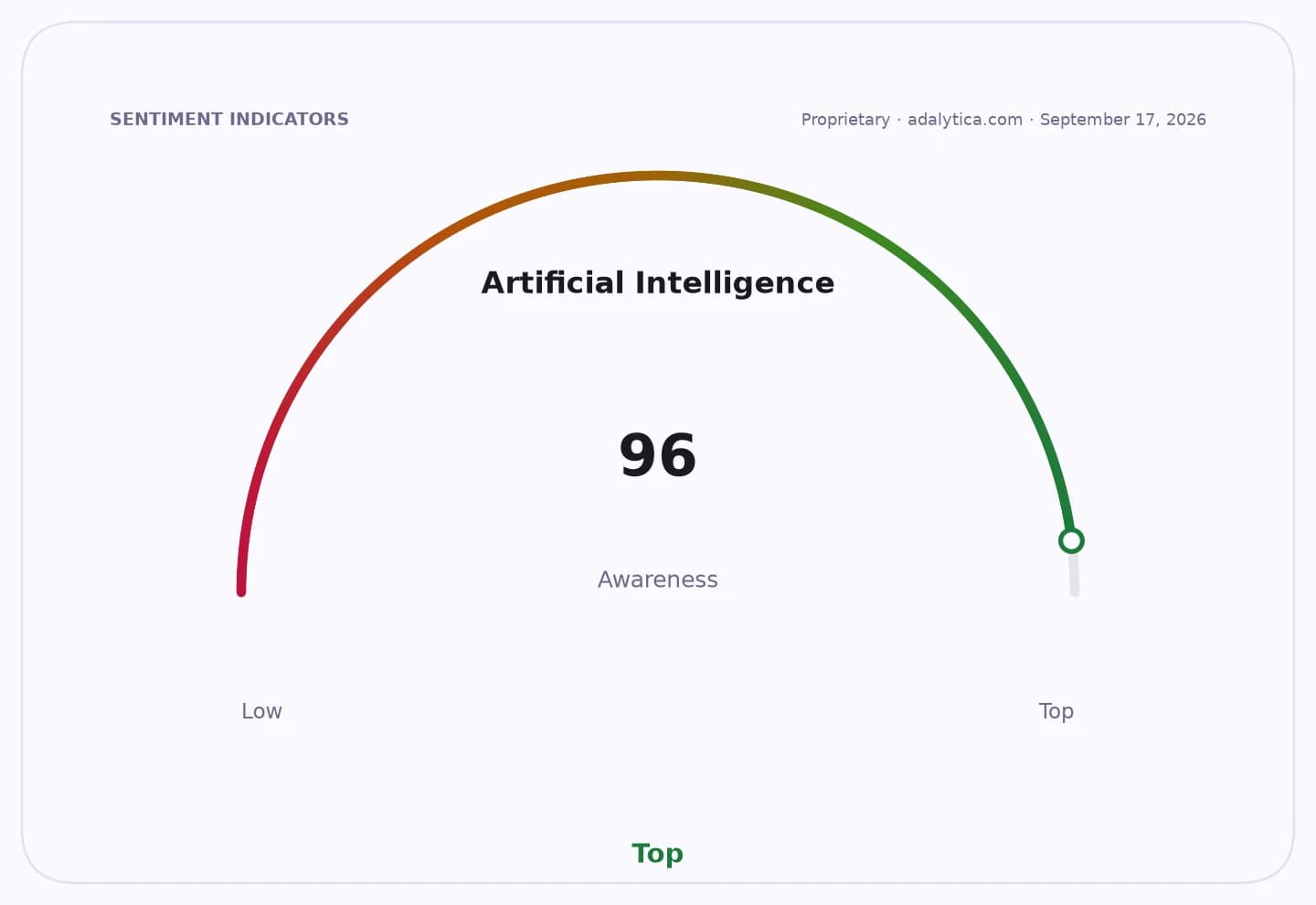
Sentiment IndicatorsⓘProprietary · adalytica.com · August 31, 2026
This is a snapshot — live sentiment, awareness and momentum for 130+ markets update continuously in the dashboard.Open AlphaPulse
Industrial output rose just 0.2% from June, according to the data context, while consumer prices excluding food and energy were little changed, up 0.22% from a month earlier. The combination suggests the July slowdown was not driven by an inflation shock but by a loss of momentum after a stretch of facility investment tied to the semiconductor boom. A forecast for August points to only a 0.33% gain in industrial production, implying the rebound, while still intact, may be modest.
That matters for the semiconductor complex, which has been the main beneficiary of the AI-led investment cycle. South Korea’s chipmakers, including Samsung Electronics and SK Hynix, have been central to the economy’s recovery, and the sector has supported strong shareholder returns and further fab spending. A pause in industrial activity does not end that story, but it does suggest that the pace of knock-on gains in domestic demand may be uneven.
The market backdrop also underlines how closely investors are linking Korea’s macro outlook to semiconductors. U.S.-listed chip stocks such as Nvidia, AMD, Intel and exchange-traded funds tracking the sector have all remained highly sensitive to capex and supply-cycle signals, while Korean assets have benefited from the sector’s strength and the won’s recovery. Any hint that the capex surge is maturing could matter for exporters, suppliers and currency traders alike.
For policymakers, the read-through is mixed. A softer July may help reduce inflation pressure and give the Bank of Korea more room to weigh support for growth, but it also reinforces the economy’s dependence on a narrow set of industries. For investors, the key question is whether the slowdown is just a pause after outsized semiconductor-driven investment or the first sign that domestic demand is failing to catch up with manufacturing strength.
What to watch next is whether August production and consumption re-accelerate or confirm that the chip-fueled lift is normalizing. If the sector keeps expanding, Korea’s growth model remains intact; if not, the economy could face a more prolonged stretch of subpar domestic momentum even as the semiconductor cycle stays strategically important.
| Entity | Gains | Losses |
|---|---|---|
| Semiconductor exporters | ▲Higher fab investment | ▼Slower domestic momentum |
| Korean consumers | ▲Easier inflation pressure | ▼Weak spending support |
| Policymakers | ▲Less price pressure | ▼Slower growth balance |
| Chip suppliers | ▲Continued capex demand | ▼Fading investment surge |