South Korea’s reported agreement with the United States on a more than $20 billion gas plant in Texas is a sign that the AI buildout is starting to reshape cross-border capital flows, energy infrastructure and the next leg of U.S. industrial investment.
South Korea Texas Gas Plant Deal Talks

If the deal holds, Seoul would be backing a 6.3-gigawatt gas-fired plant in Encinal, Texas, its first U.S. investment under last year’s trade pact with Washington. That makes the project about more than one power station: it is a financing bridge between Asian capital and the electricity needs of America’s AI data-center boom. In a market where compute is increasingly constrained by power availability, the winner is not just the chipmaker or cloud platform, but the owners of the fuel, pipes and generation assets that can deliver baseload capacity fast.
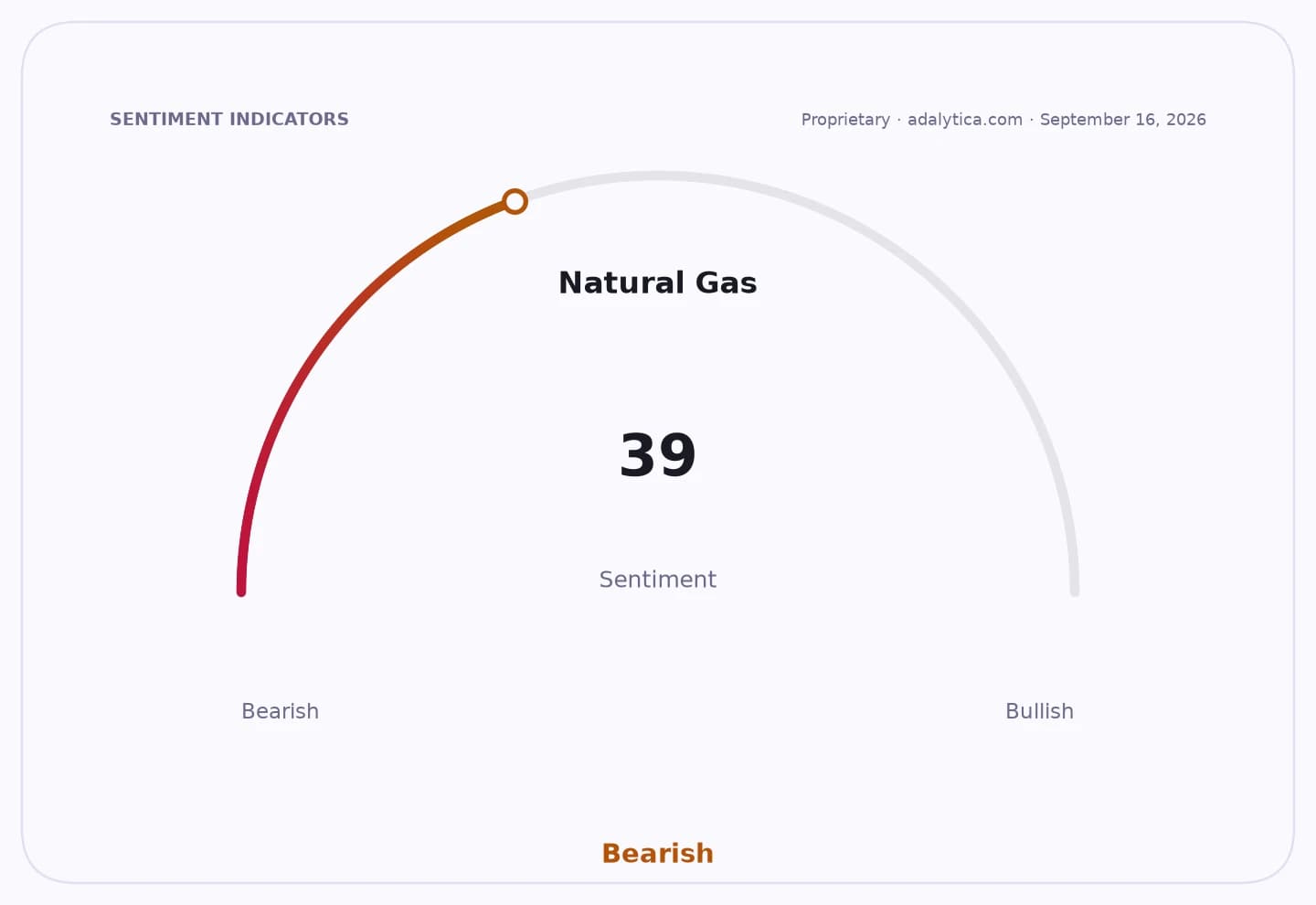
Sentiment IndicatorsⓘProprietary · adalytica.com · September 7, 2026
This is a snapshot — live sentiment, awareness and momentum for 130+ markets update continuously in the dashboard.Open AlphaPulse
The investment also matters because it sits inside a broader $350 billion pledge by South Korea to invest in the U.S. in exchange for tariff relief. That turns energy infrastructure into a trade-policy instrument as much as a corporate project. For Washington, it is a way to mobilize allied capital into domestic capacity at a time when power demand is rising faster than new generation can be built. For Seoul, it is a strategic bet that buying access to U.S. energy and industrial opportunity is worth the political and financial cost.
Markets are already telling you where the flow is likely to go. U.S. natural gas has firmed, while energy equities have been among the stronger large-cap performers this year. The sector is being pulled by a simple but powerful equation: AI data centers need reliable electricity, gas plants can be built faster than nuclear, and capital is chasing any asset that can monetize that gap. That is why the real upside is not only in the project itself, but in the surrounding ecosystem — gas producers, pipeline operators, LNG exporters and engineering contractors that stand to capture the volume growth.
The policy backdrop is not fully settled. South Korea’s Industry Ministry said media reports on the Texas project were inaccurate and that talks with Washington were still continuing, which means timing, financing structure and ownership are not locked in. But even that uncertainty reinforces the thesis: the strategic direction is clear, and the negotiations are about scale and allocation, not whether the AI power race exists. Seoul is also weighing other U.S. energy options, including a nuclear plant or an LNG project in Alaska, underscoring that this is becoming a multi-year capital deployment theme, not a one-off deal.
For investors, the message is straightforward. The market is underestimating how much AI will pull forward spending on power, gas infrastructure and related services, and how much of that spending will be financed by sovereign and quasi-sovereign capital looking for access to the U.S. growth machine. I believe the best way to play this is through the picks-and-shovels: U.S. gas infrastructure, LNG and midstream names, along with energy ETFs that are starting to reflect a structural re-rating rather than a cyclical trade.
The next catalyst is clarity on who funds and operates the Texas project, and whether it becomes a template for more allied capital tied to U.S. industrial and energy capacity. If that happens, the AI infrastructure trade broadens well beyond semiconductors and software. It moves into the real economy — and that is where the most asymmetric opportunity still sits.
| Entity | Gains | Losses |
|---|---|---|
| South Korean capital | ▲Access to U.S. growth assets | ▼Domestic capital outflow |
| U.S. gas and power developers | ▲Big new funding source | ▼Higher execution scrutiny |
| LNG, pipeline and midstream firms | ▲More demand for infrastructure | ▼None immediate |
| Power-hungry AI operators | ▲More electricity supply | ▼Higher long-term power costs |