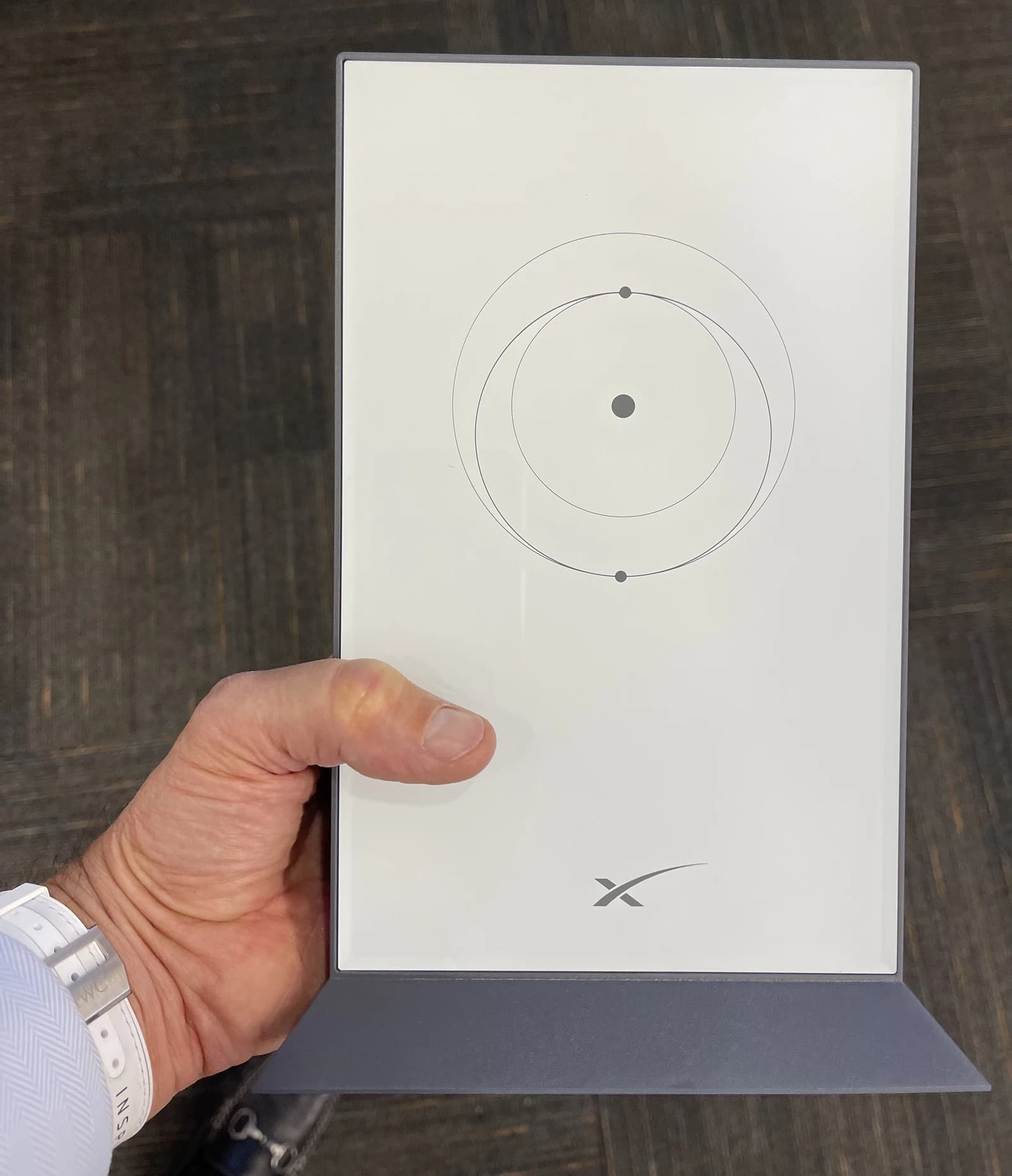
SpaceX’s move toward a direct challenge in U.S. mobile communications is rattling the country’s biggest wireless carriers while boosting the shares of companies that own the physical network backbone they rely on.
SpaceX Starlink Mobile rattles AT&T, Verizon

The prospect of Starlink Mobile — a satellite-based service that could eventually connect directly with handsets — is forcing investors to reassess the economics of terrestrial wireless, where AT&T, Verizon and Deutsche Telekom’s T-Mobile have long depended on control of spectrum, towers and network density. At the same time, American Tower and Crown Castle are being viewed as potential beneficiaries if carriers respond by leaning harder on infrastructure sharing, densification and in-building coverage to defend service quality.
Sentiment IndicatorsⓘProprietary · adalytica.com · October 17, 2026
This is a snapshot — live sentiment, awareness and momentum for 130+ markets update continuously in the dashboard.Open AlphaPulse
That shift matters because the satellite model is not simply a new distribution channel. If SpaceX can make mobile communications work at scale, it could capture traffic in remote areas, reduce some dependence on traditional coverage maps and pressure carrier pricing power at the margin. The bigger near-term effect, though, is defensive: incumbents may need to spend more to keep networks competitive, even as they face a fresh source of competition from a company with deep capital, a brand built on technical disruption and a vertically integrated satellite constellation.
The market reaction has reflected that split. AT&T and Verizon have come under pressure as investors weigh the risk that a future satellite-to-phone offering could erode customer stickiness or alter the economics of premium coverage. Verizon stock has been especially volatile, dropping sharply in early October before stabilizing, while AT&T has also given back ground after a midyear recovery. Technical readings on both stocks suggest the selloff has reset sentiment: Verizon remains below its 50-day moving average, while AT&T has only recently started to recover from deeply oversold RSI levels.
By contrast, American Tower has climbed to record territory, helped by the view that any new competitive threat to carriers could strengthen the case for more network investment rather than less. Crown Castle has also benefited from the same logic, with investors treating tower and small-cell assets as infrastructure that becomes more valuable when carriers need to densify networks, improve in-building service and maintain coverage against an unconventional rival. The logic is simple: if wireless operators must add capacity, they still need the real estate and equipment footprint these companies provide.
There are, however, important limits to the satellite threat. Satellites can blanket large geographies, but they still face capacity constraints when data usage rises, and meaningful service quality will depend on how well satellite systems connect with terrestrial infrastructure and at what cost. That makes a full-scale replacement of mobile networks unlikely in the near term. For now, the more plausible outcome is a hybrid model in which satellite services fill coverage gaps, while towers, fiber backhaul and small cells remain essential to handle traffic in dense urban and suburban markets.
For investors, the key question is whether SpaceX’s entry accelerates a race to defend share or simply enlarges the market for network infrastructure. In the bullish case for towers, Starlink Mobile reinforces the need for more resilient, layered networks and could extend a capex cycle that benefits American Tower and Crown Castle. In the bearish case for carriers, the threat could weigh on valuations if markets start to price in slower subscriber growth, weaker pricing or higher spending needs just as competition from fixed wireless and fiber is already reshaping the sector.
Either way, SpaceX has turned mobile communications into a new battleground, and the first market to respond appears to be the stock market. The next catalysts will be regulatory approvals, technical milestones and any signs that carriers respond with partnerships, spectrum-sharing strategies or fresh investment in network quality.
| Entity | Gains | Losses |
|---|---|---|
| American Tower | ▲Higher tower demand | ▼Less network scarcity premium |
| Crown Castle | ▲More densification spending | ▼Pressure if carrier capex slows |
| AT&T | ▲Coverage gap defense if satellites stay niche | ▼Valuation pressure from new competition |
| Verizon | ▲Network quality story if capex rises | ▼Share pressure from Starlink Mobile risk |