India’s telecom industry is using this week’s India Mobile Congress to press for the next phase of growth, with Prime Minister Narendra Modi set to inaugurate the event on Oct. 8 and government announcements, partnerships and investment talks expected to follow.
India Mobile Congress Opens with 6G and Satellite Focus
That matters because the four-day conference in New Delhi has become a key policy-and-business venue for a sector that sits at the center of India’s digital economy. This year’s theme, “Scale Without Boundaries,” points to a focus on 6G, AI-native networks, satellite communications and digital infrastructure — all areas that could determine where the next round of capital spending flows.
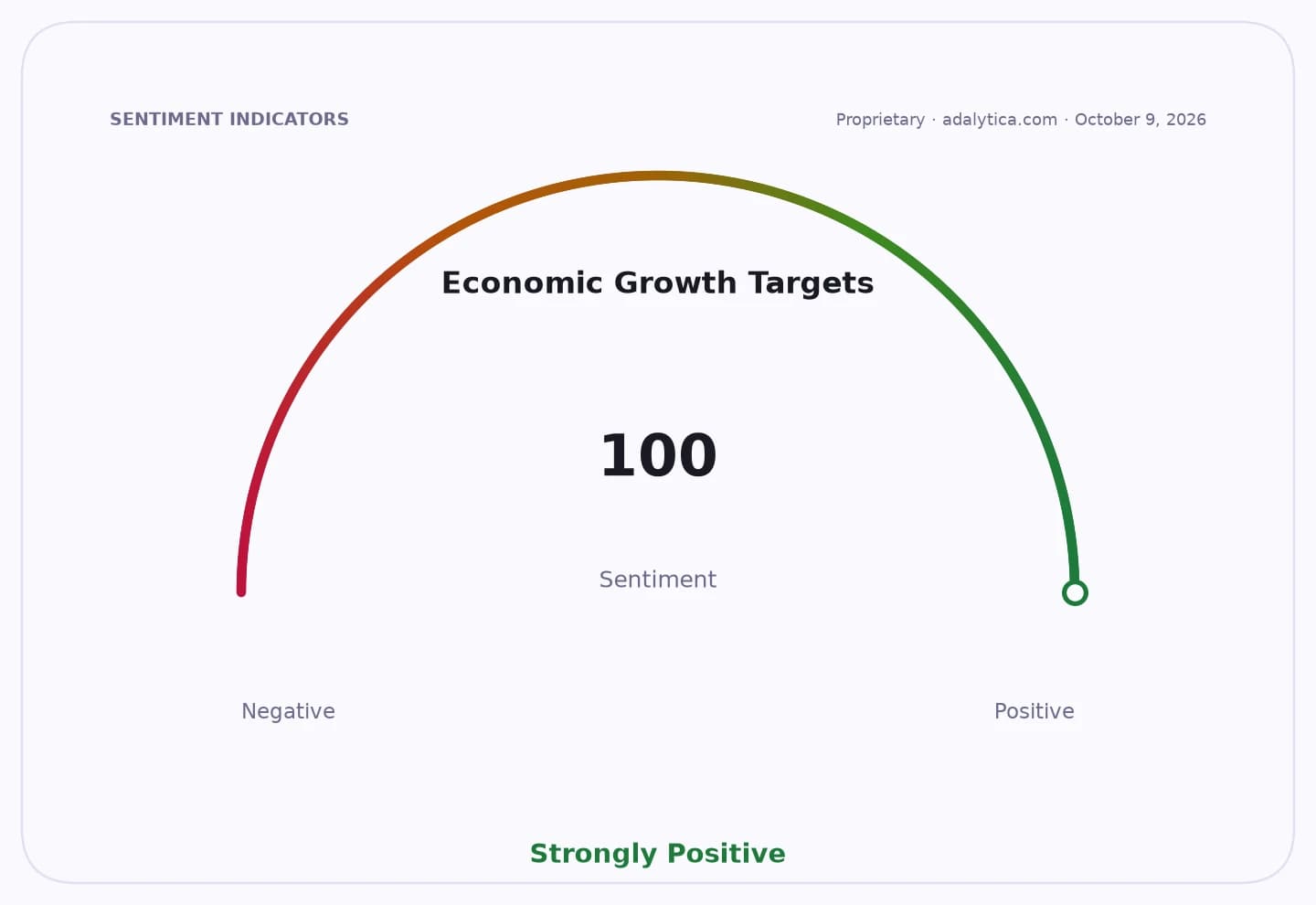
Sentiment IndicatorsⓘProprietary · adalytica.com · October 6, 2026
This is a snapshot — live sentiment, awareness and momentum for 130+ markets update continuously in the dashboard.Open AlphaPulse
The timing also matters for investors watching India’s technology and telecom pipeline. The event brings together Reliance Jio chairman Akash Ambani, Bharti Airtel Chairman Sunil Bharti Mittal and Aditya Birla Group Chairman Kumar Mangalam Birla, alongside senior officials from the Department of Telecommunications, C-DOT and global vendors including Qualcomm, Ericsson, GSMA and Intel.
Starlink Business Operations Vice President Lauren Dreyer is among the speakers on the opening day, underscoring how satellite broadband remains part of the policy conversation as India weighs ways to extend connectivity beyond dense urban markets. Sessions across the forum will cover 6G, cloud and edge computing, cybersecurity, semiconductors, network APIs and intelligent radio access networks.
The exhibition floor is likely to be the bigger commercial draw, with companies expected to showcase 5G and 6G systems, AI tools, semiconductors and satellite-use cases. For telecom operators and equipment makers, the immediate value is in signaling future demand; for startups, the ASPIRE program is aimed at turning deep-tech prototypes into commercial deals and funding.
For markets, the broader takeaway is that India is still trying to convert its scale in mobile usage into a larger domestic technology stack — from networks to chips to cloud infrastructure. Any policy signals on spectrum, satellites or digital infrastructure would be closely watched by operators, vendors and investors looking for the next capital-spending cycle.
The next catalyst is the set of government announcements and partnership deals expected once Modi opens the event, with the clearest read-through likely for Indian telecom stocks, global network suppliers and satellite broadband players.
| Entity | Gains | Losses |
|---|---|---|
| Reliance Jio, Bharti Airtel, Vodafone Idea | ▲Policy visibility, partnership opportunities | ▼Near-term capital spending pressure |
| Qualcomm, Ericsson, Intel | ▲Demand outlook for network gear and chips | ▼Pricing and competition pressure |
| Starlink / satellite broadband players | ▲Regulatory and commercial opening | ▼Incumbent terrestrial operators |
| Startup exhibitors | ▲Investor access, commercialization boost | ▼Firms lacking deep-tech scale |