Spaniards are set to spend an average of as much as 316 euros per person this Black Friday, but they are buying fewer items and paying more for each basket as inflation, higher shipping costs and tighter household budgets reshape the shopping event.
Spain Black Friday spending rises as shoppers buy less
That puts Spain’s biggest retail promotion in the middle of a broader squeeze on consumers, with estimates for average spending ranging from 175 euros to 316 euros depending on the survey. The higher ticket reflects not a rush to splurge, but shoppers using Black Friday to spread Christmas spending and lock in purchases before December prices and delivery costs pile up.
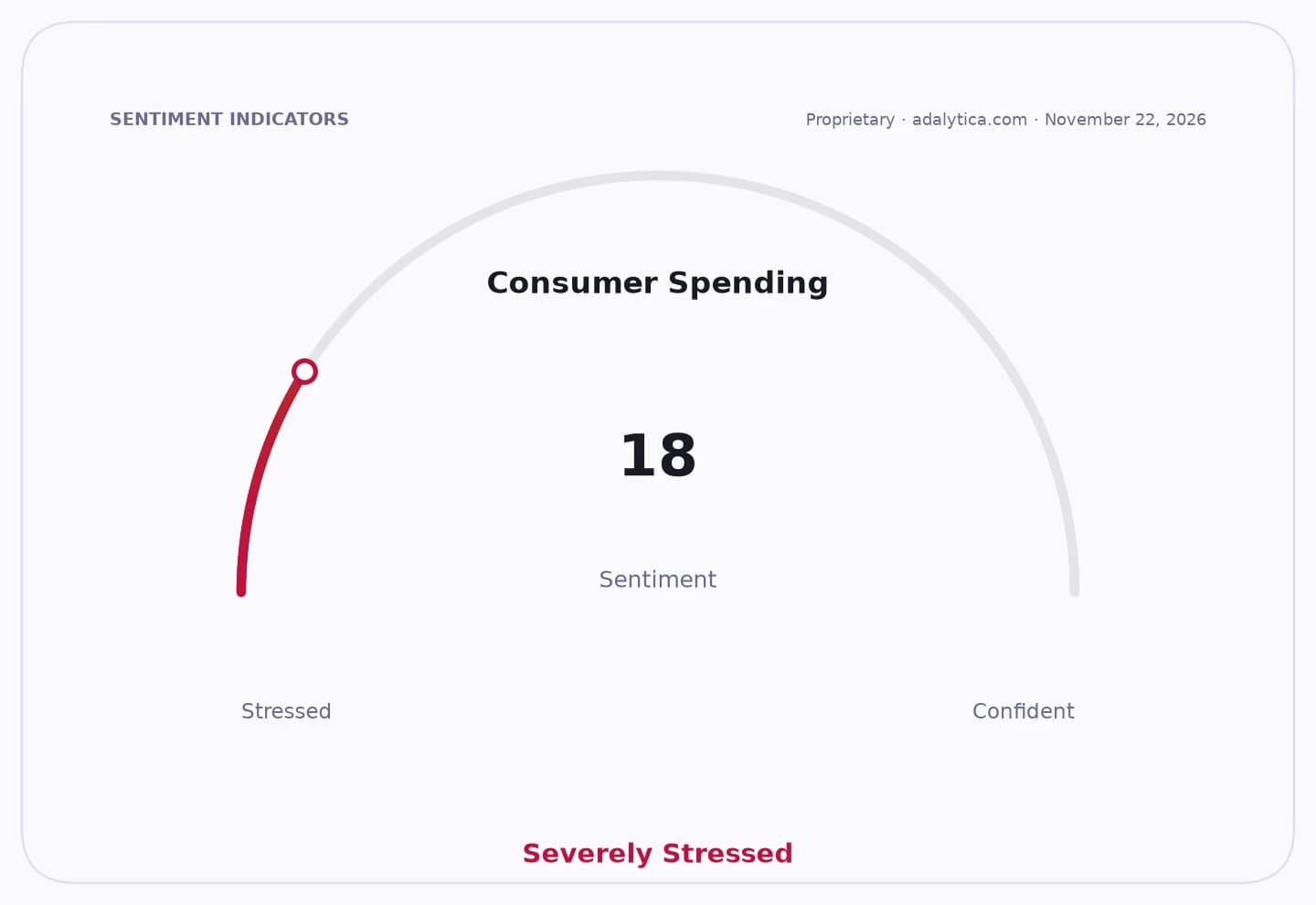
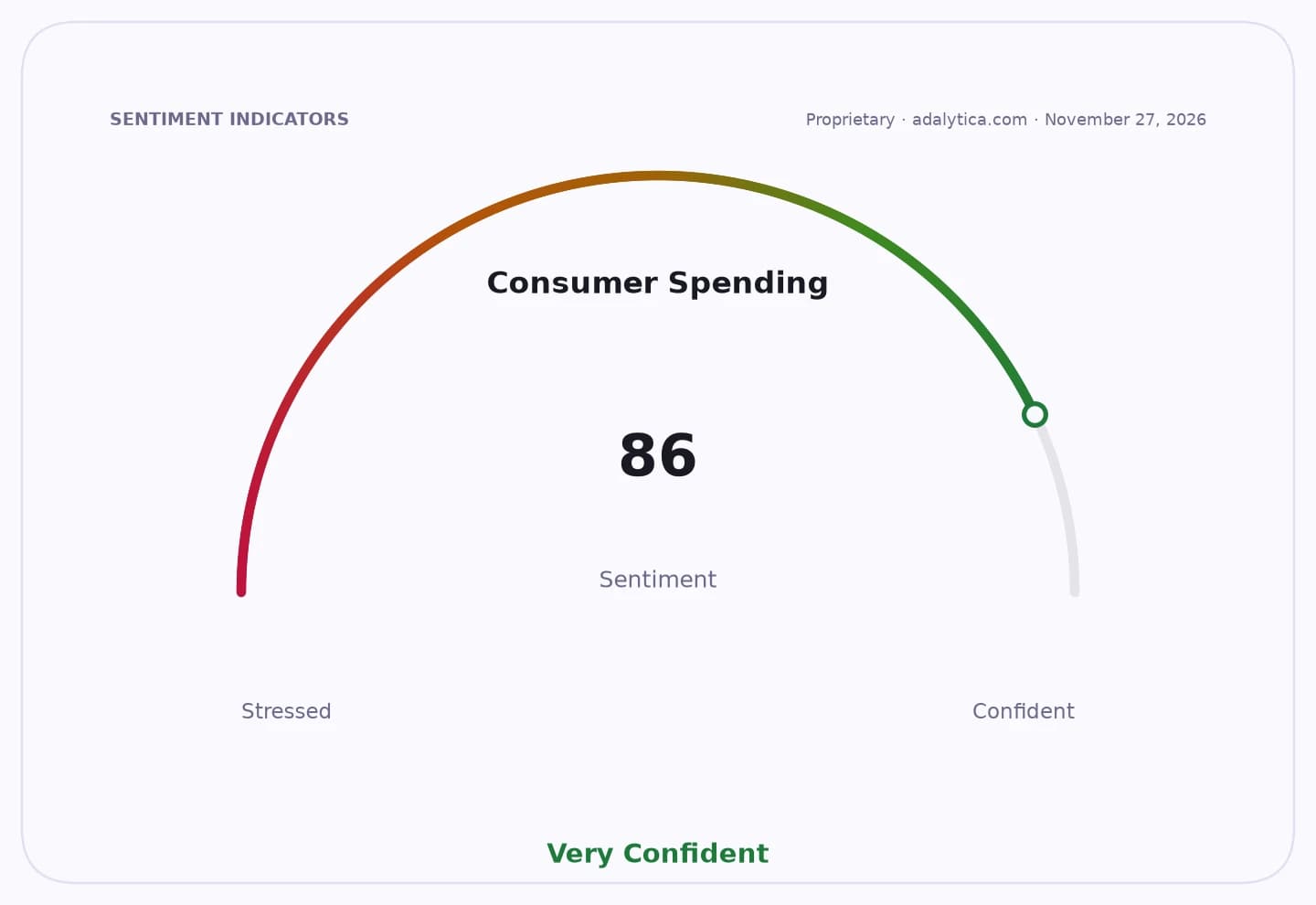
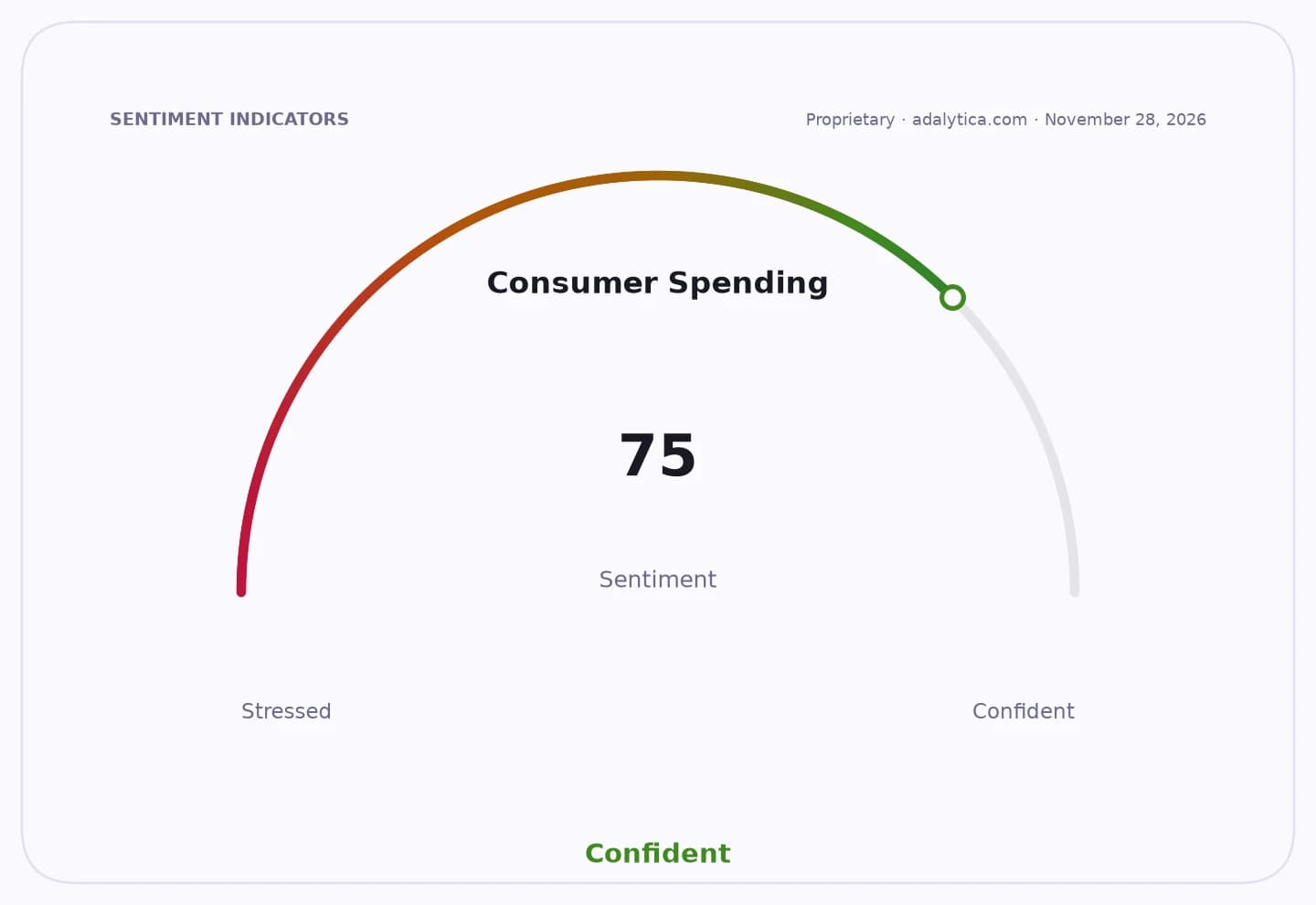
Sentiment Indicators
The shift matters because it shows demand is still there, but consumer behavior is changing fast. KPMG says 88% of Spaniards cite the cost of living as their main concern, and that has tilted the market toward more deliberate buying: 61% of consumers now describe themselves as reflective shoppers, well above the 36% who say they buy impulsively.
Black Friday is also becoming a test case for how technology changes retail pricing power. Four in 10 consumers plan to use artificial intelligence tools to compare prices and check whether discounts are genuine, a sign that skepticism over promotions is rising after repeated warnings that some retailers inflate prices ahead of the sales window to make markdowns look bigger than they are.
For retailers, that means conversion may come under pressure even if gross sales hold up. Consumers are visiting more stores, comparing more offers and buying fewer products, which can help large chains with scale and logistics while hurting merchants that rely on pricing opacity or impulse purchases.
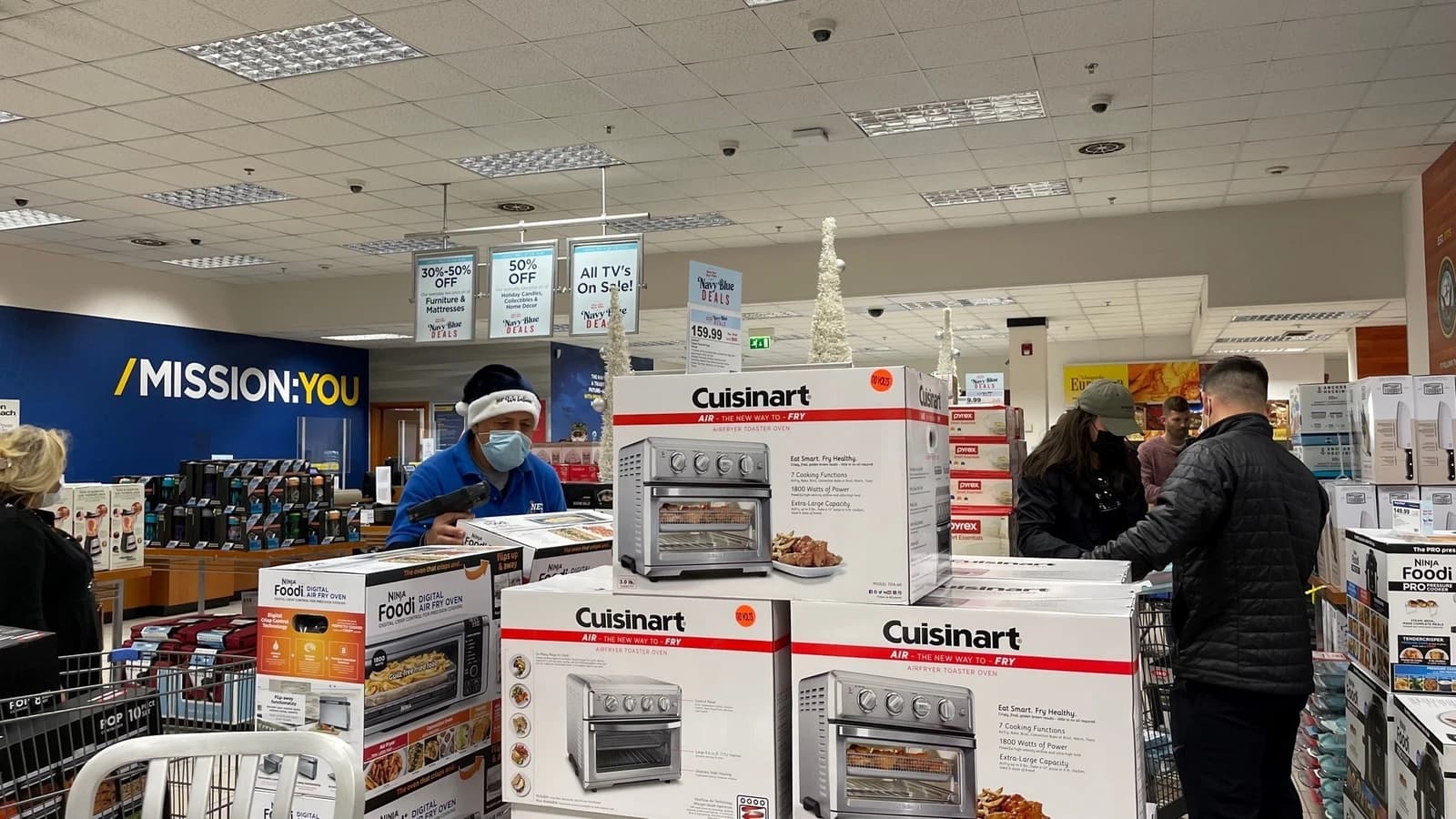
The physical store is regaining some ground, though online channels still dominate categories such as fashion, home goods and electronics. Cetelem says in-store buying has climbed to nearly 15% of total purchases, up 3.8 percentage points from 2025, suggesting shoppers still want to touch products and avoid delivery surprises when budgets are tight.
The campaign is also a jobs event for logistics and retail. Spain’s Asempleo expects 1.3 million temporary placement contracts, translating into about 200,000 hires in commerce and transport, while UNO sees more than 127 million shipments, up 2.4%, and logistics employment reaching 1.201 million workers.
For investors, the read-through is constructive for retailers and parcel operators that can manage volume without sacrificing margins, but less friendly to merchants exposed to discounting or higher fulfillment costs. With Black Friday feeding straight into Christmas and January sales, the real question is whether Spanish consumers can keep spending at this pace without the inflation squeeze forcing a sharper pullback later in the season.
| Entity | Gains | Losses |
|---|---|---|
| Large retailers | ▲Higher traffic and sales volume | ▼Margin pressure from discounts |
| Logistics and parcel firms | ▲More shipments and seasonal hiring | ▼Cost inflation and delivery strain |
| Budget-conscious shoppers | ▲Better price comparisons and delayed gifting | ▼Less pricing power against inflation |
| Smaller merchants | ▲Limited benefit from channel mix | ▼Harder to compete on price and trust |