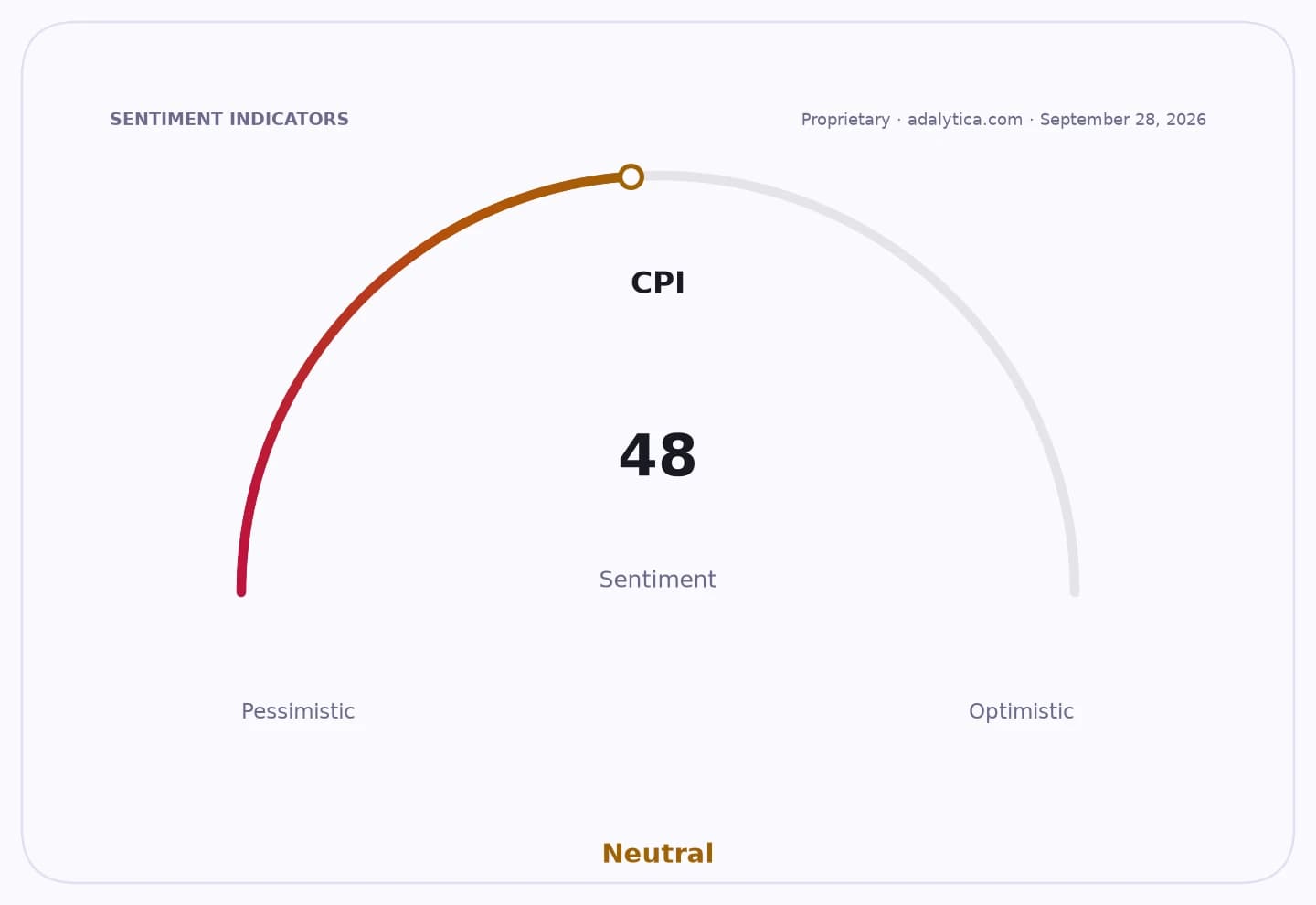
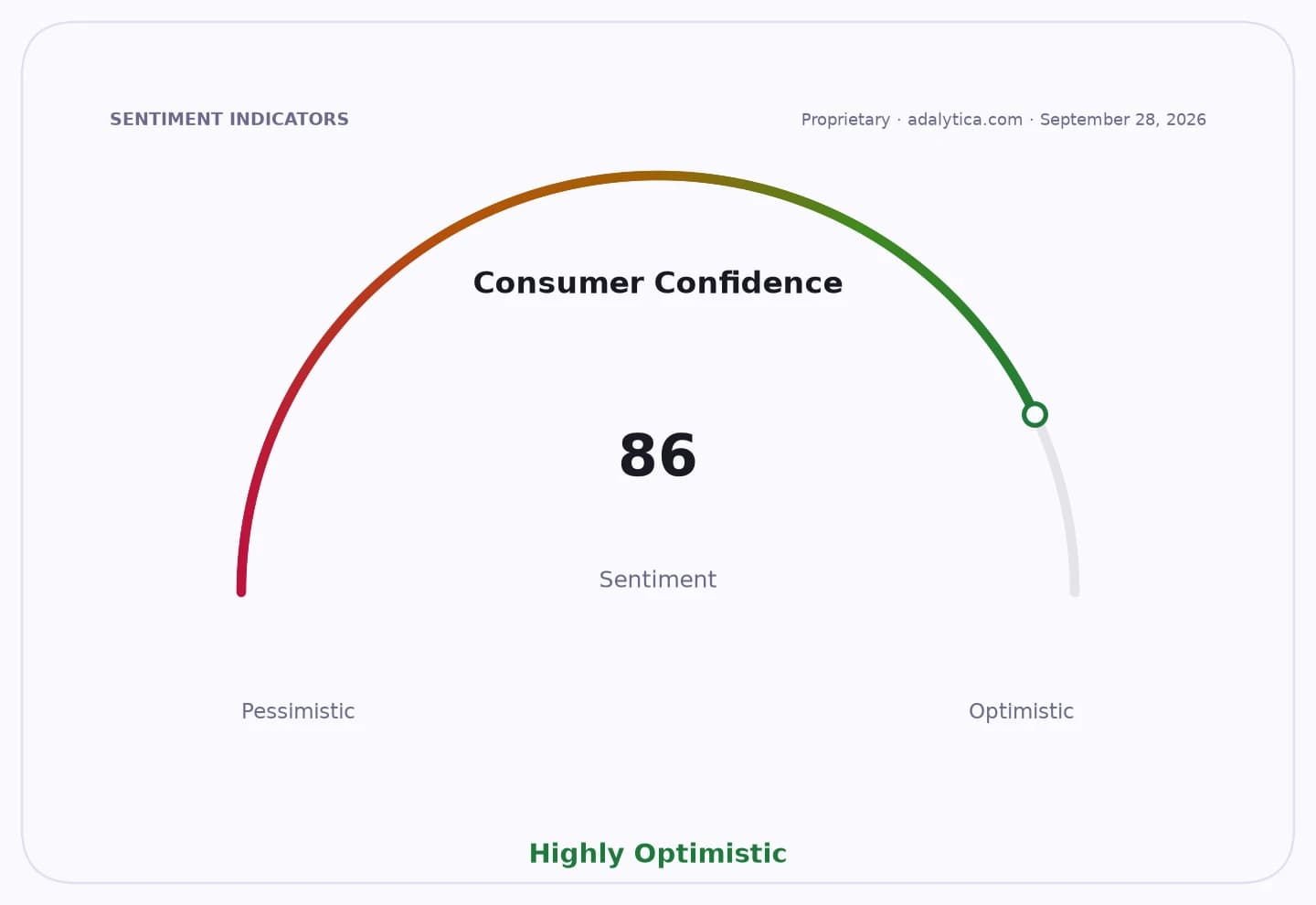
Spain is set to grow faster than the OECD expected, but the bigger message for markets is that inflation will stay sticky enough to keep the country at the top of the eurozone price pile through 2027.
Spain growth outlook upgrades, inflation stays sticky
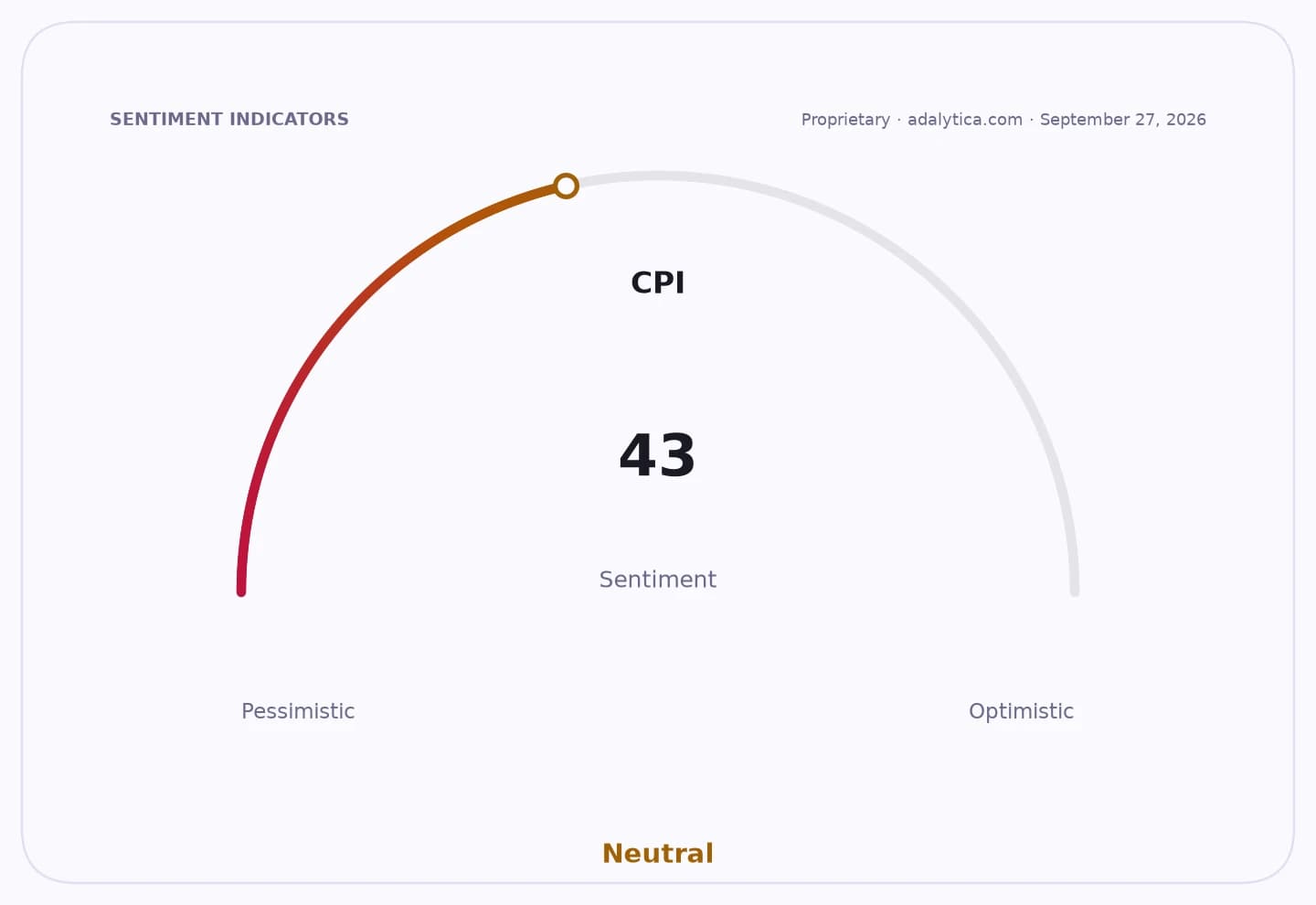
The Paris-based lender lifted Spain’s 2026 growth forecast by four-tenths of a point, a meaningful upgrade at a time when much of Europe is still struggling for traction. Yet the same outlook also warns that Spain will remain the euro area’s inflation outlier for longer than investors may want, a mix that is good for nominal activity but less comforting for consumers, policymakers and duration-sensitive assets.
Sentiment IndicatorsⓘProprietary · adalytica.com · September 27, 2026
This is a snapshot — live sentiment, awareness and momentum for 130+ markets update continuously in the dashboard.Open AlphaPulse
That combination matters because Spain is one of the bloc’s brighter growth stories, but not on the kind of price path that lets the European Central Bank relax quickly. Inflation that remains elevated even as growth improves tends to support revenues for banks, retailers and domestic cyclicals, while also keeping pressure on household purchasing power and real wage gains. It also complicates the ECB’s easing calculus if Spain’s price dynamics continue to diverge from the core eurozone.
The market backdrop reflects that split. The Spain ETF EWP has climbed to $61.20, well above its 200-day moving average of $56.87 and near the upper end of its recent range, while shares of Banco Santander and BBVA have both pushed higher over the past several months. Santander last traded at $14.42 and BBVA at $28.87, with both stocks sitting above their 200-day moving averages. That tells you investors are already leaning into the upside from stronger Spanish nominal growth, but they have not yet fully priced the drag from stubborn inflation and potentially tighter-for-longer financial conditions.
For banks, that is the key trade. Faster growth supports loan demand and reduces credit stress, but persistent inflation can keep rates higher for longer and slow the pace of margin normalization. Santander and BBVA also benefit from exposure to Spain’s domestic economy and broader European lending cycle, making them direct proxies for whether the OECD’s upgrade turns into a durable earnings tailwind.
There is a broader macro message here too: Spain’s relative outperformance looks increasingly like a story of resilience, not relief. If growth improves while inflation remains the highest among major eurozone economies, the country may continue to outperform on headline GDP while still leaving policymakers with unfinished business on prices. For investors, that means Spain stays attractive as a growth-and-income market, but the trade is better in banks and domestic cyclicals than in long-duration assets that need falling inflation to justify higher multiples.
The main takeaway is simple: the OECD’s upgrade strengthens the bull case for Spanish equities, but the inflation warning says the real opportunity is selective. Stay with the beneficiaries of nominal growth, especially Spain’s banks and index-linked domestic plays, rather than chasing the country as a broad macro bet.
| Entity | Gains | Losses |
|---|---|---|
| Spanish banks | ▲Stronger loan growth | ▼Sticky inflation if rates stay high |
| EWP Spain ETF | ▲Better GDP outlook | ▼Eurozone inflation overhang |
| Banco Santander | ▲Domestic growth tailwind | ▼Margin pressure from policy uncertainty |
| BBVA | ▲Faster Spanish activity | ▼Higher-for-longer rate risk |