A rare rebuke from Spain’s central bank over a mortgage collection blunder is a small case with a bigger message: lenders’ consumer practices remain under the microscope at a time when housing finance is politically sensitive and investors are rewarding banks that can grow without inviting legal trouble.
Spain Mortgage Slip Signals Bank Conduct Risk
The Bank of Spain’s action, described as a slap on the wrist, centers on an entity that suddenly collected 52 mortgage installments from a resident of Alicante. On its face, that sounds like an isolated operational failure. Economically, it matters because mortgage servicing is where banks meet households in the real world, and errors there can become costly through complaints, penalties, reputational damage and tighter oversight. For a sector that depends on trust, especially in home lending, even a modest sanction can have an outsize effect on how regulators and banks behave next.
Sentiment IndicatorsⓘProprietary · adalytica.com · July 26, 2026
This is a snapshot — live sentiment, awareness and momentum for 130+ markets update continuously in the dashboard.Open AlphaPulse
For investors, the headline is less about the size of the punishment than the reminder that mortgage books are not just yield-generating assets; they are also compliance liabilities. In Spain, where housing affordability and lending standards are politically charged, banks cannot afford to treat servicing mistakes as back-office noise. That is particularly relevant for large lenders such as Banco Bradesco’s tickers in the market data context are not the focus here; the broader banking takeaway is that consumer-protection risk can hit profitability indirectly through fines, remediation and slower growth in mortgage origination.
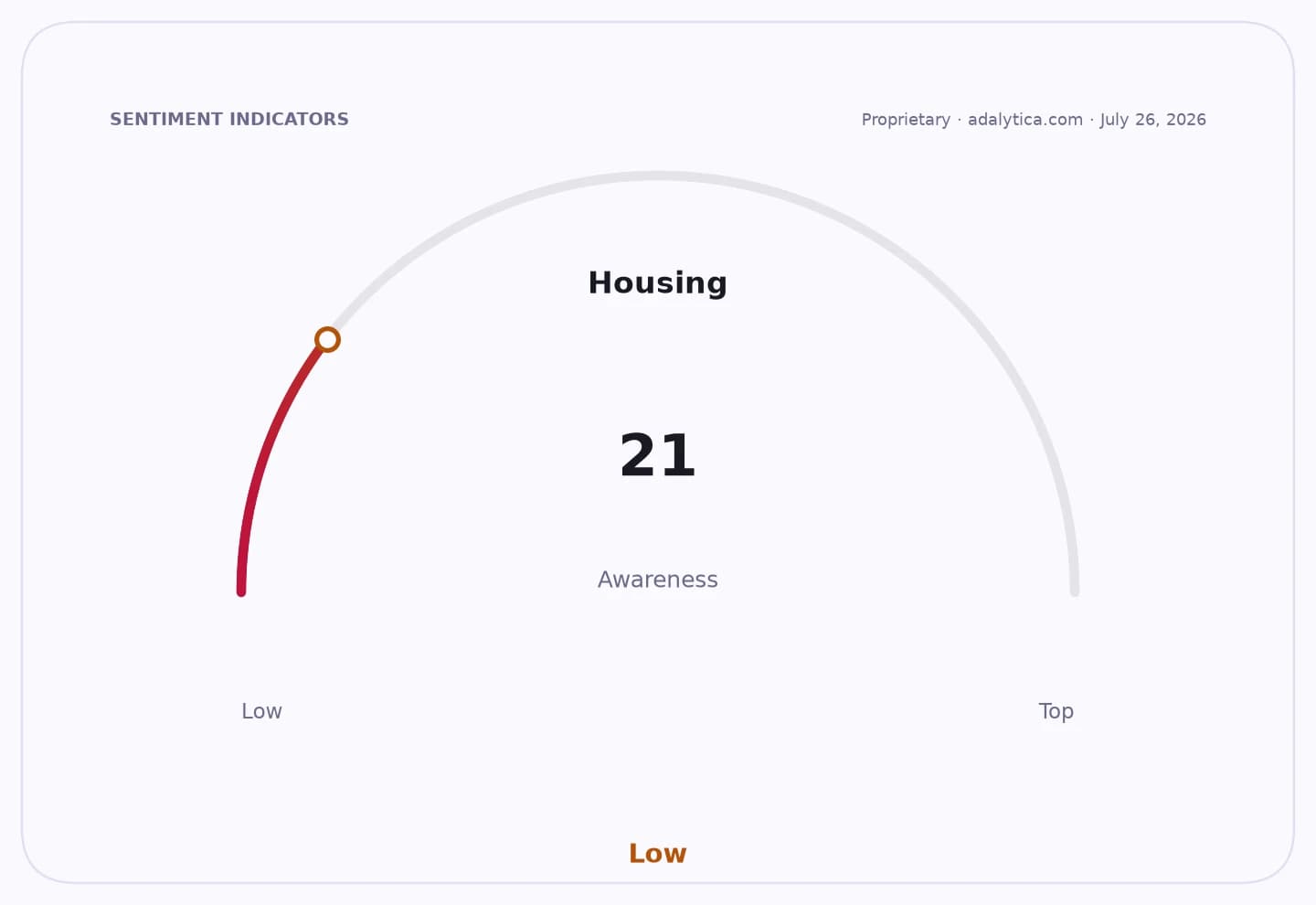
The wider housing backdrop helps explain why this matters now. Mortgage policy is being pushed in a more interventionist direction, with governments keen to keep credit flowing while avoiding excesses that could stoke inequality or inflate property prices. Adalytica’s Housing and Rent Inflation Sentiment gauge is flashing extreme greed, underscoring how overheated housing narratives can become before regulators lean in. In that kind of environment, banks that show discipline on underwriting, disclosures and collections are better positioned than peers that chase volume and then clean up mistakes later.
Housing vs BBDadalytica.com
Explore this data interactively — full history, time series and cross-market comparisons.Open AlphaPulse
There is also a second-order market implication. Bank stocks tend to rerate not only on net interest income but on the perceived durability of earnings. A lender that can expand mortgages while avoiding conduct risk deserves a higher-quality multiple than one that is forever paying for operational lapses. That is why investors should view this sort of enforcement action as a governance signal, not just a local consumer dispute.
The long-term takeaway is straightforward: mortgage growth remains attractive, but only for banks that can pair scale with rigor. For patient investors, that means favoring diversified lenders with strong controls, stable funding and a history of managing regulators well. This is worth watching, because in banking, the cleanest compounding often comes from avoiding the mistakes that never make the loan book look bigger, but can quietly make it much less valuable.
| Entity | Gains | Losses |
|---|---|---|
| Borrower / consumers | ▲Better scrutiny | ▼Less tolerance for errors |
| Regulators | ▲Stronger oversight | ▼More pressure to act |
| Banks with strong controls | ▲Cleaner franchise value | ▼— |
| Banks with weak servicing | ▲— | ▼Fines and reputational risk |