Five positions at Spain’s public procurement watchdog have never been filled, a small but telling reminder that governments can struggle to staff even the offices meant to police them.
Spain procurement watchdog has five unfilled posts
That matters because the issue is not just administrative. The Independent Office of Regulation and Supervision of Public Procurement, known as Oirescon and housed under the Finance Ministry, is supposed to help oversee a system where public contracts move billions of euros and where weak supervision can mean slower decisions, less transparency and, in the worst cases, poorer value for taxpayers. When vacancies linger for years, the risk is not headline-grabbing scandal so much as the quieter erosion of capacity.
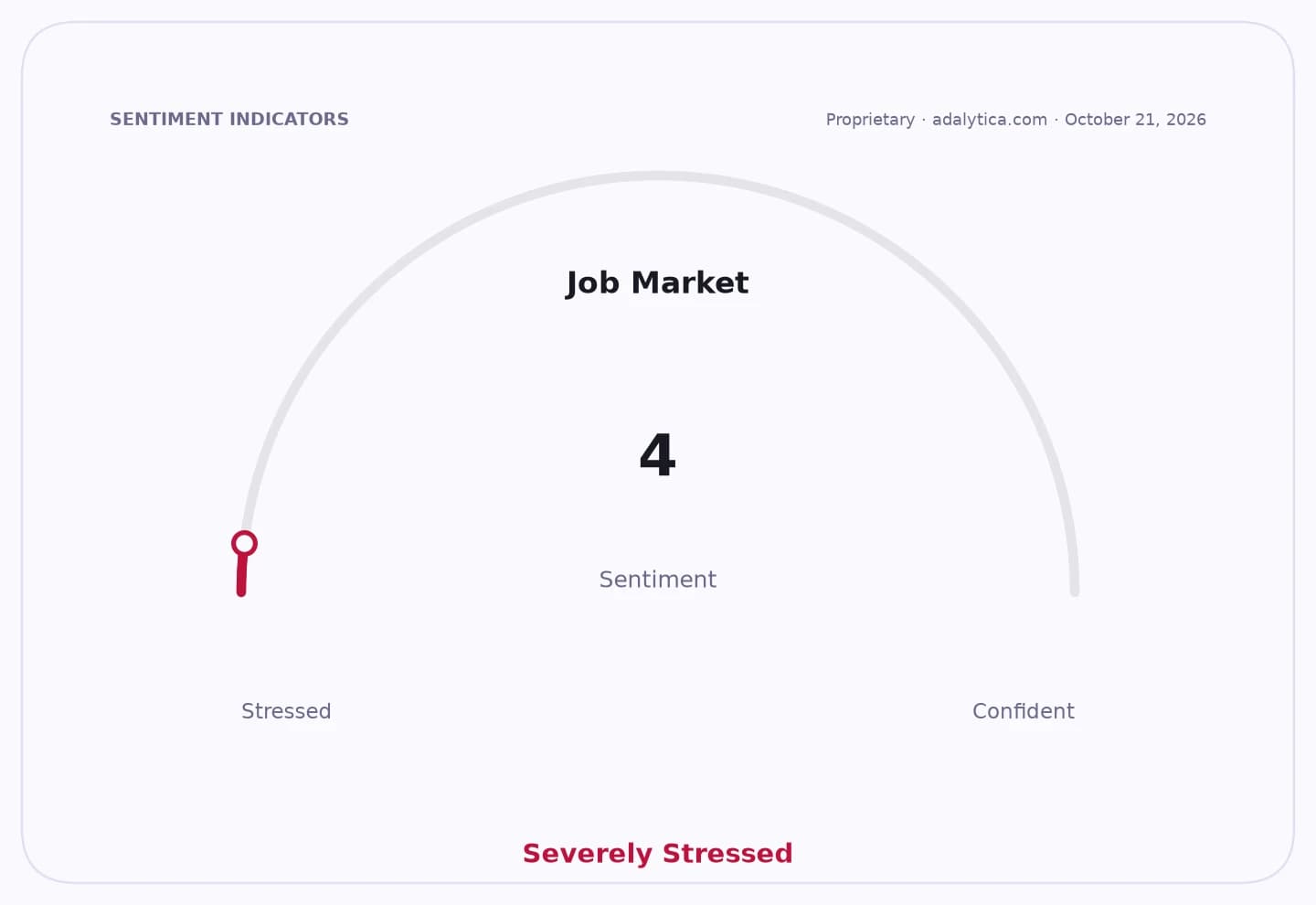
Sentiment IndicatorsⓘProprietary · adalytica.com · October 21, 2026
This is a snapshot — live sentiment, awareness and momentum for 130+ markets update continuously in the dashboard.Open AlphaPulse
According to a resolution signed on Oct. 6 by Oirescon president María Luisa Araújo Chamorro, five posts in the agency’s staffing table have never once been occupied despite repeated attempts to fill them through competitive selection or temporary appointments. The unfilled roles include a technical adviser, two unit heads and three secretary posts spread across the divisions that handle public procurement regulation, supervision and contract analysis.
The document does not say why the roles have remained empty, leaving open the possibility that pay, hiring rules or a shortage of qualified applicants are to blame. But whatever the reason, the fact that the vacancies have persisted suggests a broader civil-service problem: some public bodies may be formally staffed on paper while still operating below full strength in practice.
That distinction matters for investors because efficient public administration is part of the investment climate. Procurement affects how quickly infrastructure gets built, how cleanly state contracts are awarded and how reliably public spending turns into economic activity. For companies that bid on government work, a weak or understaffed regulator can create uncertainty. For bond investors and long-term holders of Spanish assets, persistent bottlenecks are a reminder that institutional quality still shapes fiscal outcomes over time.
Oirescon said 33 career civil servants were working there as of Sept. 23, with most posts filled by a mix of open competition, temporary assignment and new hires. Even so, the office’s own records show 15 vacancies overall, including 10 posts that had been filled at some point but had since gone empty again. Some had last been occupied as recently as 2023, while others date back further.
The agency says it supervises public procurement and analyzes how the system is functioning. It has not shown that the vacancies have caused delays or failures, but it also has not ruled out operational strain. That leaves the story where investors should always pay attention: not in the drama of a single empty desk, but in the compounding effect of administrative weakness.
For long-term investors, the lesson is simple. Countries that cannot attract and retain talent in the most technical parts of government tend to pay for it later through slower execution, less effective oversight and lower productivity. The five “cursed” posts at Oirescon may look minor. They are also exactly the kind of small institutional leak that, over years, can turn into a real economic drag.
| Entity | Gains | Losses |
|---|---|---|
| Oirescon management | ▲Clears the record | ▼Exposes staffing weakness |
| Taxpayers | ▲More transparency if fixed | ▼Weaker procurement oversight |
| Contractors | ▲Faster awards if staffed | ▼More uncertainty now |
| Spain’s Finance Ministry | ▲Pressure to improve hiring | ▼Credibility from vacancies |