Spain’s Treasury raised 6.27 billion euros in a medium- and long-dated debt sale on Thursday while pushing borrowing costs higher, a sign that demand remains strong even as the state pays more to lock in funding.
Spain Treasury Raises 6.27 Billion in Bond Sale
That matters because Europe’s sovereign borrowers are still navigating a market that is no longer delivering ultra-cheap money. Higher yields raise the cost of financing deficits, but Spain’s ability to attract 13.84 billion euros of bids — more than double the amount sold — shows investors are still willing to absorb supply when they’re paid enough.
Sentiment IndicatorsⓘProprietary · adalytica.com · September 3, 2026
This is a snapshot — live sentiment, awareness and momentum for 130+ markets update continuously in the dashboard.Open AlphaPulse
The Treasury sold 2.06 billion euros of three-year bonds at a marginal yield of 3.085%, the highest since November 2023, and 1.58 billion euros of five-year paper at 3.260%. It also placed 1.996 billion euros of 10-year bonds at 3.737%, above the prior auction, and 638.7 million euros of 15-year inflation-linked debt at a record marginal yield of 1.828% for that line.
For investors, the key takeaway is that Spanish debt still clears comfortably, but only with richer compensation. That is bullish for income buyers who want duration and real-yield protection, and it reinforces the view that sovereign paper can still compete for capital in a world where central banks are not backstopping every rally.
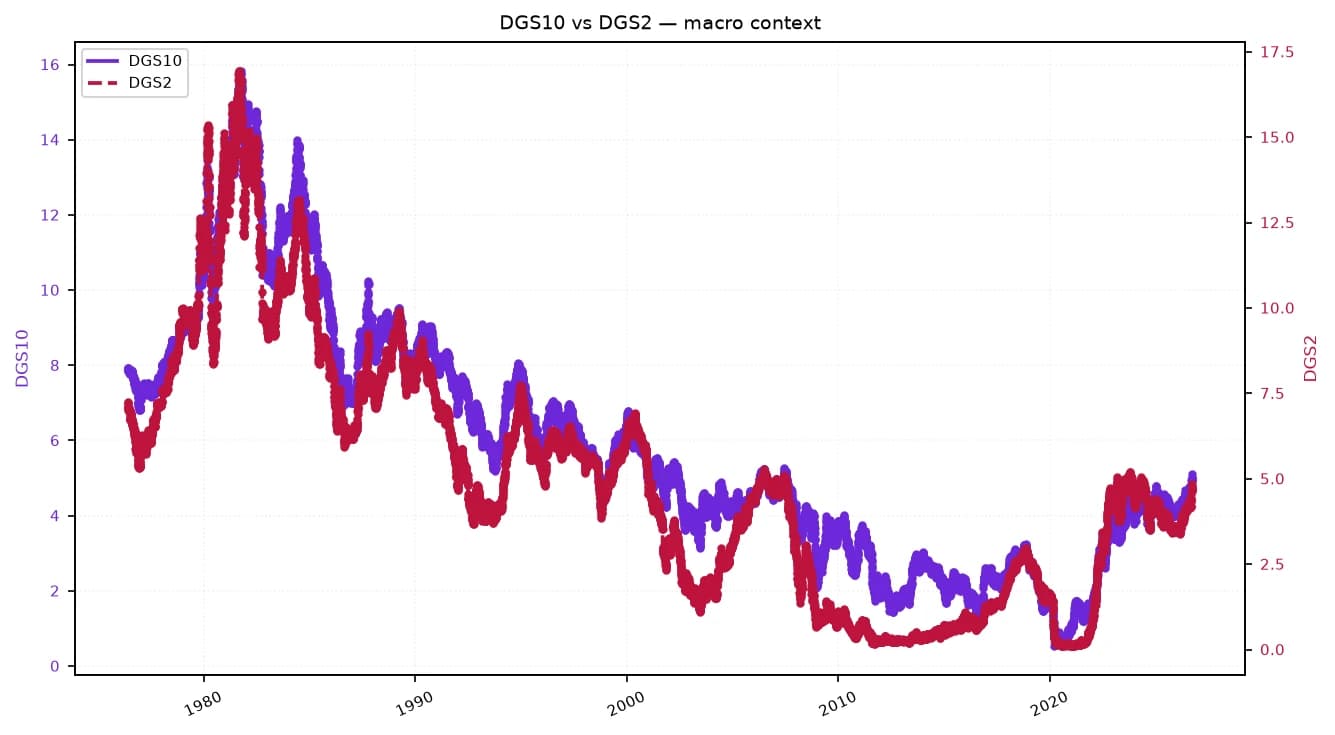
The backdrop remains constructive for government bonds more broadly, even if prices are under pressure. U.S. Treasury yields are sitting near the top of recent ranges, with the 10-year around 4.8% and the 2-year near 4.4%, while long-duration bond funds such as TLT are trading below both their 50-day and 200-day moving averages. That combination points to a market that wants yield, not price appreciation.
Spain’s auction also fits a wider fiscal narrative investors should not ignore: governments are funding larger debt loads at higher rates, and the cost of that adjustment is becoming more visible. When bidders still show up in size, it tells you liquidity is there — but it also confirms that sovereign borrowers must keep paying up to secure it.
For portfolios, the implication is straightforward. Investors should be selective on duration, favoring parts of the curve where carry is attractive and inflation protection is paid for, while watching whether continued heavy issuance starts to lift term premiums further. Spain’s latest sale says demand is intact. It also says the era of cheap refinancing is still over.
| Entity | Gains | Losses |
|---|---|---|
| Spain Treasury | ▲Raises funding; strong bid coverage | ▼Pays higher yields |
| Bond buyers | ▲Lock in higher income | ▼Face duration risk |
| Long-duration bond funds | ▲Attract yield-seeking flows | ▼Suffer if yields rise |
| Taxpayers / fiscal accounts | ▲None immediate | ▼Higher future interest burden |