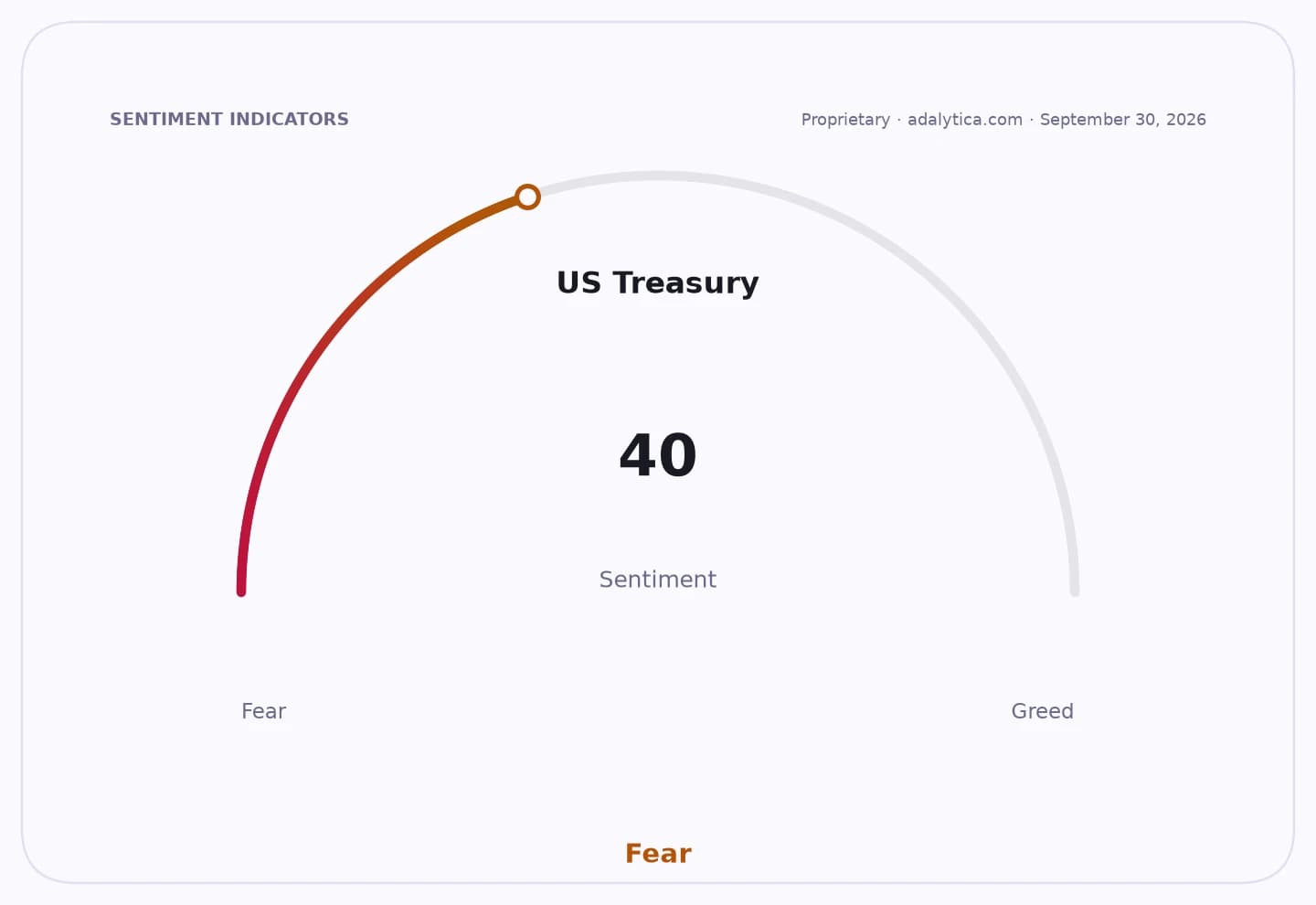
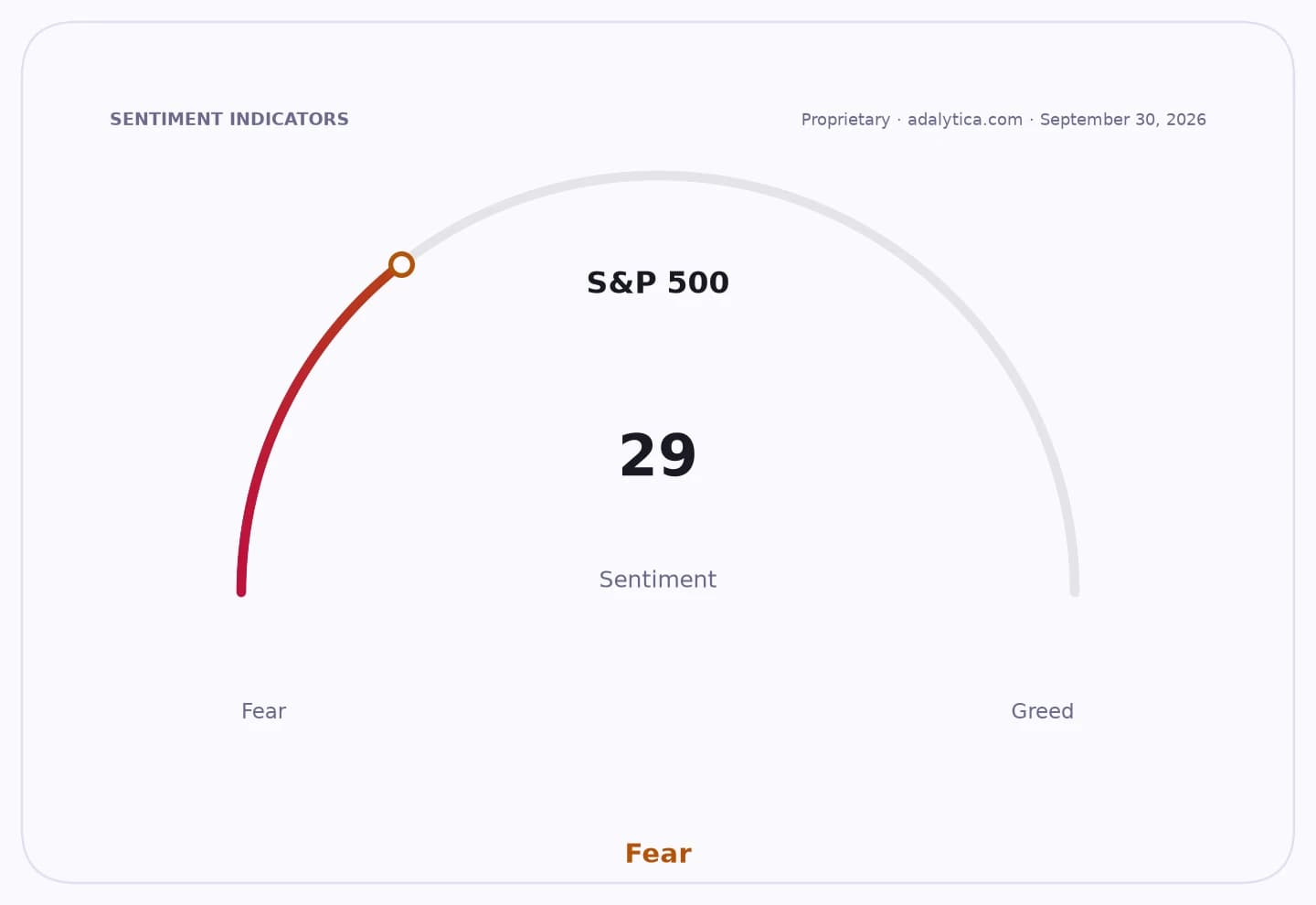
SPY is sliding into a tougher setup for credit spread sellers, with the S&P 500 ETF down about 2% from its recent peak and the Adalytica S&P 500 Trade Signals gauge flashing Fear after a sharp one-day, one-week and one-month deterioration in sentiment.
SPY Falls Near 50-Day Average as Fear Rises
That matters because short-dated credit spreads depend on time decay and muted price swings. When volatility rises and the underlying starts trending lower, the cushion for traders selling premium narrows fast, and the probability of a profitable 30-DTE entry falls.
Sentiment IndicatorsⓘProprietary · adalytica.com · September 30, 2026
This is a snapshot — live sentiment, awareness and momentum for 130+ markets update continuously in the dashboard.Open AlphaPulse
SPY closed at 764.2 on Sept. 29, well off its Sept. 25 high of 772.28, while the 50-day moving average at 760.87 has become a near-term reference point. The ETF is still above its 200-day moving average near 715.71, but momentum has weakened, with RSI readings in the low 50s after months of cooler trade signals.
The shift is even more important for premium sellers because the broad market had looked stretched earlier in the year, and the recent pullback is coming after a powerful run that left many indexes priced for little bad news. For options traders using a 30-DTE entry, that usually means waiting for a higher implied-volatility window, wider spreads and more selective strikes rather than forcing trades in a fast market.
Bond and currency moves are adding to the caution. TLT, a long-duration Treasury ETF, has dropped to 78.23 from 79.32 on Sept. 25, while the dollar tracker has been volatile but held near 95.55, reinforcing a market backdrop that can keep risk assets choppy and pressure equity premium-selling strategies.
Adalytica’s FX Volatility Trading Signals shows neutral sentiment but elevated fear in awareness terms, while the SPY trade signal remains in fear territory. For investors, that is a reminder that short premium strategies can work best when volatility is high but stabilizing — not when fear is still accelerating.
The near-term catalyst is whether SPY can hold above its 50-day moving average and whether the market can digest the latest pullback without another leg lower. If not, credit spread sellers may need to wait for a cleaner volatility spike or a clearer technical base before re-entering 30-DTE trades.
| Entity | Gains | Losses |
|---|---|---|
| Premium buyers | ▲More volatility to trade | ▼Higher option costs |
| Credit spread sellers | ▲Better if volatility peaks and stabilizes | ▼Higher assignment risk in a selloff |
| SPY bulls | ▲Opportunity to buy dips | ▼Near-term momentum and sentiment |
| TLT holders | ▲Potential flight-to-quality demand | ▼Rising rate pressure if risk appetite returns |