Rising Treasury yields are reasserting themselves as the dominant market force, and Meta Platforms’ stock is moving like the inverse of long-duration bonds. As the 10-year Treasury yield climbed to 5.24% and the 2-year reached 4.92%, TLT slid to 78.23, while Meta held near 738.79 after touching 777.59, underscoring how investors are still treating megacap growth as a duration trade.
Meta and TLT move opposite as Treasury yields rise
The move matters because higher yields tighten financial conditions even when the Federal Reserve is no longer cutting. The market is now pricing a more persistent rate backdrop, with the Fed funds rate still around 3.63% and Treasury forecasts pointing higher in the near term. That combination is painful for bondholders, but it also raises the discount rate on future corporate earnings, which is why long-duration equities and Treasury ETFs have been trading in opposite directions.
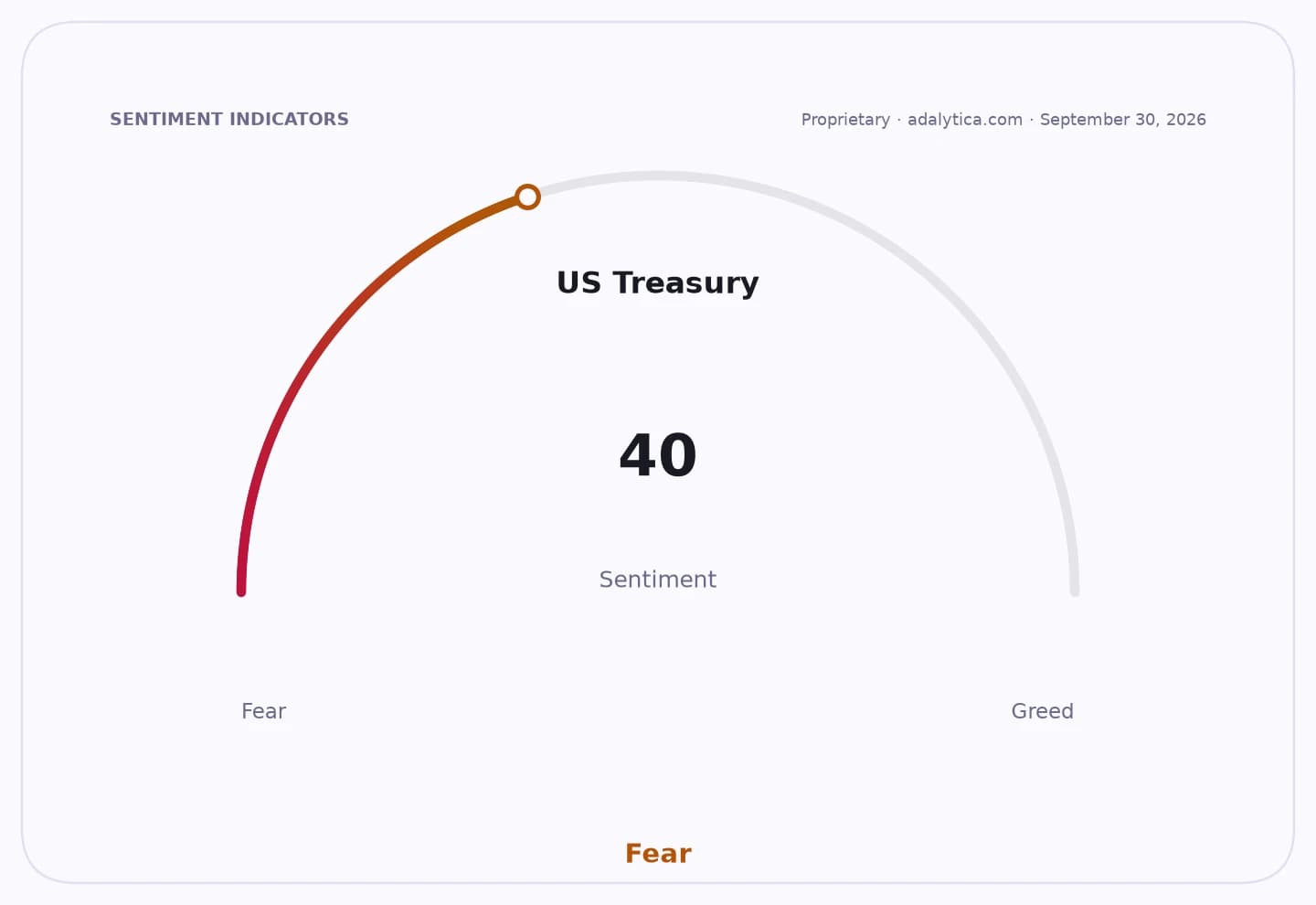
Sentiment IndicatorsⓘProprietary · adalytica.com · September 30, 2026
This is a snapshot — live sentiment, awareness and momentum for 130+ markets update continuously in the dashboard.Open AlphaPulse
TLT’s technicals reflect that pressure. The ETF closed below its 50-day moving average at 81.77 and its 200-day average at 84.17, with RSI at 25.1 and MACD sinking deeper into negative territory at -0.823. In plain market terms, the bond rally is not just stalling; it is being sold aggressively. Adalytica’s Treasury-bond trade signal shows extreme awareness at 92, but sentiment only neutral at 40, suggesting investors are focused on the move rather than embracing it.
Meta has become one of the clearest beneficiaries of the same macro regime. Its share price remains far above the 50-day moving average at 618.59 and the 200-day at 626.18, even after a pullback from the recent high. The stock’s RSI at 65.8 still points to strength, while the MACD remains firmly positive, indicating that investors continue to pay up for earnings growth despite the higher discount rate.
That resilience says as much about investor preference as it does about Meta’s business. In a market where the dollar is under severe pressure in Adalytica’s signal set and SPY sentiment has fallen into fear, capital is still concentrating in companies with durable cash generation and scale. Meta’s ability to outpace the broader market while bonds weaken suggests investors see it as less vulnerable than lower-quality growth names to a higher-for-longer yield environment.
But the bull case is not unchallenged. If Treasury yields keep grinding higher, valuation support for Meta becomes harder to justify, especially after a sharp run-up from July lows. The bear argument is that the same rate pressure that has crushed TLT will eventually force equity multiples lower, even for firms with strong fundamentals. The recent swing in Meta from 777.59 to 738.79 shows that investors are already testing that premise.
For now, the narrative is straightforward: rising yields are the market’s central macro story, and Meta remains one of the equities most sensitive to it, just on the other side of the trade. If the 10-year Treasury pushes convincingly above 5%, bond bears may keep winning first; whether Meta can keep behaving like the inverse TLT chart will depend on whether earnings growth can outrun the drag from a higher discount rate.
| Entity | Gains | Losses |
|---|---|---|
| Treasury bears | ▲Higher yields, lower bond prices | ▼Long-duration bondholders |
| Meta | ▲Growth premium, relative equity strength | ▼Rate-sensitive valuation multiples |
| TLT holders | ▲Inflation hedge, if yields reverse | ▼Capital losses in rising-yield regime |
| Broad market/SPY | ▲Selective rotation into megacaps | ▼Rate-sensitive sectors and long-duration stocks |