Sri Lanka’s employment rate climbed to 96.1% in 2025, up 0.5 percentage point from a year earlier, a sign that the labor market is recovering even as the country still faces a large pool of people outside the workforce.
Sri Lanka Employment Rate Rises to 96.1% in 2025

That matters because jobs are the clearest test of whether Sri Lanka’s post-crisis economy is translating growth into household income. A higher employment rate can support consumption, stabilize tax receipts and reduce pressure on policymakers to rely on stimulus. For investors, it is another small but important marker that the economy is moving from emergency repair toward a more durable recovery.
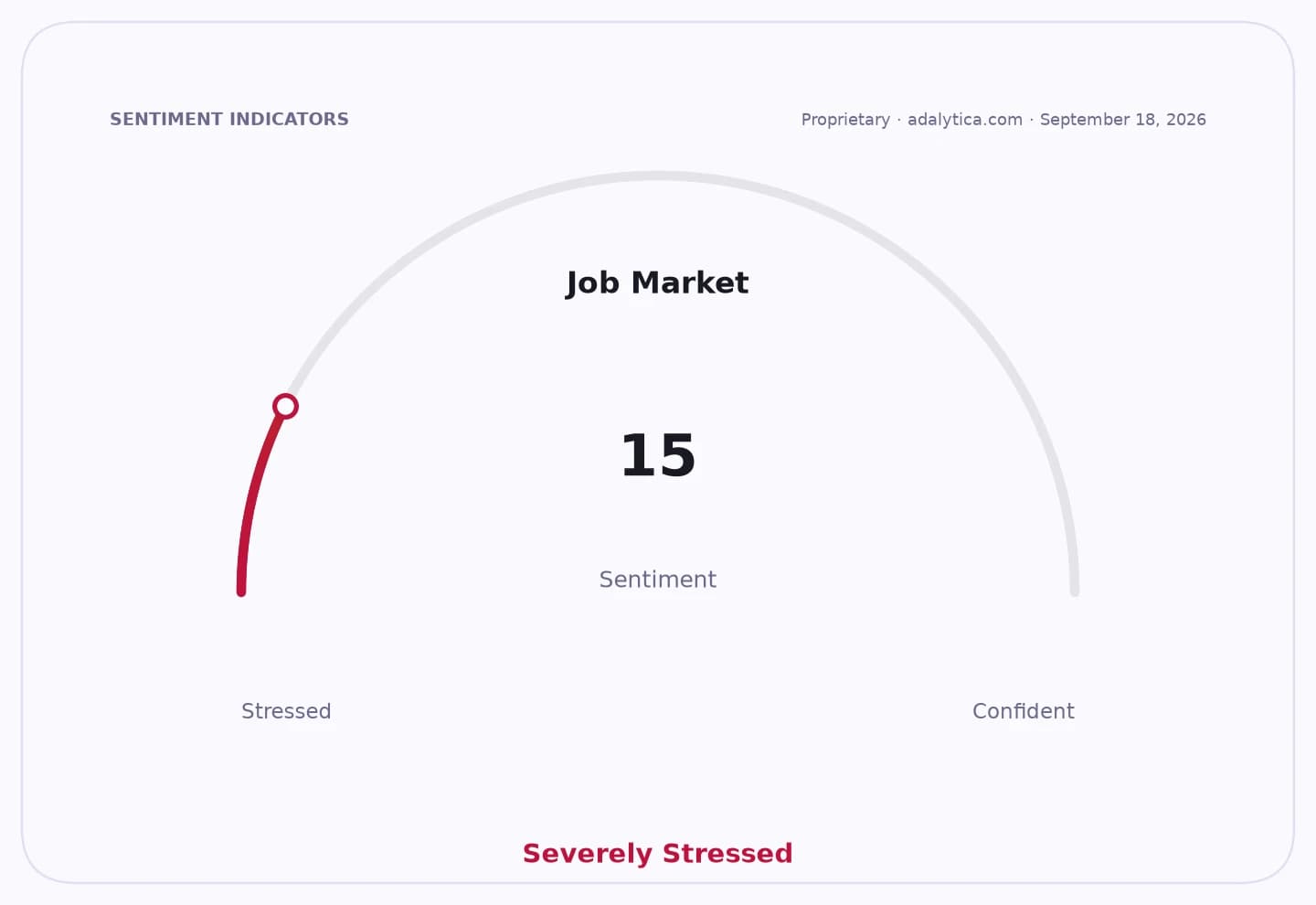
Sentiment IndicatorsⓘProprietary · adalytica.com · September 18, 2026
This is a snapshot — live sentiment, awareness and momentum for 130+ markets update continuously in the dashboard.Open AlphaPulse
The country’s unemployment rate fell to 3.9%, according to the latest labor force survey, with about 329,000 people still looking for work. That is not a crisis-level number, but it still points to unused labor that could be drawn into the economy if growth broadens. The bigger structural issue is participation: more than 8.6 million people aged 15 and above were outside the labor force, equal to about 50.6% of the population in that age group. Participation stood at just 49.4%.
Women continue to bear the biggest burden. Female unemployment was 6.1%, more than double the 2.8% rate for men, underscoring how uneven the recovery remains. Most of those outside the labor force were women, along with full-time students, retirees and parents staying at home. That is important for long-term growth because a wider labor pool would give Sri Lanka more room to expand without hitting wage or capacity bottlenecks too quickly.
There are also encouraging signs beyond the labor data. Business activity expanded in August, with manufacturing and services both posting solid growth, and Sri Lanka recently signed a labor deal with Thailand that could open the door for 10,000 workers. That kind of overseas employment channel matters in a country where remittances and external labor demand have long helped support household spending and foreign-exchange inflows.
For investors, the takeaway is straightforward: Sri Lanka is not yet a fully healed labor market, but it is a better one than a year ago. The employment gain is modest, yet it fits a broader pattern of gradual normalization that can support banks, consumer stocks and the wider domestic economy over time. The key question for the next few years is whether the government can convert this recovery into higher participation, especially among women, and turn more of the population into productive earners. That is what would make the rebound durable and worth owning.
| Entity | Gains | Losses |
|---|---|---|
| Sri Lankan workers | ▲More jobs | ▼Persistent underemployment |
| Women in labor force | ▲Higher policy focus | ▼Wide unemployment gap |
| Domestic businesses | ▲Stronger consumer demand | ▼Slower participation growth |
| Sri Lankan economy | ▲Better recovery momentum | ▼Idle labor capacity |