Michael Saylor is trying to turn Strategy from a one-stock Bitcoin proxy into the blueprint for a new credit market, and that matters because it would widen the investor base for crypto while deepening the company’s dependence on the token’s price.
Strategy pitches Bitcoin-backed digital credit
The Strategy executive chairman is now pitching a Bitcoin-backed digital dollar-like instrument that he says could deliver about 7% yield with very low volatility, extending his long-running effort to recast Bitcoin as the reserve asset underpinning a stack of liabilities, preferred shares and common equity. In Saylor’s framing, Bitcoin sits at the base as “digital capital,” preferred-style securities such as STRC act as “digital credit,” and Strategy’s common stock becomes the most junior, highest-beta layer.
That structure is economically important because it aims to turn Bitcoin’s long-run appreciation into recurring income products. If it works, Strategy could create demand from income investors who would not normally buy Bitcoin directly, while monetizing the company’s balance-sheet leverage in a market still starved for yield. If it fails, the same structure could amplify losses across the capital stack, leaving common equity holders and preferred investors exposed to Bitcoin’s sharp drawdowns.
Strategy is also continuing to expand the inventory behind the pitch. The company said it bought another 1,665 bitcoin for $142.7 million in the week to Sept. 27 at an average price of $85,681 each, taking holdings to 847,666 bitcoin. The total cost basis on those coins now stands at about $63.95 billion. The latest purchases were funded by selling common shares, with the company also using part of the proceeds to repurchase STRC stock.
That funding pattern is central to the story. Strategy is effectively recycling equity issuance into more Bitcoin while simultaneously trying to build a lower-volatility credit layer around it. For investors, that means the equity behaves less like a conventional operating company and more like a leveraged claim on Bitcoin plus a financing machine. The appeal is obvious in a strong Bitcoin market: holders get amplified upside and the company can keep issuing securities against a volatile but scarce asset. The danger is equally clear when Bitcoin weakens, because the value proposition depends on sustained confidence in the reserve asset.
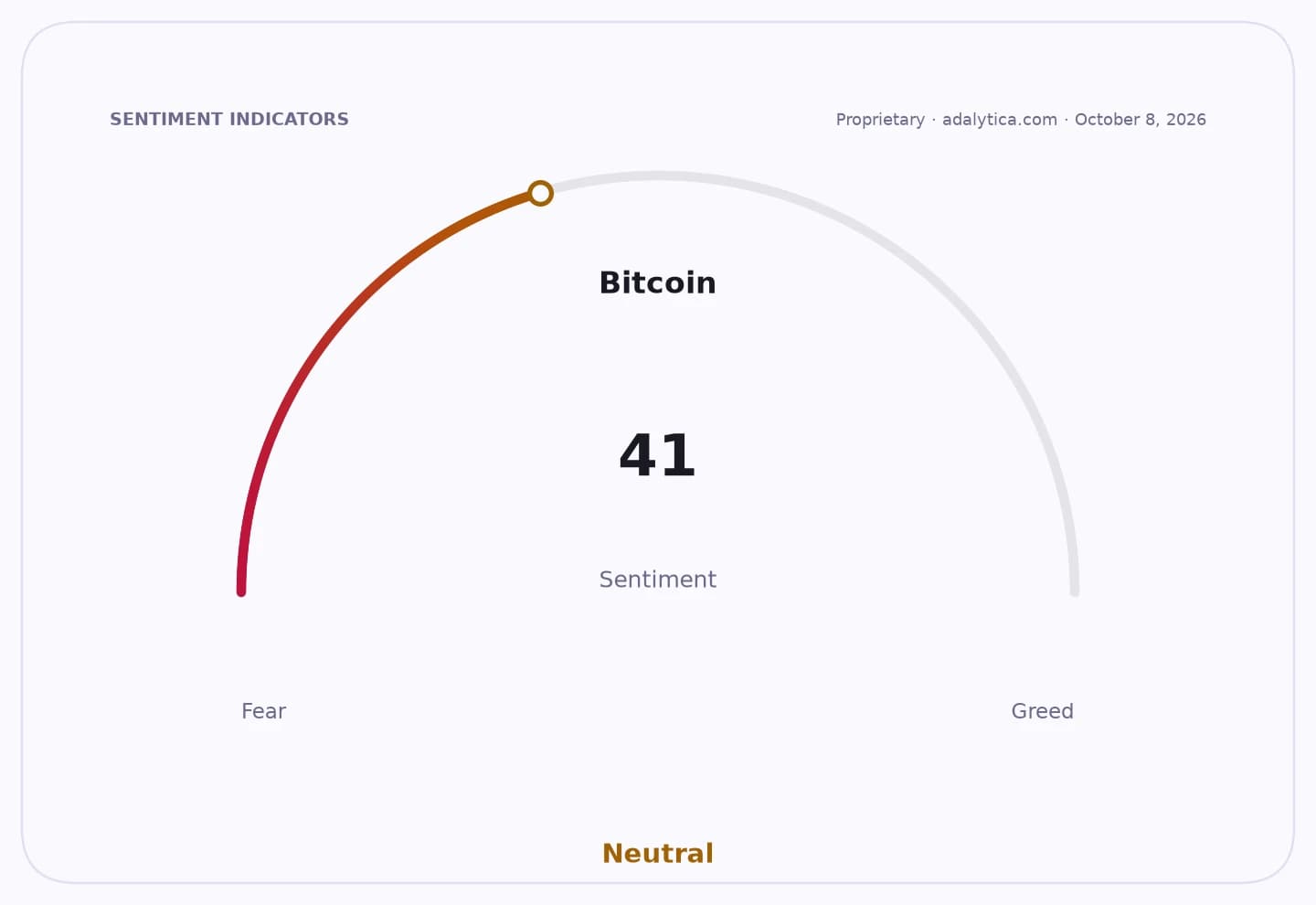
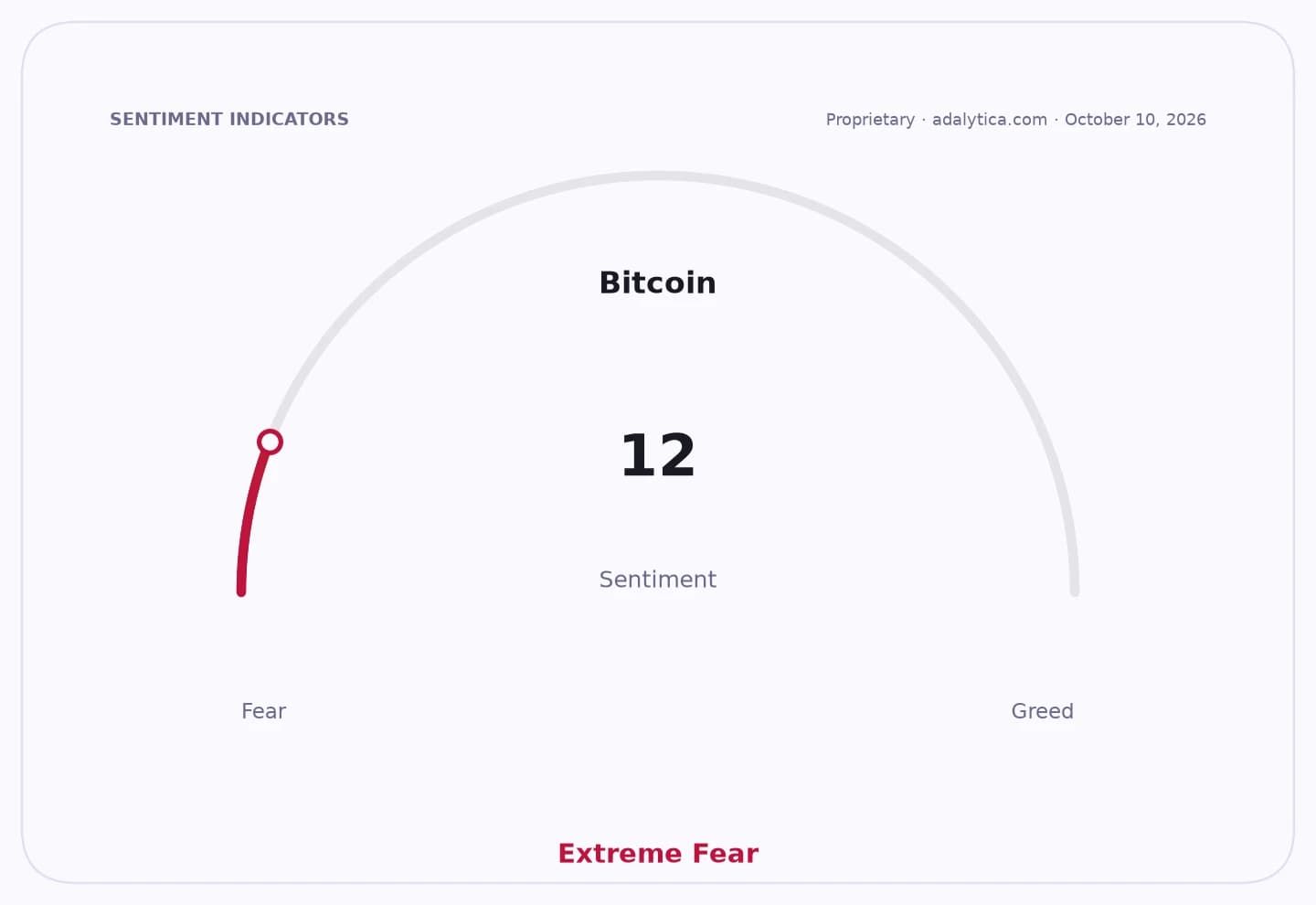
Bitcoin itself is trading in a defensive posture. Adalytica’s Bitcoin Fear & Greed Index shows “extreme fear” at 12, with sentiment down 18 points on the day and 76 points over the past week. Price data show Bitcoin recently at $82,959, still above its 50-day moving average but below the 200-day moving average area seen in prior periods, with momentum indicators suggesting a market that has not yet fully reset bullishly. That backdrop makes Saylor’s yield pitch more ambitious, but also more vulnerable to scrutiny if investors decide the embedded credit risk is being underpriced.
The broader market context is mixed for the dollar and crypto-linked assets. Adalytica’s US dollar signals show neutral sentiment but rising awareness and stronger short-term interest, underscoring that fiat markets remain orderly even as crypto remains volatile. In that environment, a Bitcoin-backed “digital dollar” is less a rival to the greenback than an attempt to create a yield product that borrows the dollar’s unit-of-account stability while keeping Bitcoin at the center of the economics.
For Strategy shareholders, the key question is whether the company is building a durable financing franchise or simply layering more complexity onto a highly correlated Bitcoin trade. Bulls will argue Saylor is institutionalizing a new form of digital credit before competitors do, with Bitcoin’s scarcity supporting an expanding capital structure. Bears will say the model still rests on a single risky asset and that every added layer of preferred and structured credit only makes the equity more sensitive to a Bitcoin downturn.
The next catalyst is whether Strategy can keep attracting capital into STRC-like products and continue accumulating Bitcoin without forcing common shareholders to absorb too much dilution. If Bitcoin stabilizes and recovers, Saylor’s framework could gain credibility as a template for crypto-backed financing. If the token stays under pressure, the same architecture may come to look less like digital money and more like leverage in search of a story.
| Entity | Gains | Losses |
|---|---|---|
| Strategy / MSTR bulls | ▲leveraged Bitcoin upside | ▼dilution if funding costs rise |
| STRC and similar preferred holders | ▲higher yield, seniority | ▼Bitcoin-linked credit risk |
| Bitcoin holders | ▲broader institutional demand | ▼tighter linkage to leverage cycles |
| Bitcoin shorts / skeptics | ▲validation if structure strains | ▼if Saylor’s model attracts capital |