Strategy’s stock climbed 5.1% on Tuesday even after B. Riley trimmed its price target to $180 from $195, underscoring that the market still sees a long runway for the company’s Bitcoin-heavy model despite the volatility in both crypto and the shares.
Strategy shares rise after B. Riley cuts target

That matters because Strategy is no longer just a levered bet on Bitcoin; it is now increasingly a question of whether management can keep expanding Bitcoin per share faster than dilution, debt and preferred claims erode that value for common stockholders. B. Riley’s latest note suggests those structural risks have eased, while still leaving room for about 26% upside from the stock’s $142.54 close.
Sentiment Indicators
The call also highlights a more important long-term story than the day-to-day move in Bitcoin itself. Strategy’s plan is to double Bitcoin per share over seven years, a goal that would imply roughly 10.4% annual growth in that metric if achieved smoothly. For investors, that is the real prize: not simply owning more Bitcoin, but owning more Bitcoin for each share outstanding.
That distinction matters in a capital structure like Strategy’s. A company can pile up digital assets and still fail common shareholders if it keeps issuing equity or layering on priority claims. B. Riley said the “structural risk” from growing senior claims on the Bitcoin stack has declined, which is exactly the kind of development long-term investors should watch. If the balance sheet becomes less encumbered, more of the upside from Bitcoin can flow to common stock.
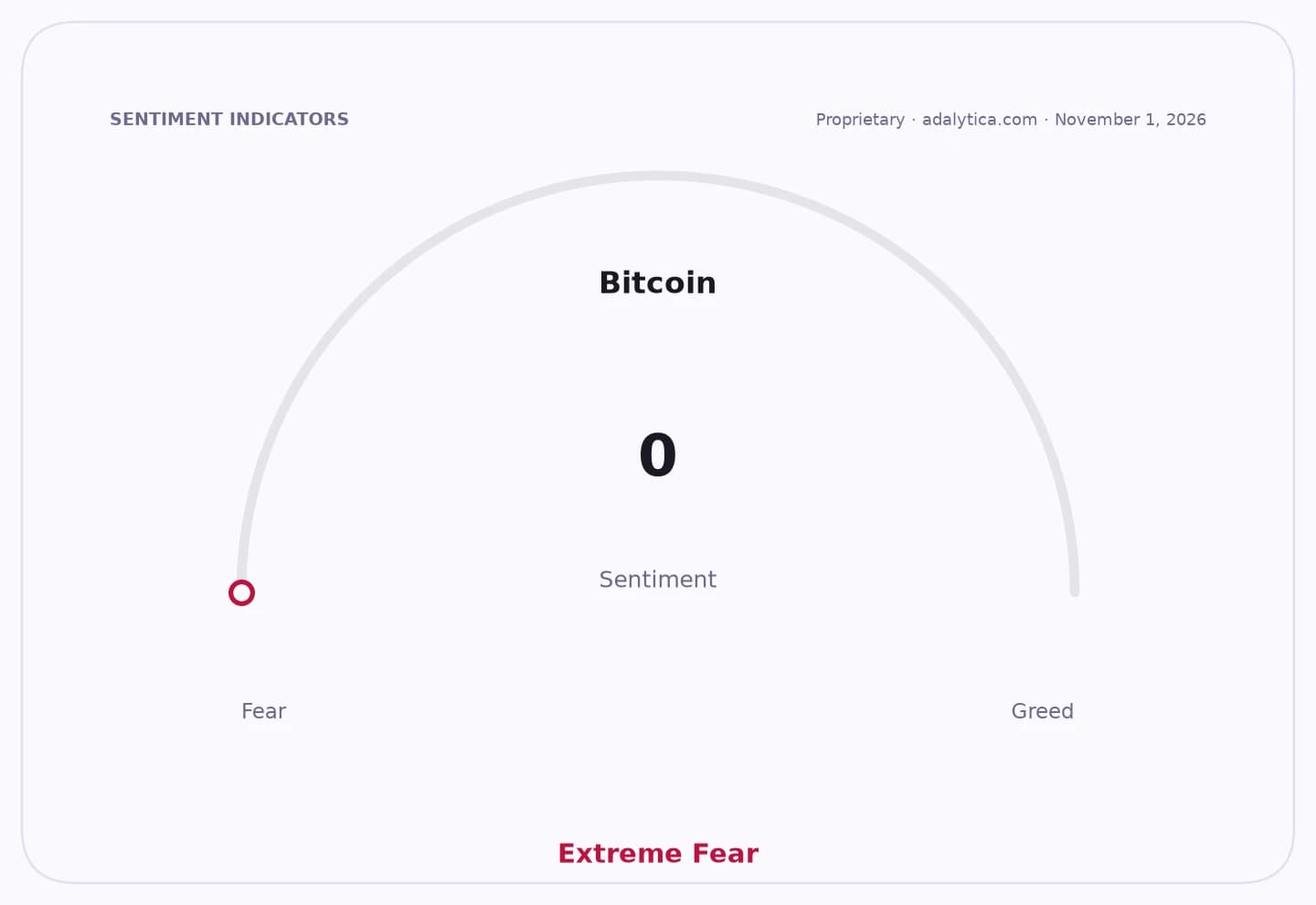
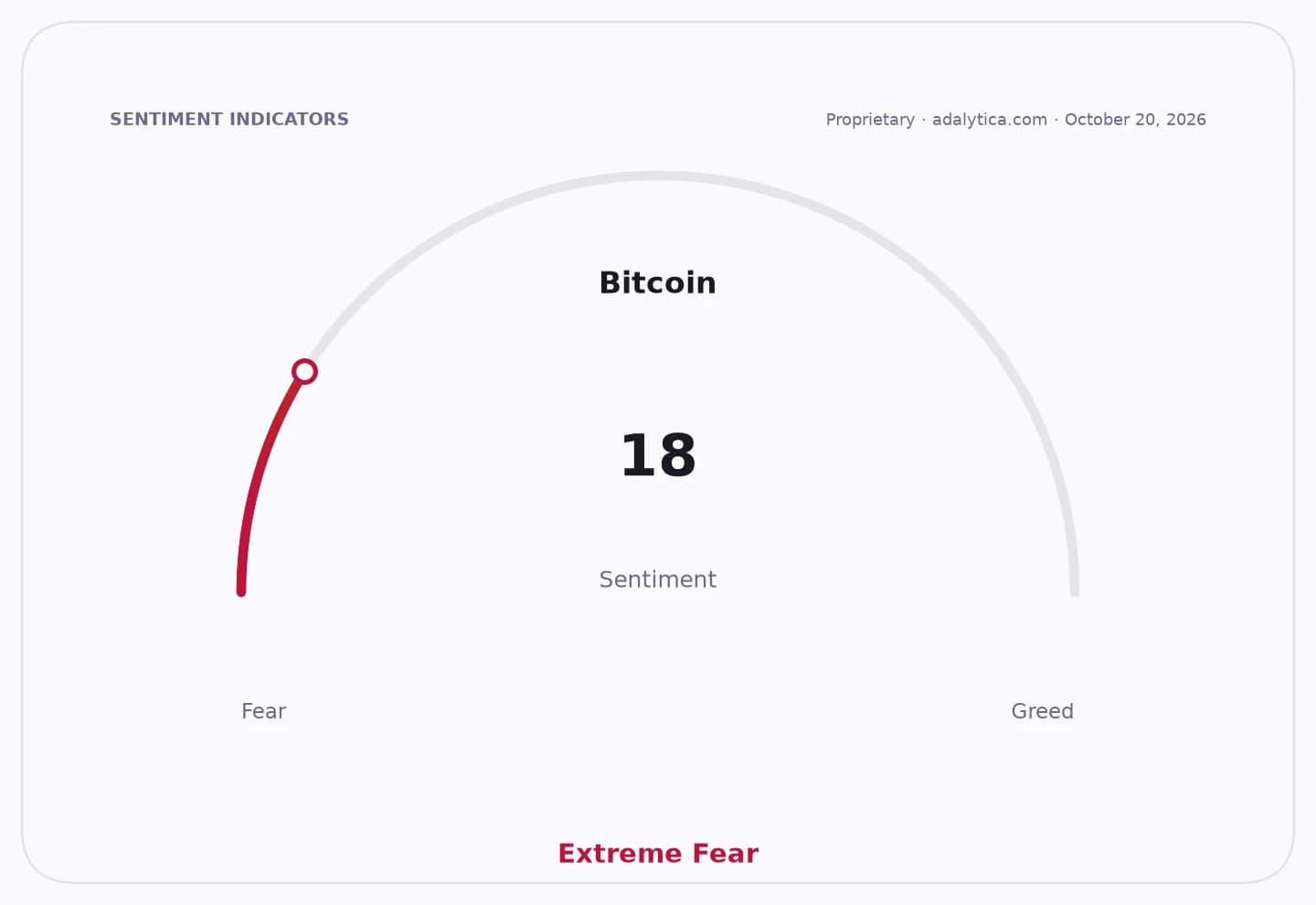
The stock’s recent action shows how sensitive investors remain to that narrative. Strategy closed at $142.54 and added another small premarket gain to $142.99, even as Bitcoin itself has been weak and sentiment across crypto has cooled. The Adalytica Bitcoin Fear & Greed Index stood at 22, squarely in “fear” territory, while Bitcoin traded around $74,758 on Monday after sliding from levels above $80,000 earlier in the month.
That backdrop makes Strategy’s premium valuation harder to justify on simple asset arithmetic alone. Bitcoin’s 50-day moving average now sits above the spot price, and the token’s own momentum has deteriorated. Yet Strategy remains a different kind of investment thesis: if management can keep funding Bitcoin purchases on acceptable terms, the company can still grow per-share exposure over time, even in a choppy market.
For investors, the question is not whether Bitcoin is volatile — Strategy already discloses that it is — but whether the company can turn that volatility into compounding. B. Riley’s lowered target says expectations should be measured. Its buy rating says the model is still working well enough to merit patience.
In other words, this is a stock to monitor for execution, not excitement. If Strategy can keep expanding Bitcoin per share while limiting the cost to common holders, the long-term upside could remain substantial. If not, the gap between the asset value and the equity value will keep reminding investors that leverage cuts both ways.
| Entity | Gains | Losses |
|---|---|---|
| Strategy common shareholders | ▲Higher Bitcoin per share potential | ▼Dilution and senior claims |
| B. Riley’s bullish thesis | ▲Validated long-term upside case | ▼Lower near-term target |
| Bitcoin bears | ▲Cheaper entry if weakness persists | ▼Less support from corporate buying |
| Long-term crypto bulls | ▲More institutional-style exposure | ▼Higher volatility and financing risk |