Sweden’s main parliamentary parties have agreed on the scope of a new law that would stop the deportation of young adults who came to the country as dependents, marking a rare cross-party move to soften immigration enforcement just as much of Europe tightens it.
Sweden parties back deportation relief law
The agreement matters because it could shield nearly a thousand people from removal and, more broadly, signals that Sweden’s migration politics are still being shaped by humanitarian pressure even as governments across the region harden their stance on asylum and deportation. For investors, the significance is less about direct market impact than about what it says on labor supply, social stability and the durability of centrist coalitions in a country that remains a key Nordic economy.
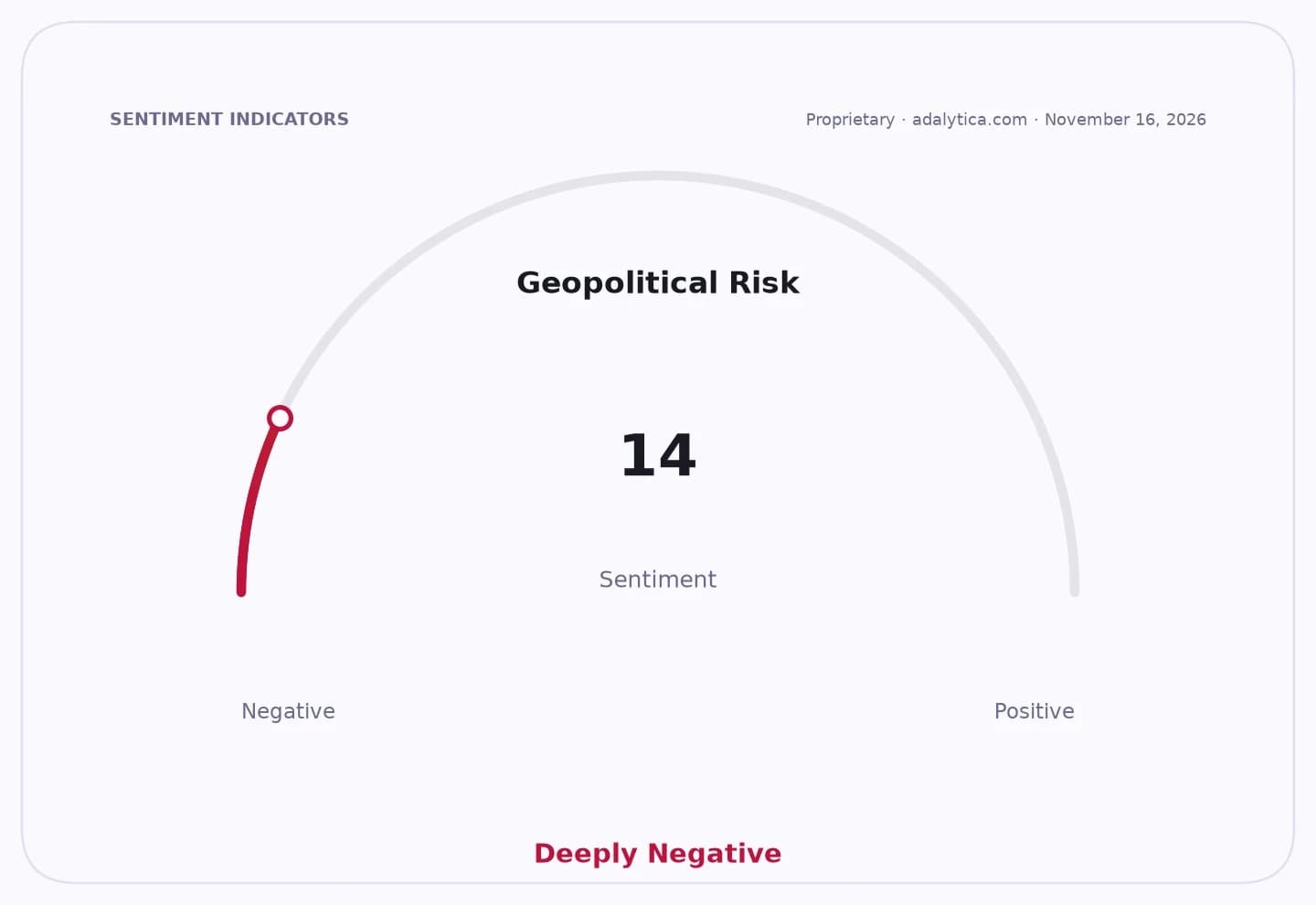
Sentiment Indicators
The Social Insurance Committee said Tuesday the law would cover people who arrived as dependents of parents whose residence permits were rejected on or after July 20, 2021, and whose parents remain in Sweden. The Social Democrats, Centre Party, Greens, Left Party, Moderates, Liberals and Christian Democrats backed the scope of the legislation, leaving only the far-right Sweden Democrats outside the deal.
That broad alignment is politically important because it suggests the issue may be treated as a legal and administrative fix rather than a full-blown immigration referendum. The parties now plan to draft the final text in committee, with hopes the law can be in place by autumn 2027 at the latest. In the meantime, they want Sweden’s Migration Agency to pause deportations ahead of implementation.
The measure also underscores the split between Sweden and a wider European trend. Germany, Austria, Denmark, Greece and the Netherlands have all moved toward tougher removal policies and deportation centers abroad, including in Rwanda, reflecting a continent-wide effort to curb irregular migration. Sweden is taking a more protective approach in this narrow category, even as it remains politically divided over migration more generally.
For markets, the immediate read-through is limited, but the second-order effects matter. Sweden’s labor market depends heavily on predictable migration policy, and rules that keep young workers and students in the country can support workforce participation in the longer run. The greater investor takeaway is political stability: when mainstream parties can still strike a compromise on contentious social policy, the risk of a sharper policy lurch recedes, which is supportive for domestic confidence and for sectors exposed to Swedish consumption and hiring.
The market is missing how often immigration policy becomes an economic input, not just a social debate. A narrower deportation regime can preserve human capital, reduce legal uncertainty and help avoid a self-inflicted tightening of labor supply. That matters in a small, open economy where productivity, services demand and demographic pressures are all tied to the availability of skilled workers.
The most important next catalyst is the drafting of the final bill and whether the Migration Agency follows through with a pause on removals before the law is enacted. If the compromise holds, Sweden may offer a more pragmatic model than the harsher European direction elsewhere — and that is exactly the kind of policy divergence investors should watch.
| Entity | Gains | Losses |
|---|---|---|
| Young adults facing deportation | ▲Residency protection | ▼Removal risk |
| Swedish mainstream parties | ▲Cross-party compromise | ▼Policy friction with voters |
| Swedish labor market | ▲Retained workers | ▼Near-term enforcement certainty |
| Sweden Democrats | ▲Hardline migration narrative | ▼Influence over this policy |