Switzerland’s inflation accelerated in October to 1.5%, beating economists’ expectations and reinforcing the view that energy costs remain the main near-term threat to price stability even as underlying inflation stays subdued.
Switzerland Inflation Rises to 1.5% in October

The consumer price index rose 0.2% from September, driven by higher heating oil, gasoline and diesel prices after the spike in global energy markets tied to the Middle East conflict. That was above the consensus range of 1.1% to 1.4% on an annual basis and a flat to slightly negative monthly reading, according to the Swiss Federal Statistical Office.
Sentiment Indicators
Long-term Inflation Expectations
The composition of the data matters as much as the headline. Core inflation, which strips out fresh and seasonal products as well as fuels, was unchanged from September and held at just 0.5% year on year. Domestic prices fell 0.1% on the month and were up 0.8% from a year earlier, while imported goods rose 1.2% month on month and 3.7% year on year, underscoring how much of the pressure is still coming from external costs rather than an internally generated wage-price spiral.
For investors, that combination points to a familiar Swiss policy dilemma. Inflation is above the Swiss National Bank’s comfort zone, but the underlying trend is still far weaker than in the US or much of Europe, leaving the SNB little reason to react aggressively to one monthly energy-driven jump. The case for tighter policy would strengthen only if imported inflation started to filter into broader domestic prices or if wage-setting behavior changed materially.
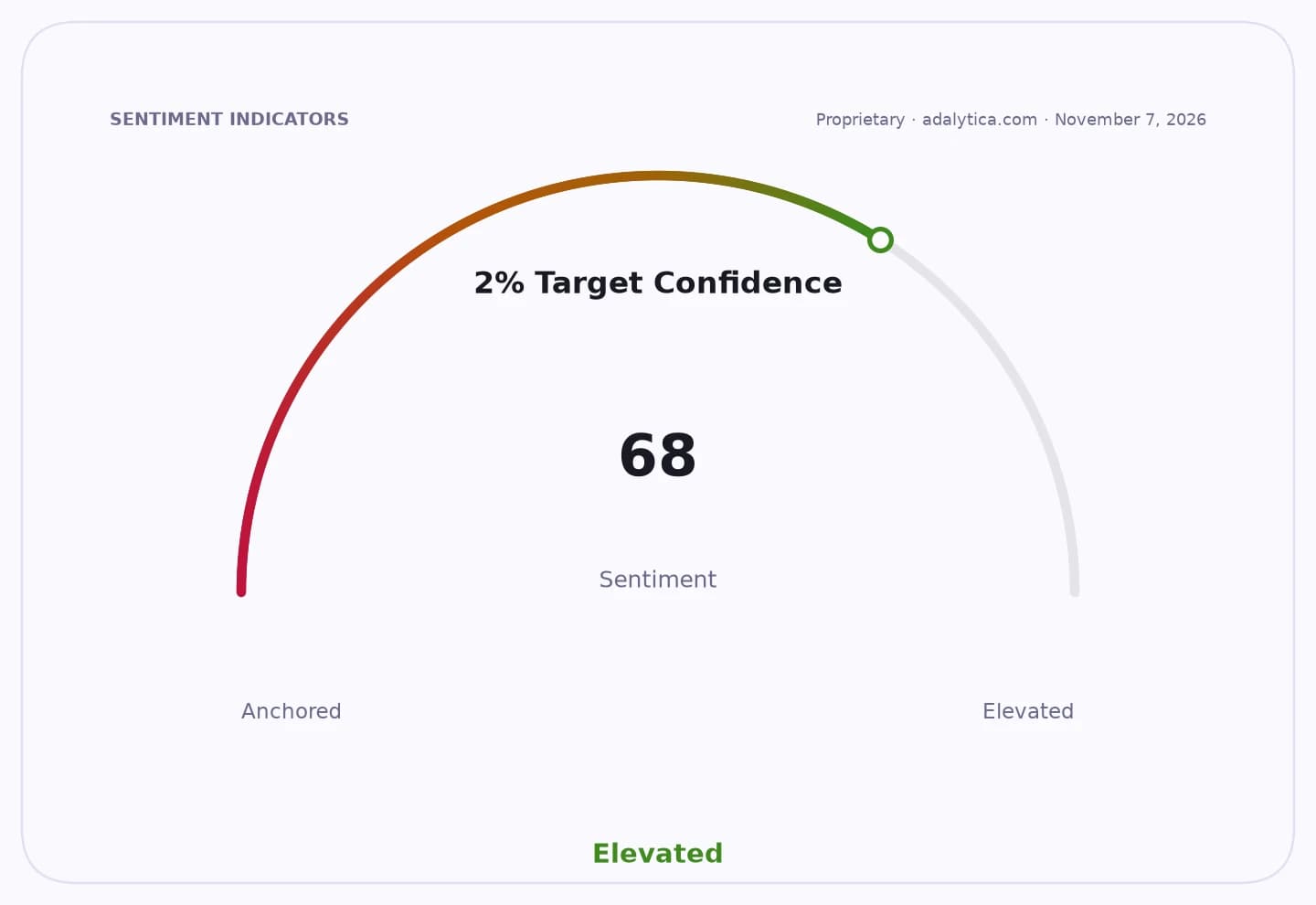
The reading also supports the broader market narrative that disinflation is not a straight line. Adalytica’s confidence measures for longer-term inflation expectations and the Fed’s 2% target have firmed in recent days, while wage inflation sentiment remains weak, suggesting investors are still watching whether energy shocks remain temporary or begin to reshape pricing behavior. In Switzerland, the latest print is more a warning about imported volatility than a signal of persistent demand pressure.
That distinction matters for the franc, Swiss bond yields and rate expectations. A one-off energy push would likely fade, but a second round of inflation imported through transport, utilities and other goods could complicate the SNB’s gradual easing path. For now, the October data argue for caution rather than alarm.
| Entity | Gains | Losses |
|---|---|---|
| Energy exporters | ▲Higher fuel demand/prices | ▼Swiss consumers |
| Swiss importers | ▲None | ▼Input-cost pressure |
| SNB doves | ▲Case for patience | ▼Hawkish rate bets |
| Households | ▲None | ▼Real purchasing power |