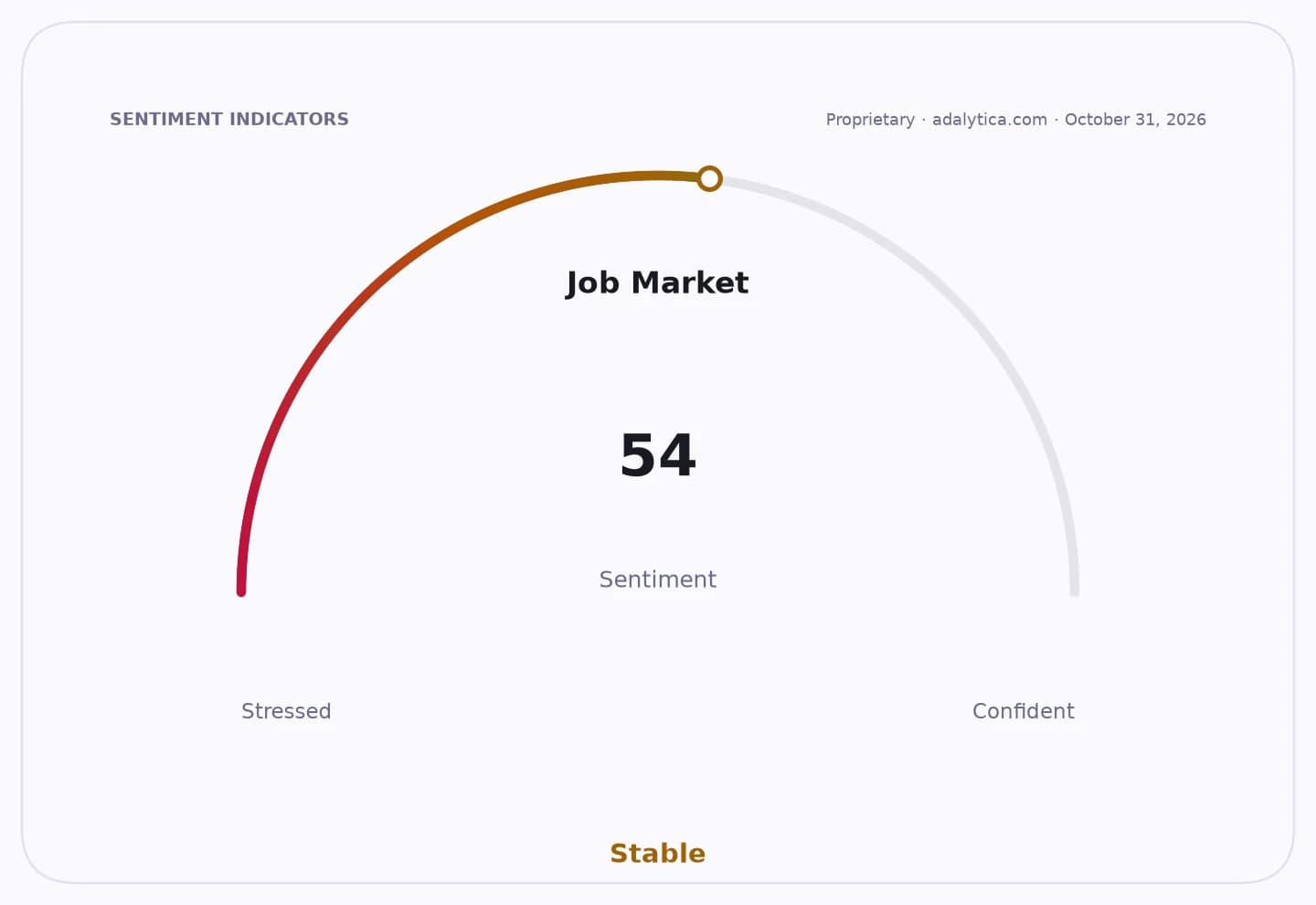
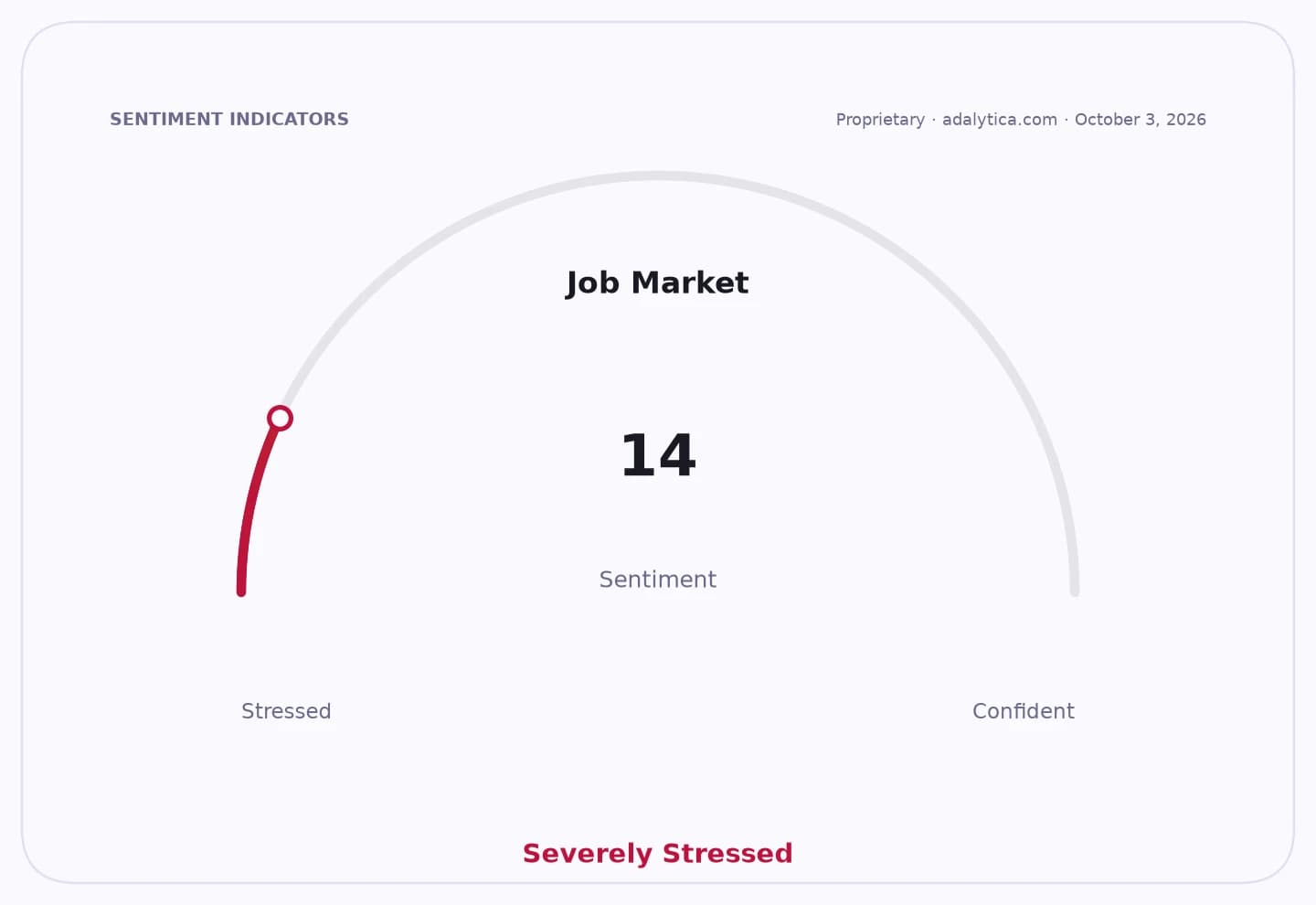
Prospects on the Swiss labor market have darkened only slightly, but the latest company survey points to a recovery that remains fragile and uneven rather than broad-based.
Switzerland labor market weakens as unemployment rises
Nonfarm Payrolls
That matters because Switzerland’s labor market has been one of the economy’s main stabilizers through a period of softer growth. If employers are losing momentum on hiring, it usually shows up first in reduced recruitment plans, fewer vacancies and greater caution around training and staffing costs — all of which can feed through to household income growth, consumer spending and eventually domestic demand.
Sentiment Indicators
The KOF survey suggests there is no sign of a meaningful autumn rebound. While unemployment has not surged, the data point to a labor market that is still absorbing weakness rather than generating fresh momentum. Newly registered jobs have fallen, some districts are seeing higher unemployment and the training market is becoming more difficult, underscoring that firms remain reluctant to expand payrolls aggressively.
Official labor figures point in the same direction. Swiss unemployment stood at 4.2% in September, up from 4.1% in August and above the 4.09% forecast for October in the latest estimate. Employment growth is still positive, with nonfarm payrolls projected at 159,085.5 in October versus 159,044 in September, but the pace is marginal. That combination — jobs still rising, but only barely — is consistent with a market that is cooling rather than contracting.
For investors, the implications are twofold. On one hand, a slower labor market reduces the risk of wage pressure and gives the Swiss National Bank more room to keep policy supportive if growth weakens further. On the other, it raises questions about the strength of domestic consumption and the earnings outlook for companies exposed to the Swiss home market, especially in retail, services and smaller cyclical businesses.
The picture is a little more constructive outside Switzerland. European equity funds have held up better than Swiss domestic exposure in recent weeks, with the iShares MSCI Switzerland ETF, EWL, trading near $64.91 on Monday, above its 50-day and 200-day moving averages. The broader German and euro-area ETFs also remain firmer than some Swiss labor-sensitive indicators would suggest, reflecting investor preference for exposure to a still-resilient European cycle rather than a sharply slowing one.
The structural challenge remains the same: Switzerland continues to face a shortage of skilled and affordable labor, even as recruitment appetite weakens. That mismatch makes it harder for businesses to scale quickly and complicates the policy response, which is increasingly including guidance on artificial intelligence use in the labor market. For now, the message from the survey is not one of recession risk, but of a labor market losing a bit more traction at the margins.
| Entity | Gains | Losses |
|---|---|---|
| Employers | ▲Lower wage pressure | ▼Slower hiring momentum |
| Job seekers | ▲More stable unemployment | ▼Fewer vacancies |
| Consumers | ▲Less inflationary strain | ▼Softer income growth |
| Swiss domestic stocks | ▲Support from easier policy | ▼Weaker demand outlook |