Finland’s labor market is weakening even as the economy grows, strengthening fears that the country is entering a period of “jobless growth” where output rises but traditional payroll work does not.
Finland unemployment rises as payroll jobs fall
The warning comes after Statistics Finland said unemployment rose again in September to 298,000, up 39,000 from a year earlier, while the trend unemployment rate climbed to 10.5%. Over the third quarter, the number of employees was unchanged from a year earlier, private-sector employment fell, and hours worked declined, underscoring that growth is not translating into broad-based hiring.
Sentiment Indicators
That matters for the economy because employment is the main channel through which household income, consumption and tax receipts improve. If companies are producing more with fewer payroll workers, GDP can keep expanding while wage-earner demand stays weak, making the recovery more fragile and limiting the government’s room to rely on labor-market strength to lift fiscal revenues.
The clearest sign of the shift is that the small increase in employment over the quarter came from self-employment, not salaried jobs. Economists and employer groups have long assumed growth would eventually feed into payroll hiring, but Mikro- ja yksinyrittäjät ry says Finland can no longer build labor policy on that expectation.
The group said private-sector payroll jobs fell by 16,000 in the third quarter, while public-sector employment rose by 11,000. The number of employees was flat, but the count of entrepreneurs and family members working in businesses increased by 7,000, with the gains concentrated among solo entrepreneurs.
For investors, the message is that Finland’s labor market may be becoming structurally less supportive of consumer spending and domestic demand. Weak hiring in the private sector can pressure earnings at retailers, banks and other cyclical companies tied to household income, while the growth of freelance and platform work suggests more fragmented cash flows and less predictable wage demand.
The development also has implications for policy and capital allocation. If more work is being pushed into self-employment, gig work and outsourcing, the country’s social security and pension systems may be misaligned with how income is actually earned, raising the risk of future reform pressure.
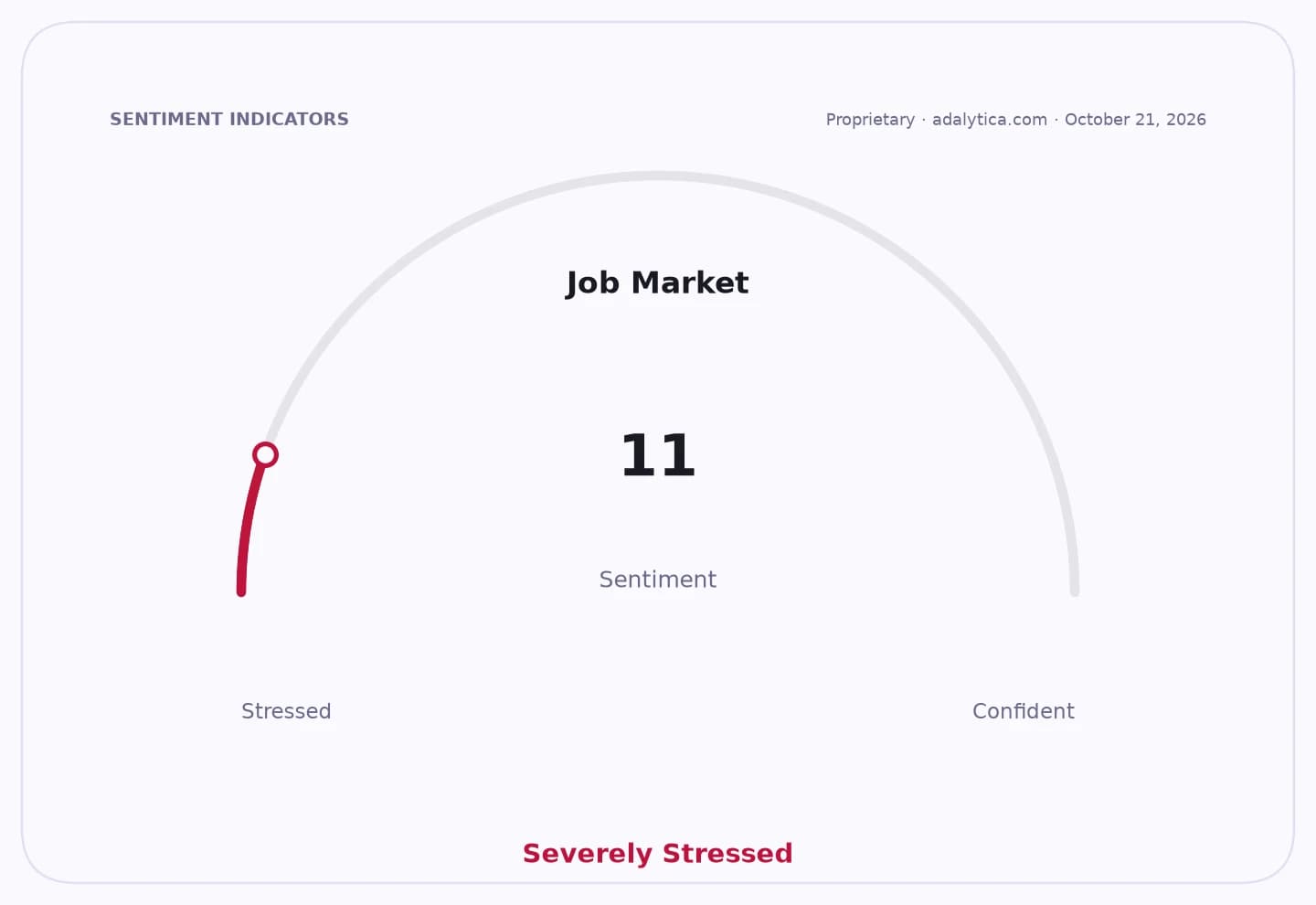
Adalytica’s Job Market Sentiment snapshot is neutral at 54, but awareness of job-market stress is at “extreme fear” at 7, while Nonfarm Payrolls Sentiment is in “fear” territory at 24. That reflects a market that is increasingly focused on labor weakness rather than a traditional cyclical rebound.
The next test is whether the autumn slowdown deepens into winter or whether public-sector hiring and self-employment continue to mask a broader loss of payroll momentum.
| Entity | Gains | Losses |
|---|---|---|
| Public sector | ▲More employment | ▼Fiscal pressure |
| Solo entrepreneurs | ▲More work opportunities | ▼Less income stability |
| Private employers | ▲Lower labor costs | ▼Weaker demand backdrop |
| Finnish workers | ▲Flexible work options | ▼Fewer payroll jobs |