Tesla is confronting a recall of almost 3 million vehicles in China after regulators flagged a defect in the emergency door-release system that could make the handles harder to operate after a crash, raising fresh safety and liability concerns for Elon Musk’s biggest EV market outside the US.
Tesla China recall over door-release defect

The move is the largest chunk of a record 4.3 million-vehicle safety action in China spanning nine automakers, underscoring how regulators are tightening scrutiny of electronic door-handle designs that can trap occupants in an accident. For Tesla, the recall affects roughly 3 million cars and lands at a sensitive moment for a company still leaning heavily on China for sales, manufacturing scale and investor confidence.
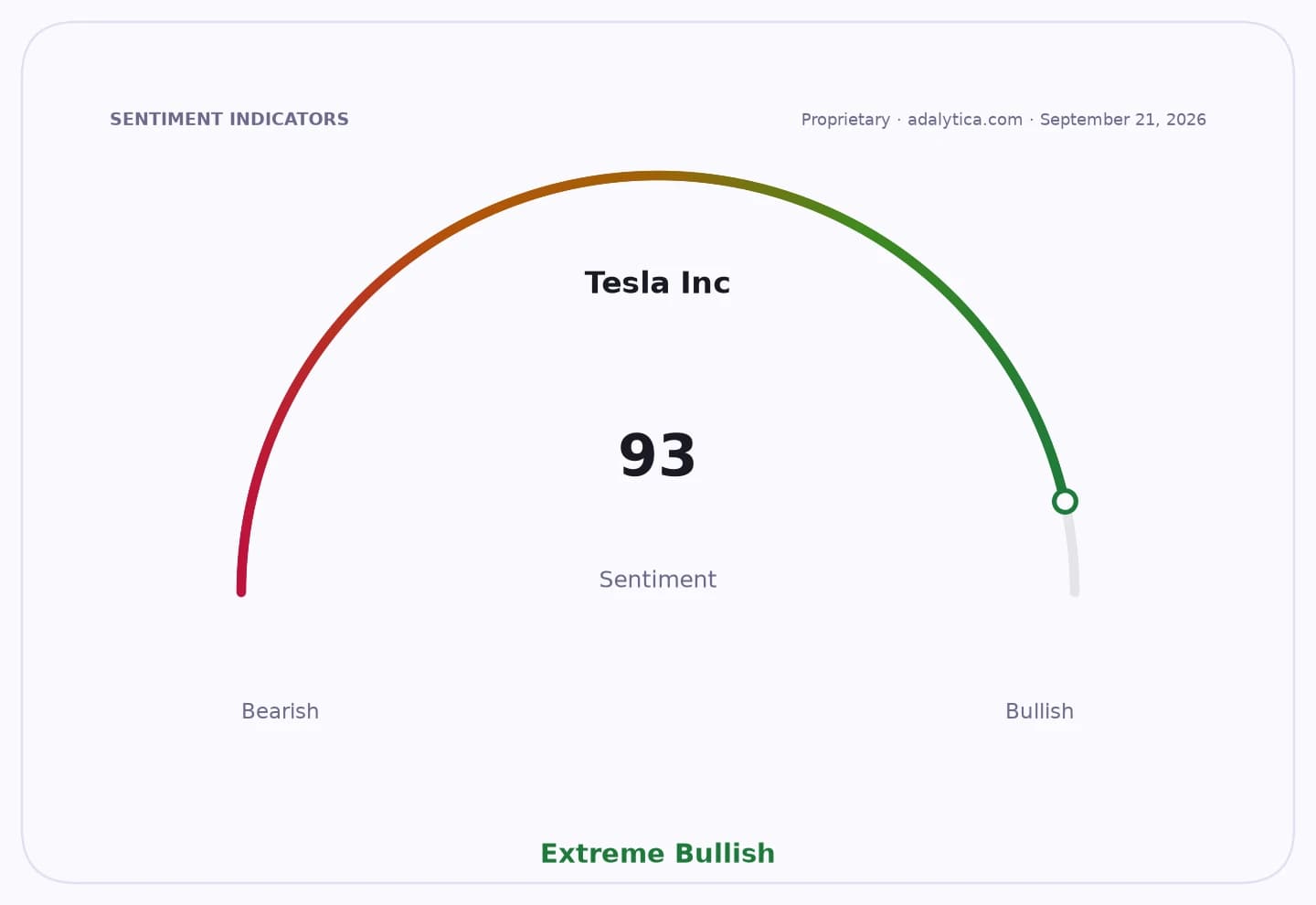
Sentiment IndicatorsⓘProprietary · adalytica.com · August 23, 2026
This is a snapshot — live sentiment, awareness and momentum for 130+ markets update continuously in the dashboard.Open AlphaPulse
Beyond the headline safety issue, the recall adds another layer of pressure on Tesla’s brand in a market where competition is intensifying and consumer expectations are rising. Any fix will also come with costs, from logistics and servicing to potential redesign work, even if the company can execute the repair without a major hit to deliveries.
Tesla shares have already been volatile, with the stock trading at $362.86 on Friday after touching $351.12 earlier in the week. The move leaves the stock well above its 50-day moving average of $365.86 but still below its 200-day average of $403.32, while the RSI reading of 72.7 points to an overbought setup by conventional technical measures.
Tesla Inc — 30-day sentimentadalytica.com
Explore this data interactively — full history, time series and cross-market comparisons.Open AlphaPulse
Investor focus now shifts to whether the recall stays contained as a compliance issue or becomes a broader warning about product design, regulatory risk and margins in Tesla’s global auto business. The next catalyst is likely to be Beijing’s formal remediation requirements and any disclosure from Tesla on the cost and timing of the fix.
| Entity | Gains | Losses |
|---|---|---|
| Chinese regulators | ▲Stronger safety oversight | ▼None |
| Tesla | ▲None | ▼Recall costs, brand pressure |
| Rival automakers | ▲Relative market share boost | ▼More scrutiny on EV design |