Elon Musk’s talk of making a Tesla–SpaceX merger a “process” matters far more than the headline chatter around it: it underscores that Tesla is no longer being judged purely as an automaker, but as a capital-intensive platform tied to Musk’s wider industrial empire.
Tesla Merger Talk Highlights Margin and Governance Risks
That shift is critical for investors because the market is being asked to price Tesla against two very different forces at once — slowing car economics and an increasingly expensive AI-and-space ambition. Tesla’s latest results showed the strain of that balancing act. Profits came under pressure even as deliveries beat expectations by nearly 74,000 vehicles, a sign that aggressive discounting can still move units but at a cost. In other words, Tesla can buy volume, but it has to pay for it in margin.
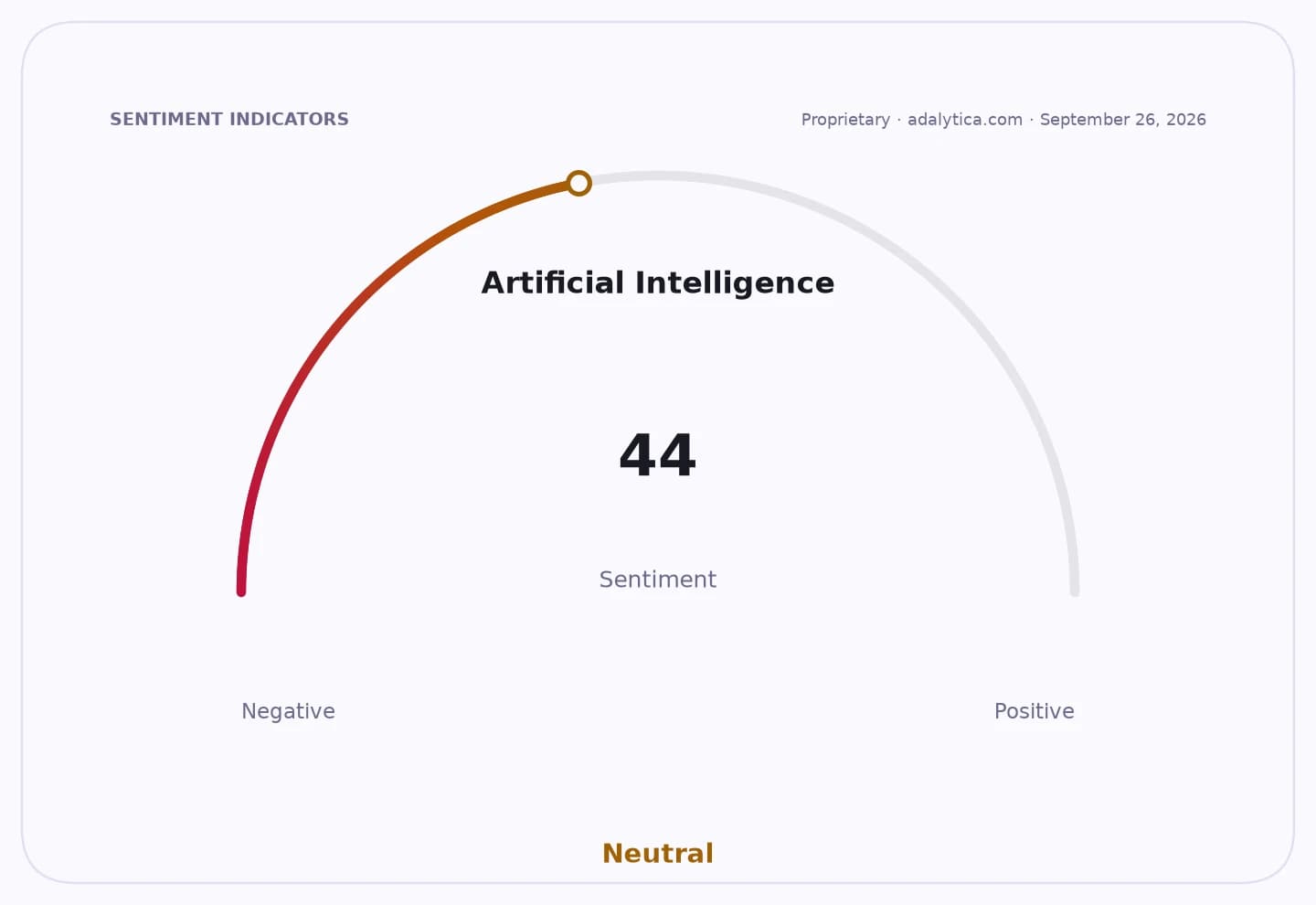
Sentiment IndicatorsⓘProprietary · adalytica.com · July 23, 2026
This is a snapshot — live sentiment, awareness and momentum for 130+ markets update continuously in the dashboard.Open AlphaPulse
That trade-off is the center of the investment case now. The stock has become a referendum on whether Tesla’s valuation should reflect near-term automotive earnings or a much larger optionality set that includes robotics, autonomy, AI infrastructure and anything Musk chooses to link to the brand. The merger speculation fits that same pattern: it signals a founder who wants investors to think in terms of ecosystem scale, not separate corporate silos.
The problem is that the market is also becoming less tolerant of ambiguity. Tesla shares have been extremely volatile, and the latest price action shows a stock that can still swing hard on narrative shifts. On the technical side, the shares have broken sharply lower, with the relative strength index sinking to 29.2, a level that conventional technicians often view as oversold. The stock also sits well below its 50-day and 200-day moving averages, reflecting how quickly momentum can unwind when expectations outrun earnings.
Adalytica’s proprietary Tesla Earnings Sentiment gauge now sits at 39, neutral, after a 42-point drop over seven days, even as awareness remains at extreme-greed levels. That combination is important: investors are still fixated on Tesla, but conviction has weakened. When attention stays high and sentiment rolls over, price moves can become violent in both directions.
There is a deeper economic story here. Tesla is still spending heavily — its latest 10-Q showed $8.28 billion in capital expenditures over the first half of 2026, much of it tied to global AI and operations. That spending is part of the bull thesis, not an accident. But it also means Tesla needs a very strong future growth curve to justify the capital deployed. Any move that blurs the boundary between Tesla’s core business and Musk’s other ventures raises the question of how much more capital the market is expected to subsidize.
That is why the merger narrative matters. A Tesla–SpaceX combination would not just be a corporate event; it would be a statement about control, capital allocation and where Musk sees the highest long-term return on equity. For bulls, it hints at a more ambitious industrial stack. For skeptics, it raises governance risk, complexity and the possibility that Tesla shareholders could be dragged into an even more capital-hungry story.
For now, the best way to view Tesla is as a high-beta call option on the AI-and-autonomy economy, with the founder’s vision acting as both the catalyst and the risk. If Musk keeps pushing investors toward a broader platform story, the market will have to decide whether Tesla is a car company with upside optionality or an ecosystem that deserves a permanent scarcity premium.
The asymmetric opportunity is not in chasing every headline. It is in owning the picks-and-shovels around Musk’s industrial ambitions — AI compute, battery supply chains, manufacturing automation and infrastructure names that benefit whether Tesla’s next move is a merger, a capital raise or simply more spending. That is where the market is still underpricing the second-order winners.
| Entity | Gains | Losses |
|---|---|---|
| Tesla bulls | ▲Optionality premium | ▼Near-term margin clarity |
| Tesla bears | ▲Volatility setup | ▼Easy short case |
| SpaceX holders | ▲Strategic leverage | ▼Corporate complexity |
| AI/industrial suppliers | ▲More capex demand | ▼Tesla-only exposure |