Tesla’s shares climbed 4.65% to $370.59 on Oct. 2 after the company said it had delivered its second-best quarterly performance on record in the third quarter of 2026, reinforcing the view that the electric-vehicle pioneer still has operating momentum even as investors question how long that can last.
Tesla shares rise after Q3 delivery update
The move matters because Tesla’s valuation remains tied to a narrow set of narratives: volume growth in cars, progress in autonomy and robotics, and the company’s ability to fund those bets without crimping margins. A strong quarter helps on the first count, but it also sharpens the debate over whether the stock is being priced more like an AI and robotics platform than a cyclical automaker.
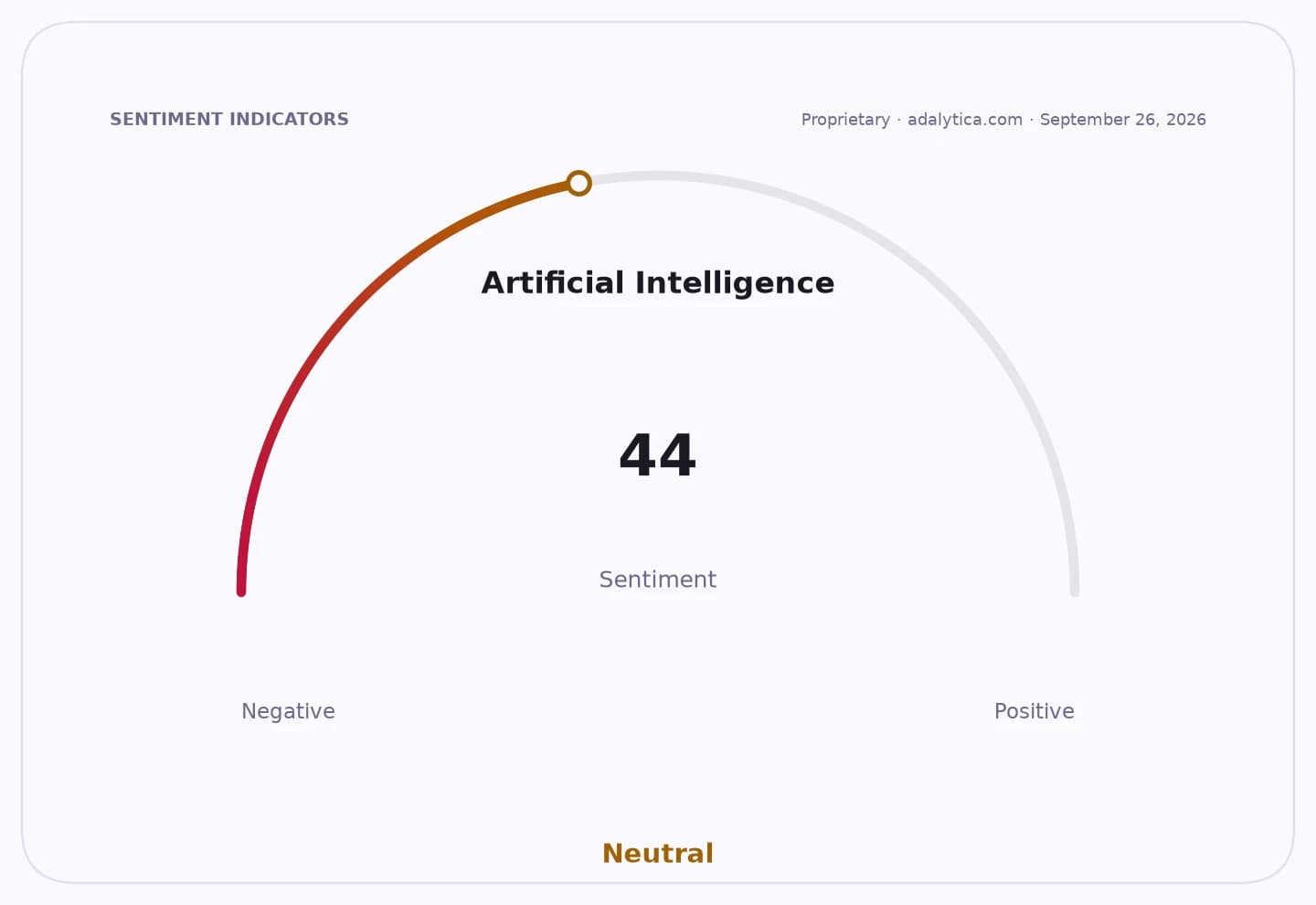
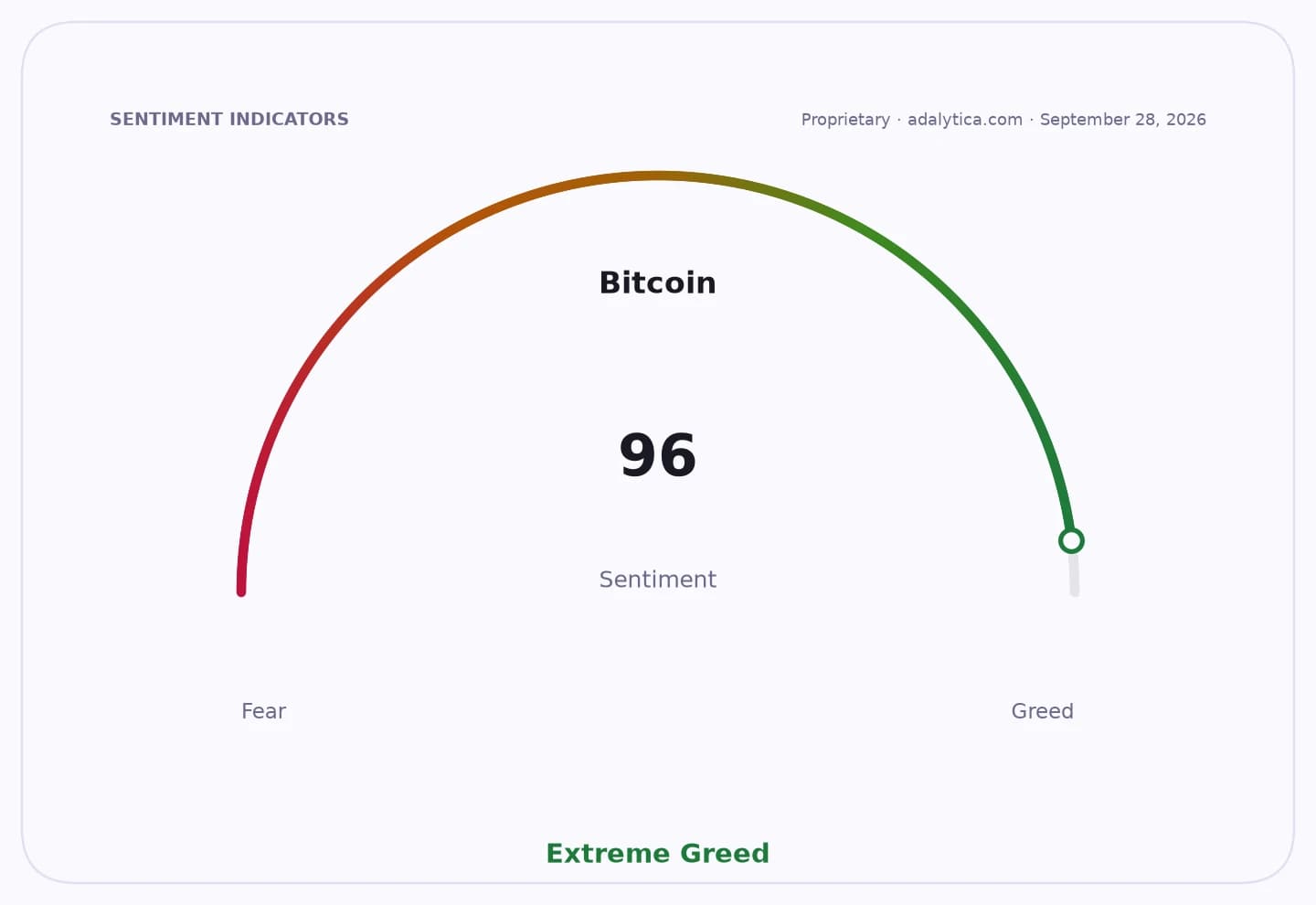
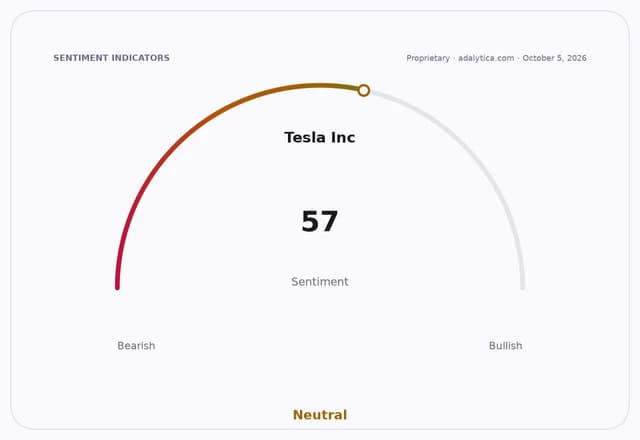
Sentiment IndicatorsⓘProprietary · adalytica.com · October 5, 2026
This is a snapshot — live sentiment, awareness and momentum for 130+ markets update continuously in the dashboard.Open AlphaPulse
Technically, the shares have recovered from recent weakness and are back above the 50-day moving average, which stood at $347.58 on the latest data, while the relative strength index has risen to 57.6 from oversold levels earlier in the summer. The stock is still below its 200-day moving average of $393.18, suggesting the longer-term trend has not been fully repaired even after the latest rebound.
That backdrop fits a market that is rewarding signs of operating strength but remains wary of capital intensity. Adalytica’s Tesla Earnings Sentiment gauge is neutral at 57, up 32 points in a day and 46 points over the past week, indicating that attention has turned more positive after the quarterly update. By contrast, the commentary around the stock still reflects skepticism about whether Tesla can translate growth into sustained earnings power as it pours money into new products, manufacturing, charging infrastructure and autonomy.
The company’s own filings have underlined that tension. Tesla said in July that automotive sales revenue rose $6.77 billion, or 24%, in the first half of 2026 from a year earlier, helped by an 18% increase in cash deliveries. But it also warned that regulatory-credit income is exposed to changing rules and that it is simultaneously expanding manufacturing on three continents while investing in autonomy, robotics and other artificial-intelligence-related projects.
That is why the latest rally matters beyond a single day’s trading. A stronger quarter supports the bull case that Tesla can keep growing into its premium multiple, especially if investors continue to assign value to Cybercab, FSD and robotics. The bear case is that Tesla’s earnings remain highly sensitive to pricing, regulation and capital spending, leaving the stock vulnerable if growth slows or if margins fail to keep up with the company’s ambition.
For investors, the near-term question is whether the Q3 momentum can carry into year-end without another round of margin pressure. Tesla’s ability to turn record-scale operations into durable free cash flow, rather than just higher unit volume, is likely to determine whether the recent gain becomes a trend or another short-lived spike in a stock still defined by big expectations.
| Entity | Gains | Losses |
|---|---|---|
| Tesla bulls | ▲Stronger growth case | ▼Skepticism on execution |
| Tesla bears | ▲Higher entry levels if momentum fades | ▼Squeezed by improving fundamentals |
| Long-term shareholders | ▲Better narrative support | ▼Near-term valuation risk |
| Legacy auto rivals | ▲Discipline on EV demand if Tesla stumbles | ▼Pressure from Tesla’s rebound |