Tether has disclosed that it holds about 150,000 bitcoin, a stockpile worth more than $11.4 billion at current prices, underscoring how the USDT issuer is turning its stablecoin profits into one of the largest corporate crypto treasuries in the market.
Tether says it holds about 150,000 bitcoin

The revelation matters because Tether sits at the center of crypto liquidity. As the largest stablecoin issuer, its balance sheet decisions can influence demand for bitcoin, the availability of dollar-like liquidity across trading venues and the broader risk appetite in digital assets.
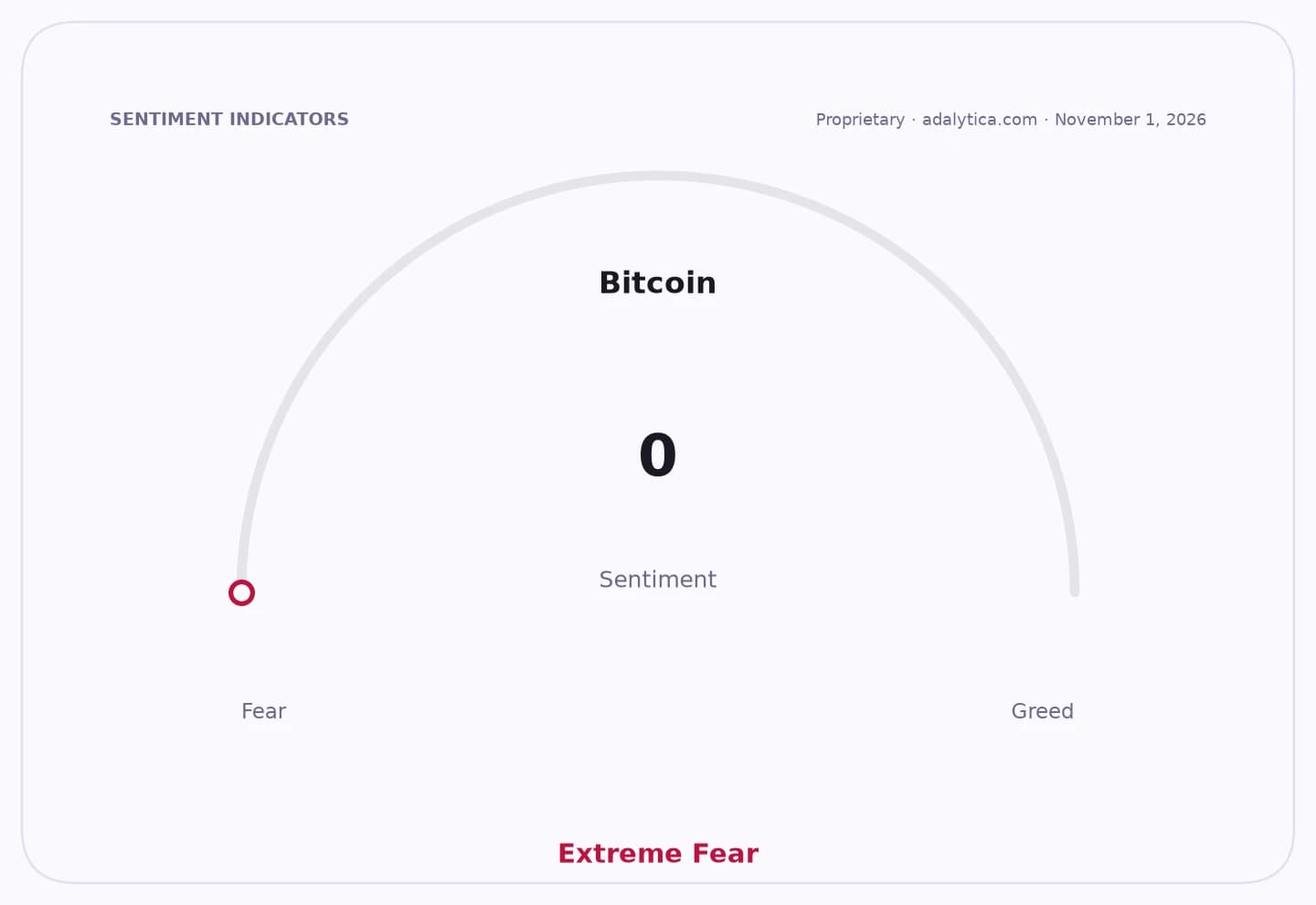
Sentiment Indicators
Paolo Ardoino, Tether’s chief executive, said the company’s bitcoin holdings are “roughly” 150,000 BTC, up from more than 100,000 BTC he had cited in 2025. The latest figure was disclosed alongside Tether’s third-quarter results, which showed reserve assets of $191.45 billion against liabilities of $183.50 billion, leaving an excess reserve buffer of $7.95 billion.
Tether also said it generated $1.5 billion of net operating profit in the third quarter and $4.5 billion year to date, helped by returns on U.S. Treasuries and repo transactions. The company said its direct and indirect exposure to U.S. government securities reached $132.4 billion, reinforcing that it remains heavily anchored to traditional dollar markets even as it expands deeper into crypto.
For investors, the bitcoin holding is the clearest sign yet that Tether is not just a stablecoin issuer but a large-scale asset allocator with growing influence over digital-asset pricing. The company is also diversifying into gold, energy infrastructure, bitcoin mining and AI-related projects, part of Ardoino’s so-called “Independence Stack” strategy aimed at building financial and technological systems outside major corporate platforms.
Bitcoin was trading around $80,420 on Wednesday after a volatile stretch, while Adalytica’s Bitcoin Fear & Greed Index showed “Extreme Fear,” highlighting the mismatch between weak sentiment and the size of Tether’s accumulated position. Any further disclosure on how the company classifies those holdings — and whether they sit inside reserves or alongside surplus capital — will matter for regulators, traders and competitors watching one of crypto’s most important balance sheets.
| Entity | Gains | Losses |
|---|---|---|
| Tether | ▲Larger treasury asset base | ▼Greater bitcoin volatility exposure |
| Bitcoin bulls | ▲Potential large corporate buyer | ▼Less clarity on reserve treatment |
| Stablecoin rivals | ▲Benchmark for reserve scale | ▼Pressure to justify balance sheets |
| Short-term BTC sellers | ▲— | ▼Higher risk of supply squeeze |