Toronto home sales fell in August, ending a five-month rebound and underscoring how quickly housing demand can weaken when households start to fear the wider economy.
Toronto home sales fall in August as prices dip
The Toronto Regional Real Estate Board said transactions across the city and surrounding area slipped 1.3% from July to 5,484, the first monthly decline since February and 28% below the 10-year average for August. The pullback came as U.S.-Canada trade talks collapsed, stoking worries about jobs, inflation and future borrowing costs even though mortgage rates were little changed.
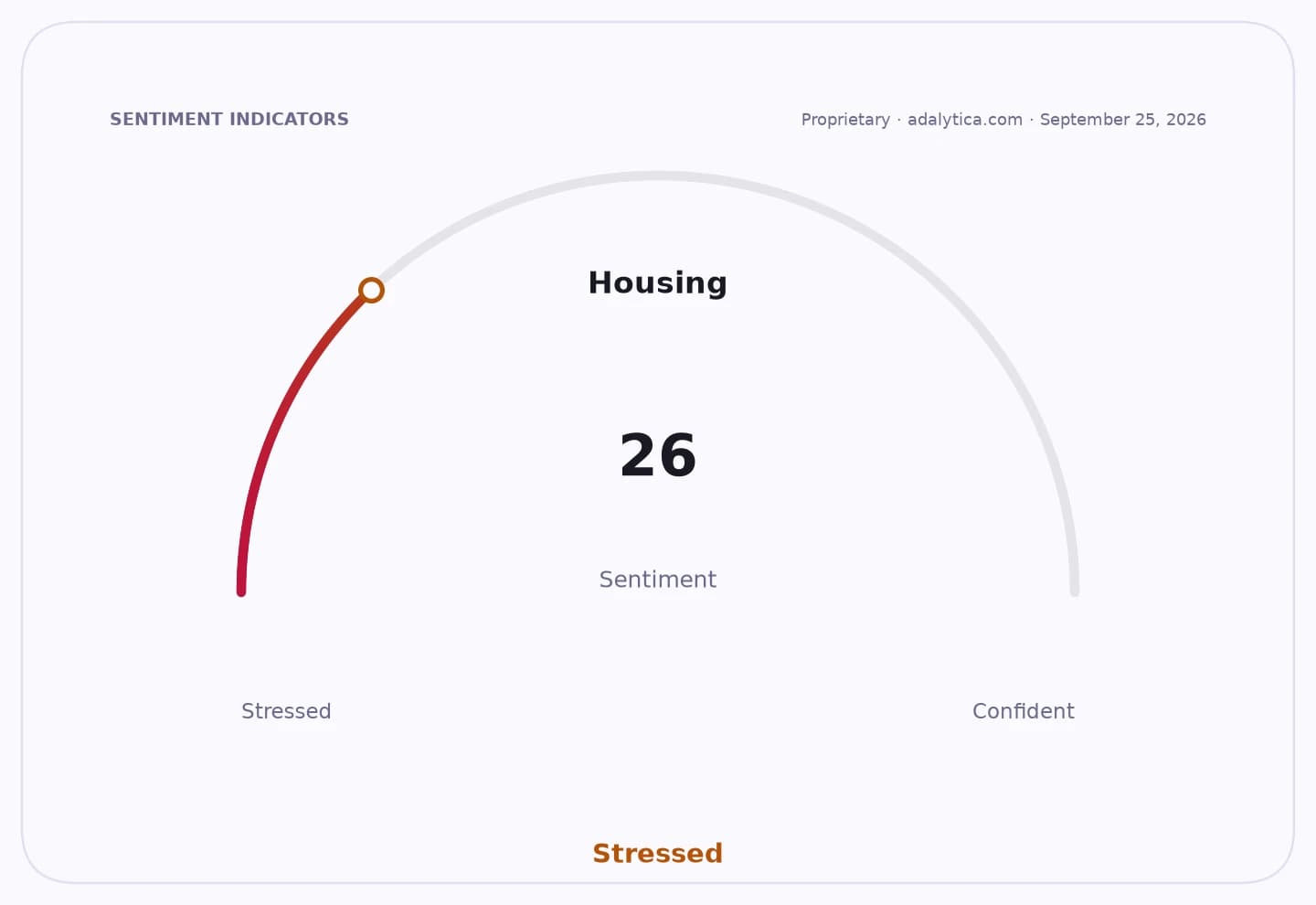
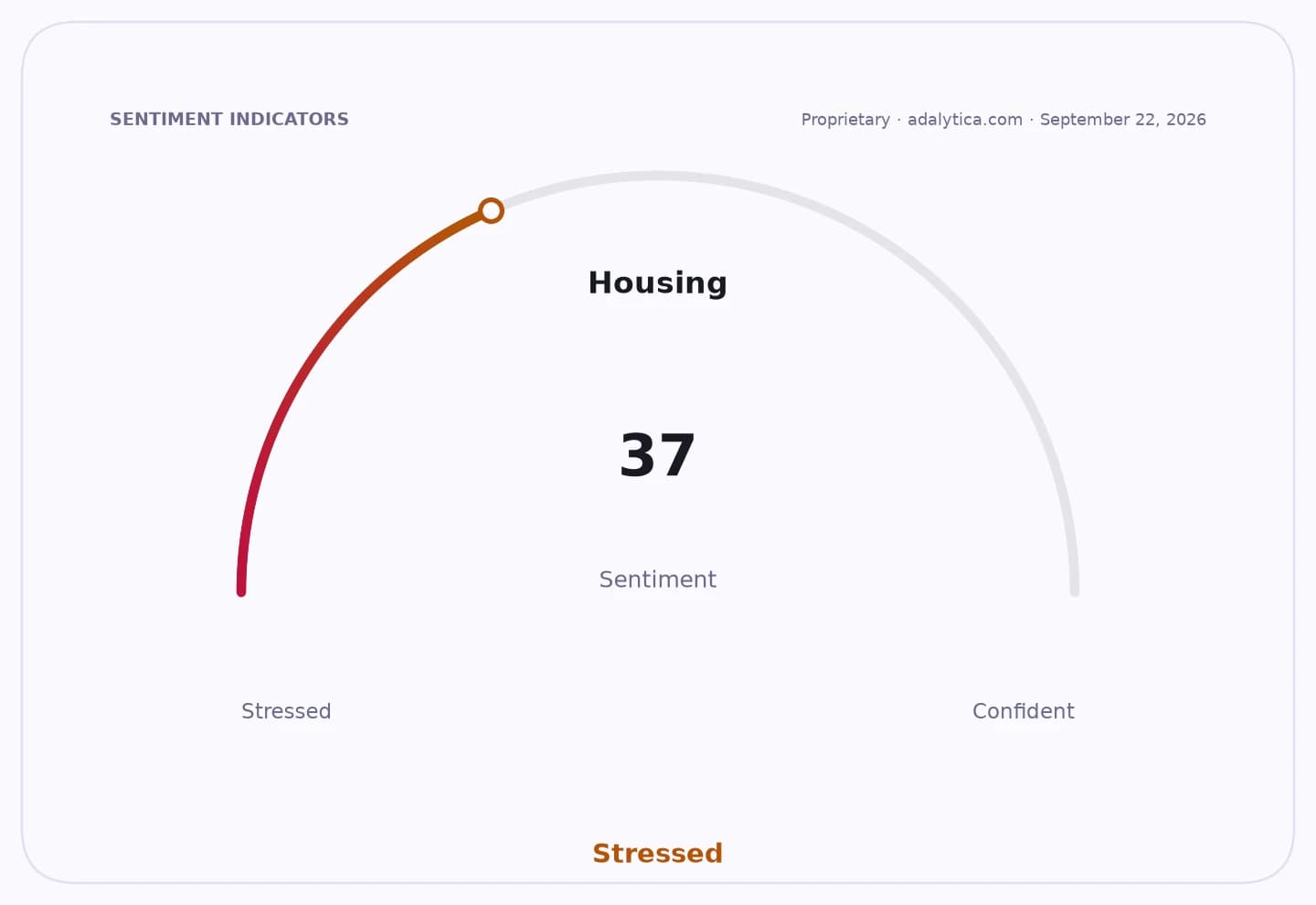
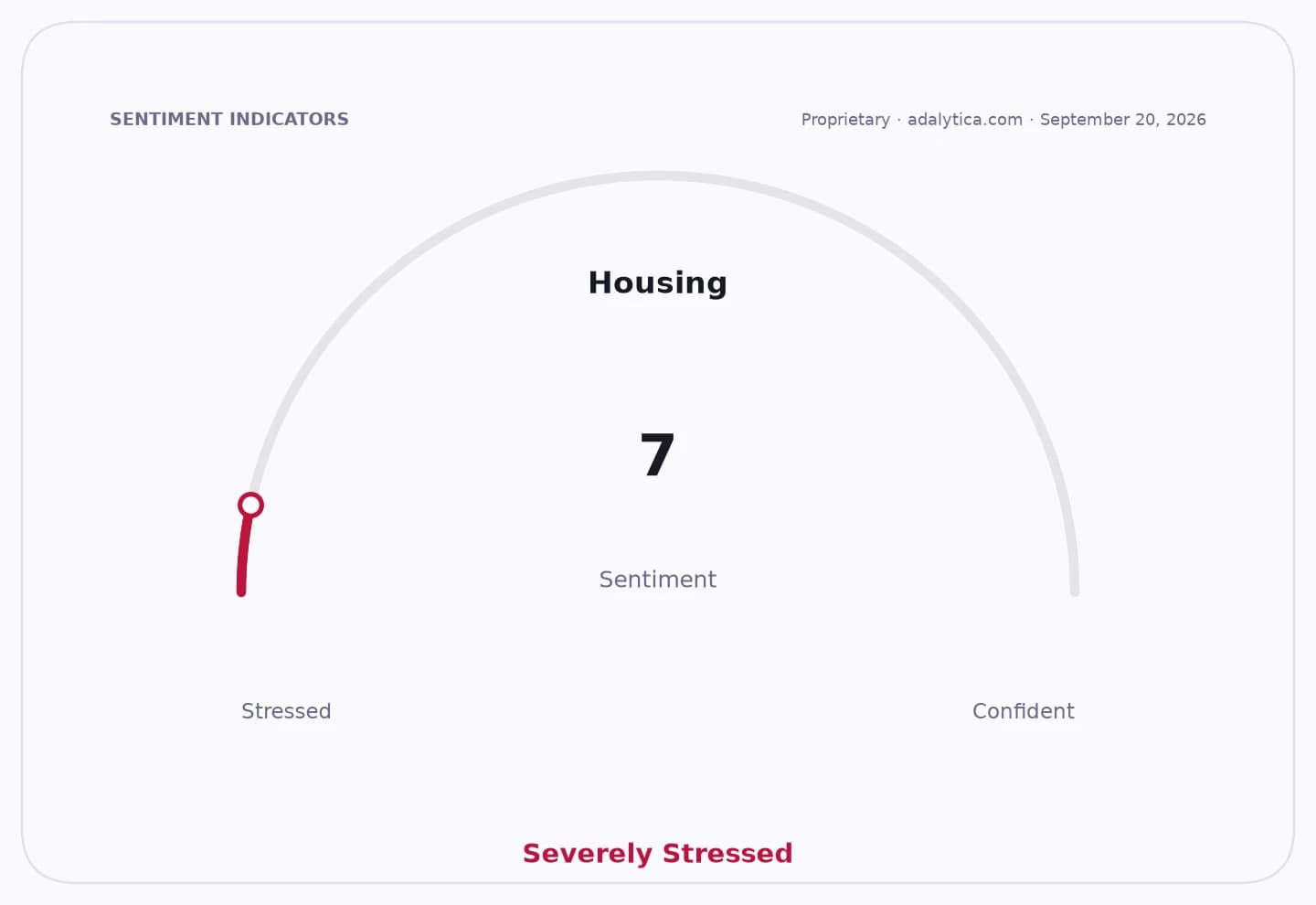
Sentiment IndicatorsⓘProprietary · adalytica.com · September 3, 2026
This is a snapshot — live sentiment, awareness and momentum for 130+ markets update continuously in the dashboard.Open AlphaPulse
That matters because Toronto is Canada’s biggest and most influential housing market. Its momentum had helped support national sales in recent months, so a loss of traction there raises the risk that the broader housing recovery stalls before it becomes self-sustaining. For policymakers, it is another sign that uncertainty, not just interest rates, is keeping consumers on the sidelines.
TRREB said would-be buyers were increasingly concerned that the trade conflict could lift inflation and push borrowing costs higher. The average rate on a five-year fixed mortgage held at 4.8% last month, according to Ratehub.ca, but that stability was not enough to offset weaker sentiment. Jamie David, Ratehub’s vice-president of marketing and mortgages, warned that if the trade war persists, softer confidence could weigh on sales even if financing costs remain relatively steady.
Prices also remain under pressure, suggesting the market recovery is still fragile. Toronto-area home prices fell 0.1% from July to a typical $931,200, and were down 4.5% from a year earlier. The sharpest annual declines were in York Region, where the benchmark fell 6.2%, while condo prices across the region dropped 7.1%, more than detached houses’ 4.5% decline.
For investors, the data reinforces the split between housing-related equities and the underlying market. Canadian homebuilders, lenders and real estate-linked names are likely to remain sensitive to every shift in trade policy and consumer confidence. In the U.S., homebuilding ETFs such as XHB and ITB are already showing technical weakness, with recent trading below their 50-day moving averages and subdued RSI readings, a sign that sentiment is fragile across the sector.
The broader narrative is that Toronto housing is no longer being driven mainly by mortgage rates or supply-demand fundamentals; it is being buffeted by macro uncertainty. If trade tensions deepen, the region could see another prolonged pause in activity. If they ease, lower rates and pent-up demand could still revive sales. For now, August looks less like a one-month dip than an early warning that the rebound still lacks conviction.
| Entity | Gains | Losses |
|---|---|---|
| Buyers | ▲More negotiating power | ▼Confidence in near-term timing |
| Sellers | ▲Faster-moving listings | ▼Pricing power |
| Homebuilders | ▲Potential future demand if rates fall | ▼Near-term sales momentum |
| Lenders | ▲Stable borrowing demand if recovery resumes | ▼Loan growth from hesitant buyers |