Albertsons is telling investors what many households already know: in a squeeze, shoppers are trading down fast, and the biggest winners are Walmart, Amazon and Aldi.
Trade-Down Favors Walmart, Amazon Over Albertsons
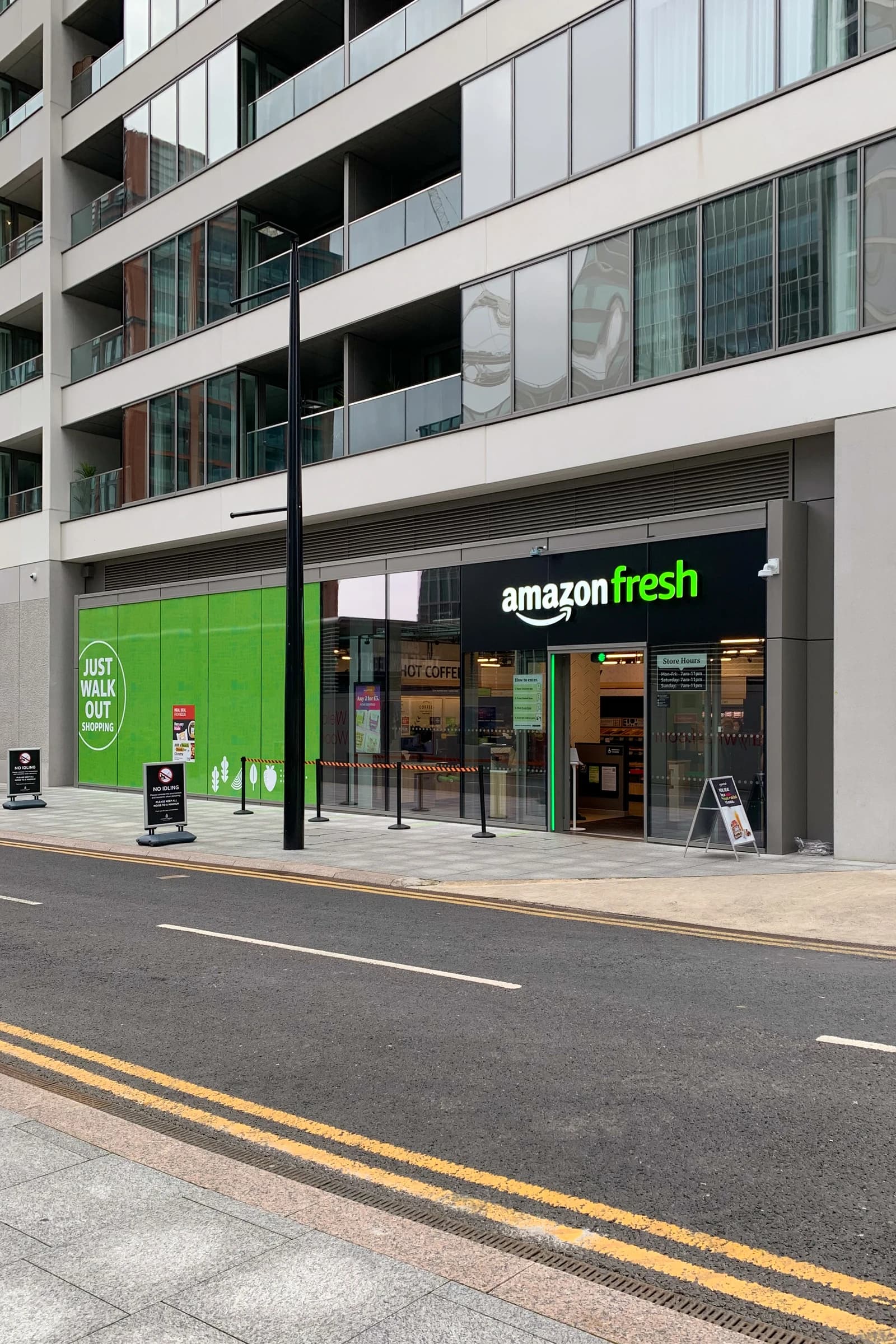
That matters because grocery demand is usually sticky, but value becomes the deciding factor when budgets are tight. Albertsons’ latest results show a business still tied to the essentials, yet fighting a more brutal battle for the basket as consumers chase lower prices on groceries, fuel-sensitive household items and back-to-school staples. In a market where every dollar matters, the retailer with the widest assortment, the sharpest pricing and the easiest digital checkout often wins.
Sentiment IndicatorsⓘProprietary · adalytica.com · July 24, 2026
This is a snapshot — live sentiment, awareness and momentum for 130+ markets update continuously in the dashboard.Open AlphaPulse
The pressure is showing up in the stock. Albertsons shares sank to $11.02 on Friday after closing at $14.60 two days earlier, a drop that pushed the retailer well below both its 50-day and 200-day moving averages. The stock’s relative strength index was deep in oversold territory at 23.1, while the MACD remained negative, underscoring how quickly sentiment has deteriorated around the name.
Albertsons’ warning also fits a broader consumer story. Adalytica’s consumer spending snapshot shows sentiment at 36, neutral but weakening, while awareness is in “Extreme Fear,” a sign that households are still cautious even if they have not yet fully pulled back. That kind of environment tends to favor Walmart’s scale, Amazon’s convenience and Aldi’s bare-bones pricing over regional grocers that do not have the same cost advantage.
Walmart is the clearest beneficiary. Its shares held around $108.20 Friday, above both the 50-day and 200-day averages, even as the broader retail backdrop softened. Amazon, meanwhile, remains a long-term winner from the same trade-down behavior because consumers increasingly compare prices across channels and buy more of their everyday staples online. Aldi’s advantage is simpler but powerful: limited assortment, aggressive private-label pricing and a reputation for low bills.
For Albertsons, the challenge is not just losing occasional traffic. It is defending margins in a market where oil costs are filtering into shipping, produce and other essentials, just as families head into the back-to-school season. That combination can force grocers to absorb some inflation while still leaning on promotions to keep volume from slipping, a poor setup for earnings growth.
Investors should read this as a reminder that grocery is a competitive business even in good times, and brutal when shoppers get picky. The companies with durable moats are the ones that can hold pricing power, keep costs low and make shopping easier across stores and apps. Albertsons can still be a long-term hold if management proves it can protect share and cash flow, but for now the louder message is that the value wars are being won by the biggest operators.
For patient investors, the lesson is simple: in a price-sensitive economy, scale wins. That is why Walmart and Amazon deserve to stay on watchlists, while Albertsons needs to show it can adapt before the market gives it the benefit of the doubt again.
| Entity | Gains | Losses |
|---|---|---|
| Walmart | ▲Trade-down traffic | ▼Margin pressure from promotions |
| Amazon | ▲Price-conscious online baskets | ▼Slower discretionary demand |
| Aldi | ▲Value-seeking grocery shoppers | ▼Limited-margin battles intensify |
| Albertsons | ▲— | ▼Share, pricing power, investor confidence |