The Treasury’s decision to double its bond buyback program next month is a sign that policymakers see enough strain in the U.S. fixed-income market to intervene, but not enough to solve the problem outright. Yields remain elevated, long-duration Treasuries are under pressure, and the dollar is near three-month lows, suggesting the market is still demanding a higher premium for holding U.S. debt even after the announcement.
Treasury bond buyback expansion pressures yields

That matters because bond market volatility feeds directly into borrowing costs for the government, corporations and households. A failed or ineffective buyback campaign would leave the Treasury financing more debt into a less forgiving market, while also keeping pressure on mortgage rates, corporate spreads and equity valuations. The 10-year Treasury yield was around 4.69% on the latest data, up sharply from the ultra-low-rate era and still well above the 3.63% federal funds rate, showing policy remains restrictive in real economic terms even without further Fed tightening.
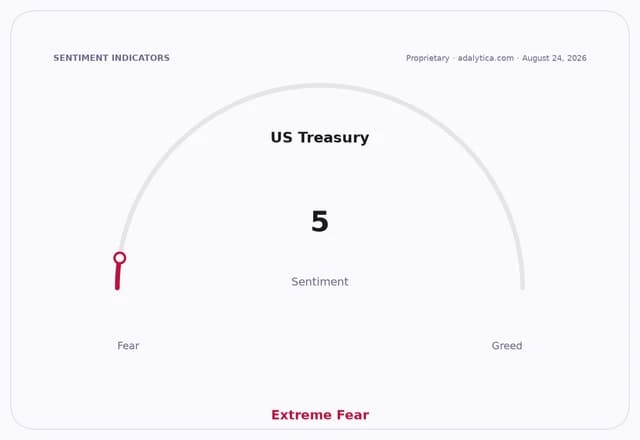
Sentiment IndicatorsⓘProprietary · adalytica.com · August 24, 2026
This is a snapshot — live sentiment, awareness and momentum for 130+ markets update continuously in the dashboard.Open AlphaPulse

The intervention also underscores a broader tension between the Treasury and the market. Officials are trying to support liquidity and smooth trading conditions through buybacks, but some Fed policymakers have described recent yield moves as normal and unlikely to change the rate path. That split matters for investors because it means the central bank is not stepping in to validate lower yields, leaving the market to test how much support the Treasury alone can provide.
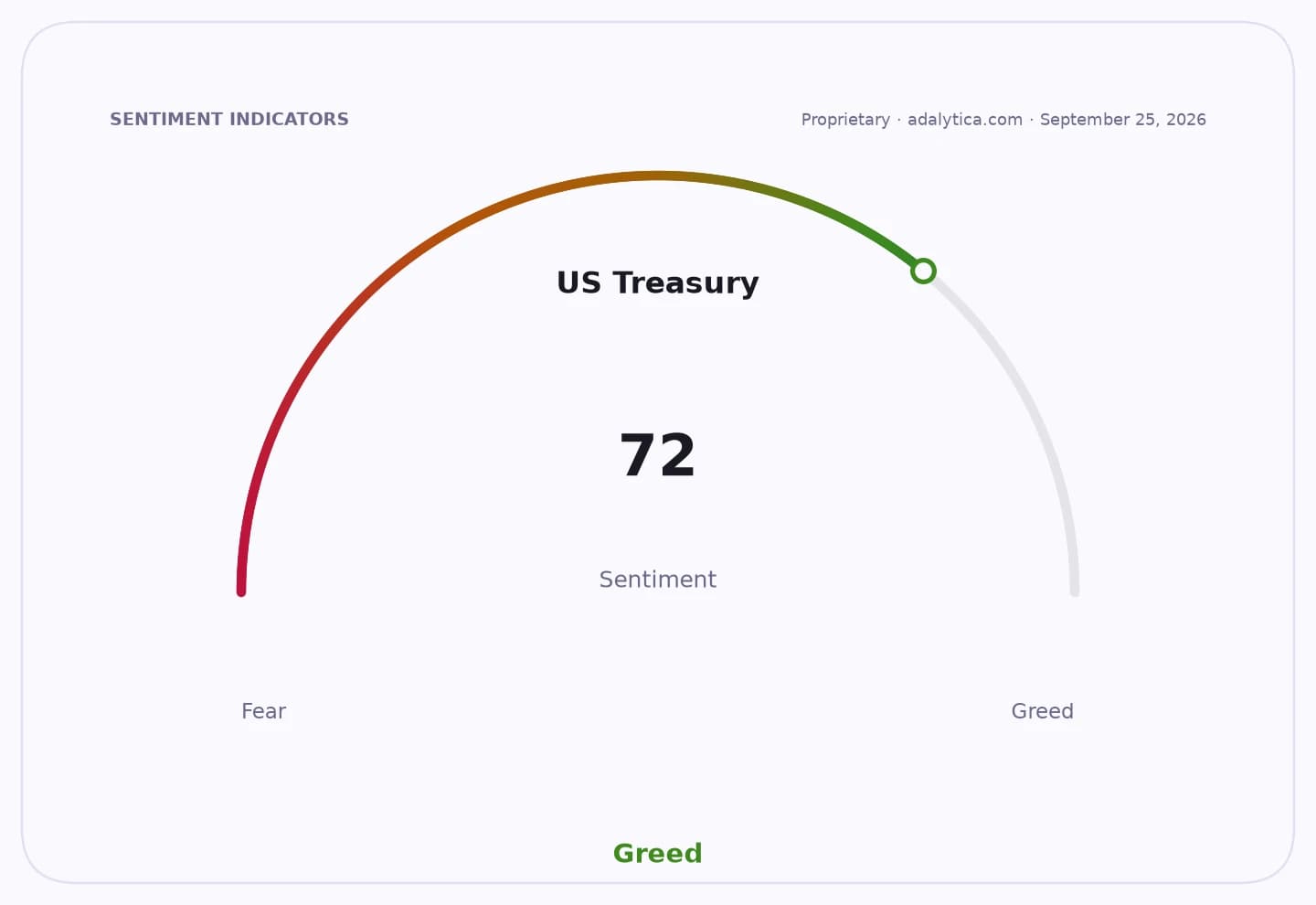
The price action in bond ETFs reflects that fragility. TLT, which tracks long-duration Treasuries, has slipped back to about 82.56 and sits below its 50-day and 200-day moving averages, while its RSI has eased to neutral readings. The Adalytica trade snapshot shows extreme fear in Treasury bonds even as awareness remains elevated, a combination that often points to crowded positioning and unstable sentiment rather than a durable recovery.
DGS10 vs DGS2 — macro contextadalytica.com
Explore this data interactively — full history, time series and cross-market comparisons.Open AlphaPulse
IEF and BND have been steadier, but they too show only modest gains and no convincing break higher in the face of intervention. That suggests investors are not treating the buyback expansion as a structural fix. Instead, the market appears to be weighing whether the Treasury is addressing a liquidity problem or merely trying to lean against a deeper repricing of duration risk, inflation uncertainty and fiscal supply.
The dollar’s weakness adds another layer. A broad slide in the currency can ease some financial conditions, but if it reflects fading confidence in U.S. assets rather than a benign growth shift, it would reinforce the case for foreign investors to demand more compensation on Treasuries. That would make the buyback program less a solution than a bridge to a tougher funding environment.
For investors, the key question is whether the Treasury can stabilize the long end without signaling panic. If buybacks succeed, duration assets could recover, the dollar may steady and risk assets could regain some breathing room. If they fail, the likely outcome is higher volatility across bonds, currencies and equities, with the 10-year yield acting as the market’s main pressure valve.
| Entity | Gains | Losses |
|---|---|---|
| Treasury | ▲Better bond liquidity | ▼Higher funding pressure |
| Bond holders | ▲Possible yield stabilization | ▼Price volatility |
| Equity investors | ▲Easing financial conditions | ▼Higher discount rates |
| Dollar bears | ▲Continued FX weakness | ▼Stronger policy support |