TSMC’s CoWoS advanced packaging has become one of the most important enablers of the AI chip boom, improving performance by letting processors and high-bandwidth memory sit closer together while also making it possible to build larger, more power-hungry accelerators.
TSMC CoWoS Demand Supports AI Chip Buildout
That matters because the bottleneck in AI semiconductors is no longer just transistor density. It is how much compute, memory and interconnect can be delivered in a single system package without wasting power or bandwidth. CoWoS — commonly read as chip-on-wafer-on-substrate — is central to that equation, which is why demand for TSMC’s packaging capacity has rippled across Nvidia, AMD and the broader AI supply chain.
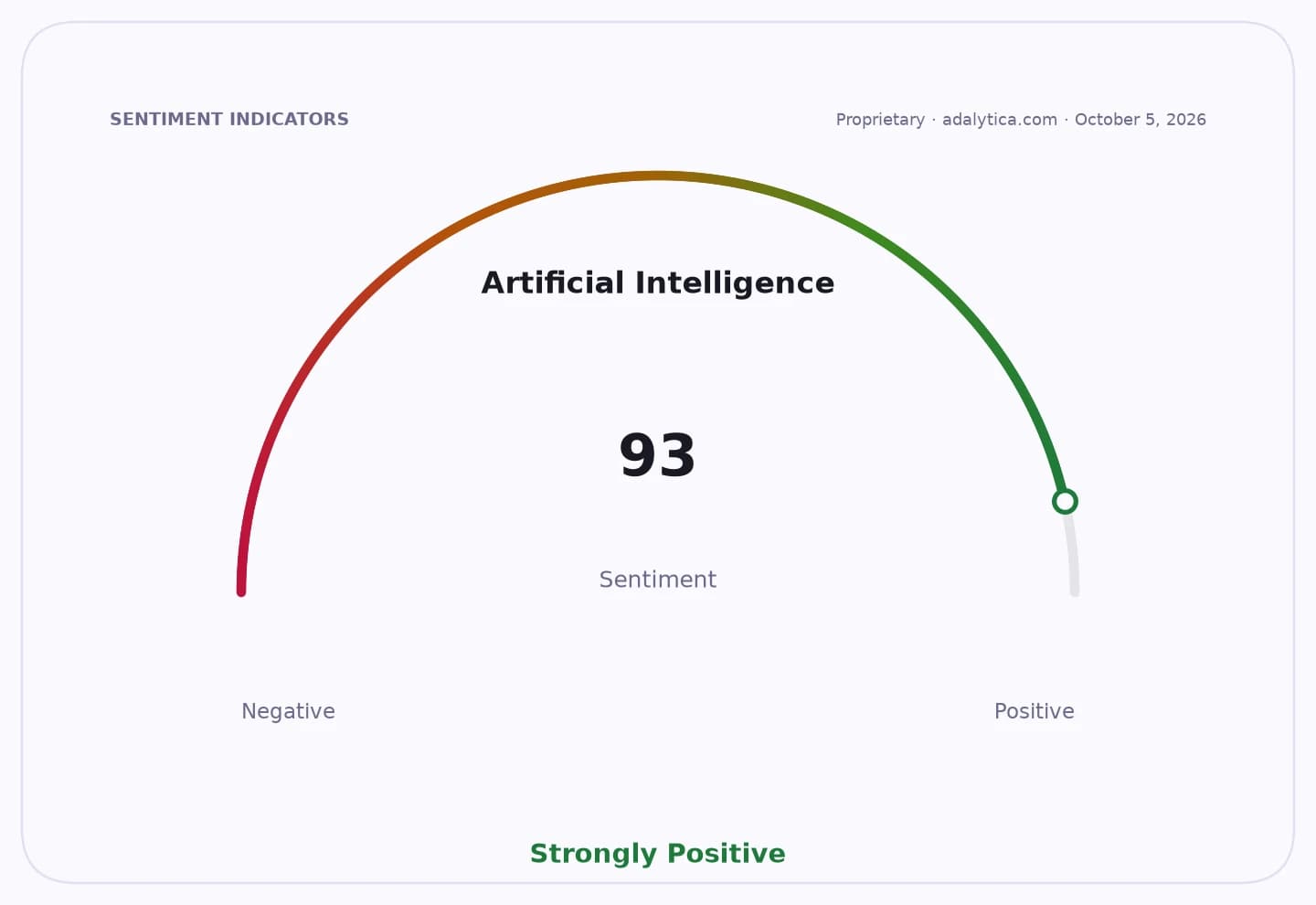
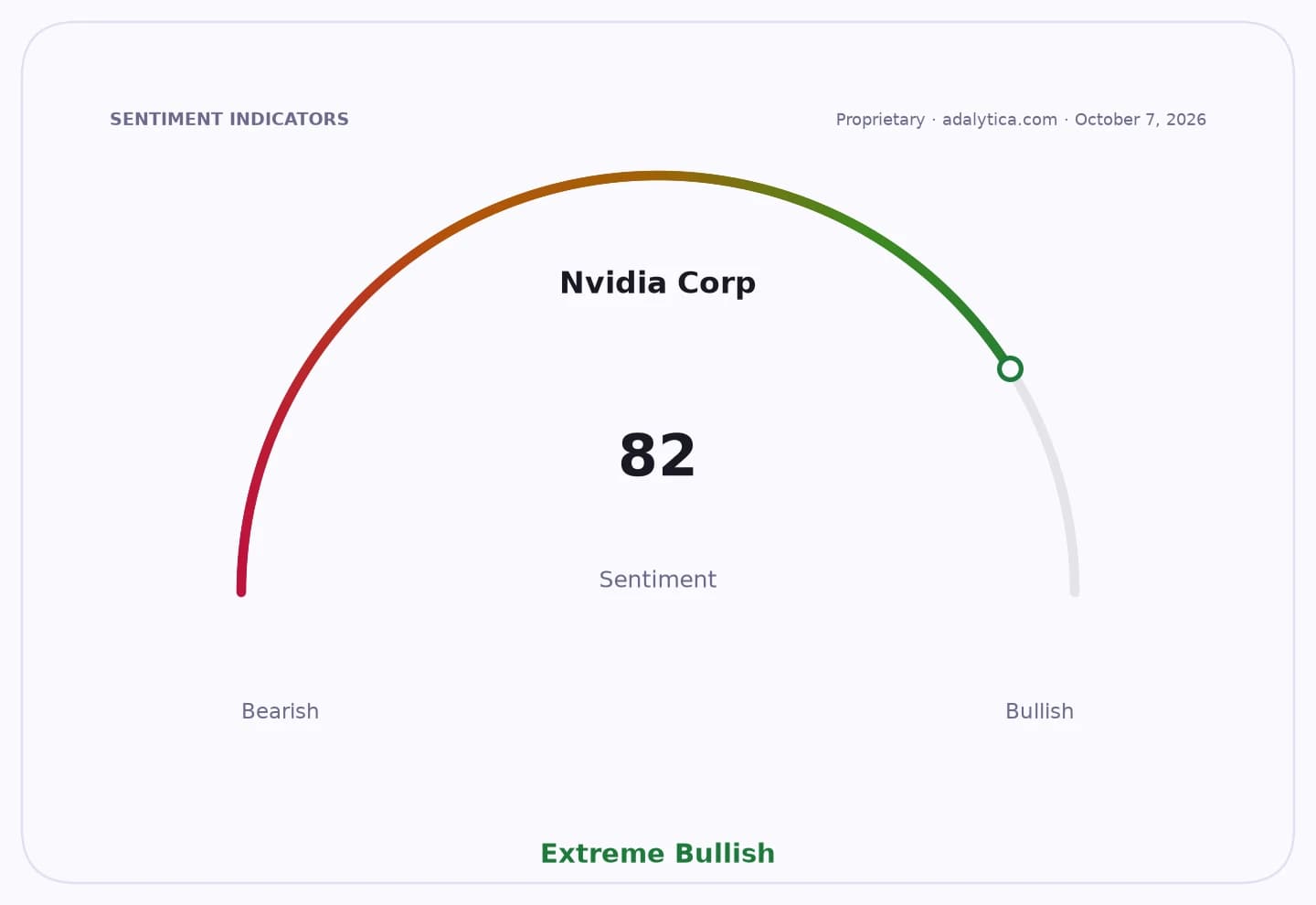
Sentiment IndicatorsⓘProprietary · adalytica.com · October 7, 2026
This is a snapshot — live sentiment, awareness and momentum for 130+ markets update continuously in the dashboard.Open AlphaPulse
For investors, the technology reinforces TSMC’s role as the critical toll booth in the AI infrastructure buildout. Shares in the Taiwan chipmaker have climbed sharply, with TSMC closing at $472.20 on Oct. 7, up from $327.98 at the end of January, while remaining well above its 200-day moving average of $388.40. The stock is still extended after a strong run — its RSI reading of 75.4 suggests overbought conditions — but the market is clearly pricing continued AI-led demand.
Nvidia, the biggest beneficiary of advanced packaging, has also rallied with AI demand. Its shares ended at $237.47 on Oct. 7, near the upper end of their recent range and above both the 50-day and 200-day moving averages. The company’s own filings have flagged supply-chain complexity and capacity constraints as a risk, underscoring why packaging and system integration matter as much as silicon design.
AMD is pushing to widen its AI footprint as well, including work with South Korean chipmakers, reflecting the same industry-wide scramble to secure manufacturing and assembly capacity. As AI models get larger and training clusters more power-intensive, access to advanced packaging is becoming a competitive advantage rather than a back-end detail.
The bull case for TSMC is that CoWoS demand remains structurally under-supplied and will keep supporting pricing power, margins and revenue visibility. The bear case is that the market may already be discounting a lot of that growth, leaving the stock vulnerable if AI spending pauses or if capacity expansion at rivals eases the bottleneck.
For now, CoWoS is a reminder that the AI trade is not just about chips. It is about the packaging, power and supply-chain engineering that determine which companies can actually ship the next generation of accelerators.
| Entity | Gains | Losses |
|---|---|---|
| TSMC | ▲Pricing power, AI demand | ▼Capacity strain |
| Nvidia | ▲Faster chip integration | ▼Supply bottlenecks |
| AMD | ▲Better AI competitiveness | ▼Catch-up burden |
| AI customers | ▲Higher performance | ▼Higher procurement costs |