TSMC’s move to raise chip prices by as much as 10% in 2027 matters because it says the world’s most important contract chipmaker still has pricing power at the exact moment investors are questioning whether the AI buildout can keep absorbing higher costs.
TSMC Pricing Power Signals Strong AI Demand
That is the real story here. If Taiwan Semiconductor Manufacturing Co. can push through meaningful price increases, it suggests advanced chips remain scarce, demand remains resilient and the company’s dominant position at the center of the AI supply chain is intact. For long-term investors, that is bullish not just for TSMC’s margins, but for the broader argument that the semiconductor cycle is being reshaped by structural AI demand rather than short-lived hype.
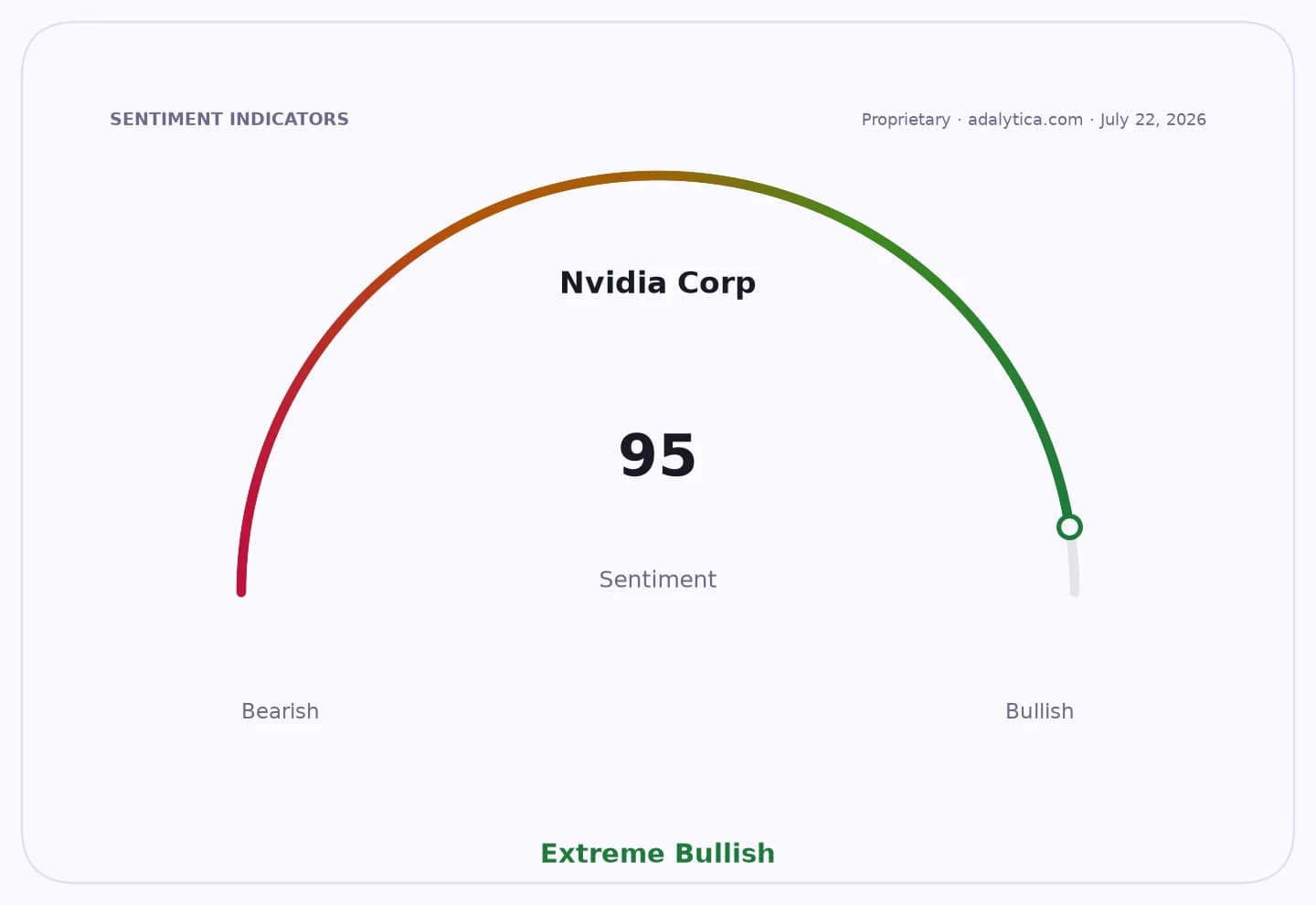
Sentiment IndicatorsⓘProprietary · adalytica.com · July 22, 2026
This is a snapshot — live sentiment, awareness and momentum for 130+ markets update continuously in the dashboard.Open AlphaPulse
The economic significance is bigger than one company’s margins. Semiconductor manufacturing sits at the heart of the global technology stack, and TSMC is the bottleneck for many of the most valuable chips in the market. When a company with that kind of leverage raises prices, the cost ripple can flow through AI infrastructure, smartphones, data centers and high-performance computing hardware. In other words, this is not just a Taiwan story. It is a pricing signal for the entire chip ecosystem.
TSMC’s latest earnings gave investors a reason to believe the higher price tag will be tolerated. The company posted a 77% jump in second-quarter profit, helped by strong demand for AI chips, according to the news context. That kind of growth helps explain why the stock has held up even after periods of volatility. TSMC shares recently traded around 424.61, above the 50-day moving average of 425.09, while technical readings such as RSI around 32 suggest the stock has cooled from earlier extremes without breaking the longer-term uptrend. The conventional indicators point to consolidation, not collapse.
For investors, the takeaway is that TSMC’s pricing power can reinforce one of the most important secular themes in markets today: the infrastructure layer of AI still has room to compound. Every new generation of AI models needs more compute, more advanced packaging and more wafer capacity. If TSMC can charge more for that capacity, then the economics of the winners in the chip chain may stay stronger for longer than skeptics expect.
That said, the benefit is not evenly spread. TSMC stands to gain from its scale, technology lead and customer dependence, while chip buyers such as Nvidia, AMD and ultimately device makers will have to absorb some mix of higher input costs, tighter supply or margin pressure. Nvidia and AMD are still being rewarded by investors for their exposure to AI demand, but higher foundry prices raise the hurdle for everyone downstream. Apple, which has already warned about rising component costs, is another reminder that even the best hardware businesses are vulnerable when supply chains tighten.
The broader market angle matters too. Semiconductor stocks have repeatedly moved major indexes, and a healthier pricing environment for the industry could help stabilize sentiment after recent swings. That is especially important because investors have spent much of the past year trying to separate durable AI demand from speculative excess. TSMC’s price hike argues the demand is real enough to support better economics, not just higher valuations.
The risks are straightforward. If AI spending slows, if geopolitical tensions disrupt Taiwan’s central role in the chip supply chain, or if customers push back harder than expected, TSMC’s leverage could fade. But for now, the company appears to have the rarest advantage in markets: it can raise prices in a critical industry without losing its place at the center of it.
For long-term investors, that makes TSMC worth keeping on the watchlist, and possibly in the core of a diversified semiconductor portfolio. The next few years may still bring volatility, but the business case for the world’s leading chip foundry remains one of the strongest in technology.
| Entity | Gains | Losses |
|---|---|---|
| TSMC | ▲Higher margins | ▼None immediately |
| Nvidia, AMD | ▲Reliable capacity | ▼Higher foundry costs |
| Apple and device makers | ▲Supply access | ▼Input-cost pressure |
| Long-term TSM investors | ▲Pricing power story | ▼Short-term volatility |