TSMC’s latest rally is stalling, and that matters because the world’s most important chipmaker is still the clearest read-through on whether AI demand can keep driving the semiconductor supply chain. Shares of Taiwan Semiconductor Manufacturing Co. fell 2.8% to $398.37 on July 17, while Tower Semiconductor slid 1.9% to $234.10, as investors reassessed how much of the AI buildout is already priced in and how quickly suppliers can keep up.
TSMC Pullback Signals AI Supply-Chain Caution
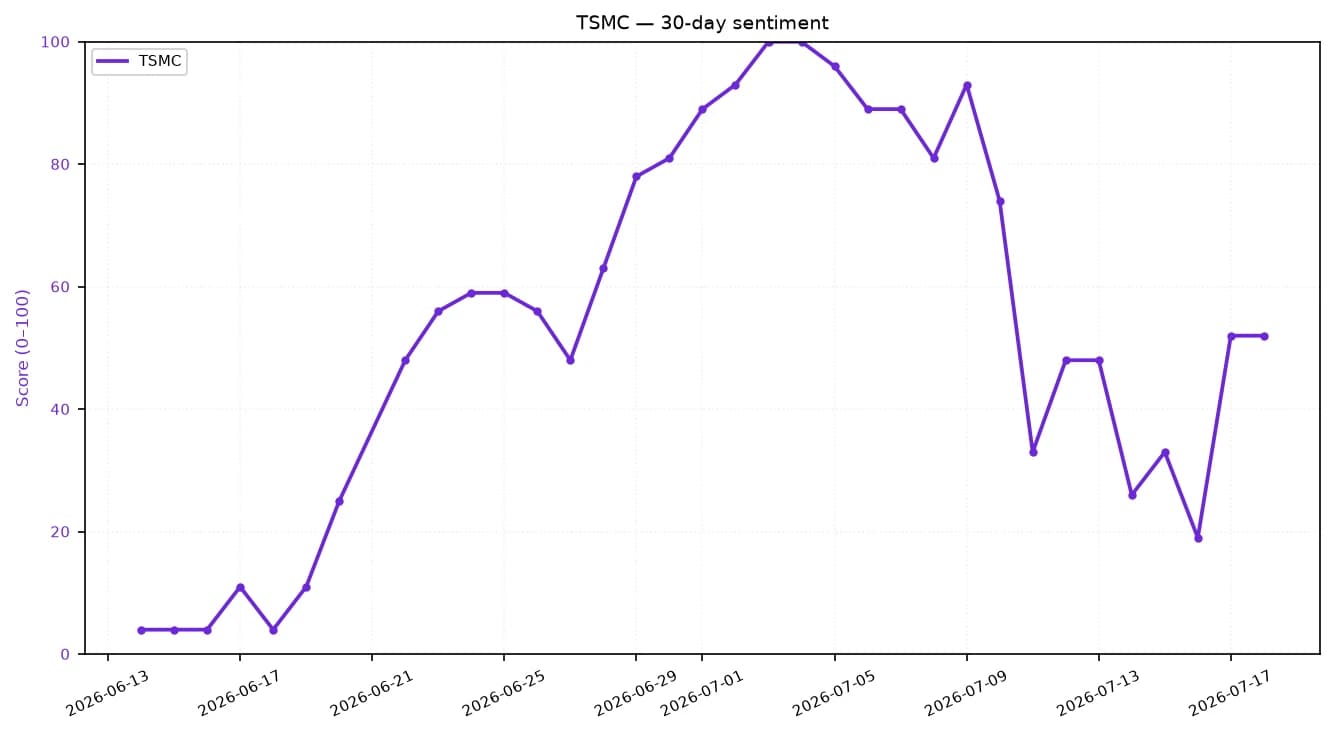
The pullback comes despite TSMC’s strong second-quarter showing and a June revenue report that showed sales up 67.9% from a year earlier, underscoring that demand is still robust even as the market grows more cautious. TSMC had surged to a recent peak of $477.57 on June 30 before slipping back, with momentum indicators now rolling over: the stock sits below its 50-day moving average and the MACD has turned negative, while RSI has cooled to 39.9, a sign the run-up has been unwinding.
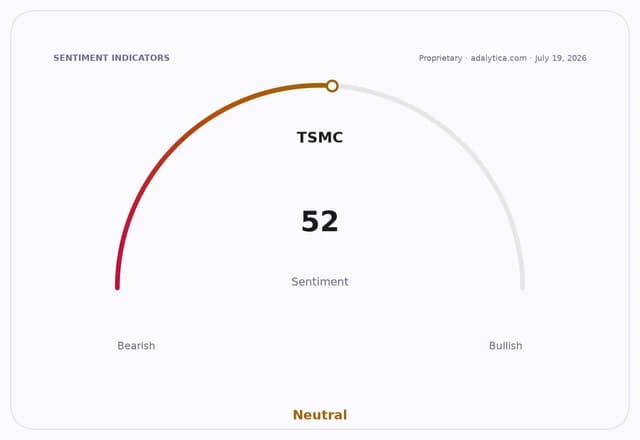
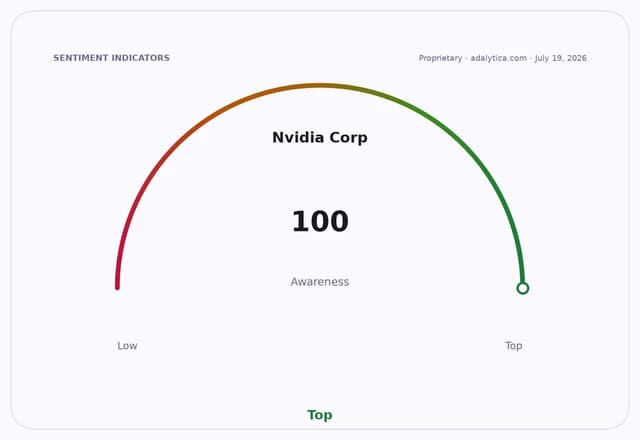
Sentiment IndicatorsⓘProprietary · adalytica.com · July 19, 2026
This is a snapshot — live sentiment, awareness and momentum for 130+ markets update continuously in the dashboard.Open AlphaPulse
For suppliers such as PVA TePla and Tower Semiconductor, the key issue is not just near-term orders but timing. When TSMC slows procurement decisions or stretches its supply chain, capital equipment and specialty semiconductor vendors can see demand recognition pushed out, even if long-term AI spending remains intact. That creates a two-way market: foundry customers want capacity, but suppliers face the risk that the pace of fab expansion and materials ordering becomes more uneven.
The broader backdrop is still supportive for the sector. TSMC’s earnings strength, NVIDIA’s elevated earnings sentiment and continued capital spending across the AI ecosystem point to a durable investment cycle. But supply-chain friction is rising too, from geopolitical uncertainty to tighter scrutiny of the pace of AI monetization, and that makes the sector more vulnerable to sharp rotations when one bellwether loses momentum.
For investors, the message is that the AI trade is moving from pure demand enthusiasm to execution risk. If TSMC continues to temper its supply-chain pace, chip equipment makers and specialty manufacturers could see more volatility in order timing, even if the structural growth story remains intact. The next catalyst is likely to come from follow-up guidance and customer capital-spending plans, which will show whether this is a temporary pause or the start of a broader deceleration.
| Entity | Gains | Losses |
|---|---|---|
| TSMC | ▲Still-strong revenue base | ▼Momentum and valuation |
| Suppliers like PVA TePla | ▲Long-term AI capex theme | ▼Near-term order timing |
| Tower Semiconductor | ▲Sector demand spillover | ▼Short-term share price |
| AI chip buyers | ▲Capacity expansion | ▼Higher supply-chain uncertainty |