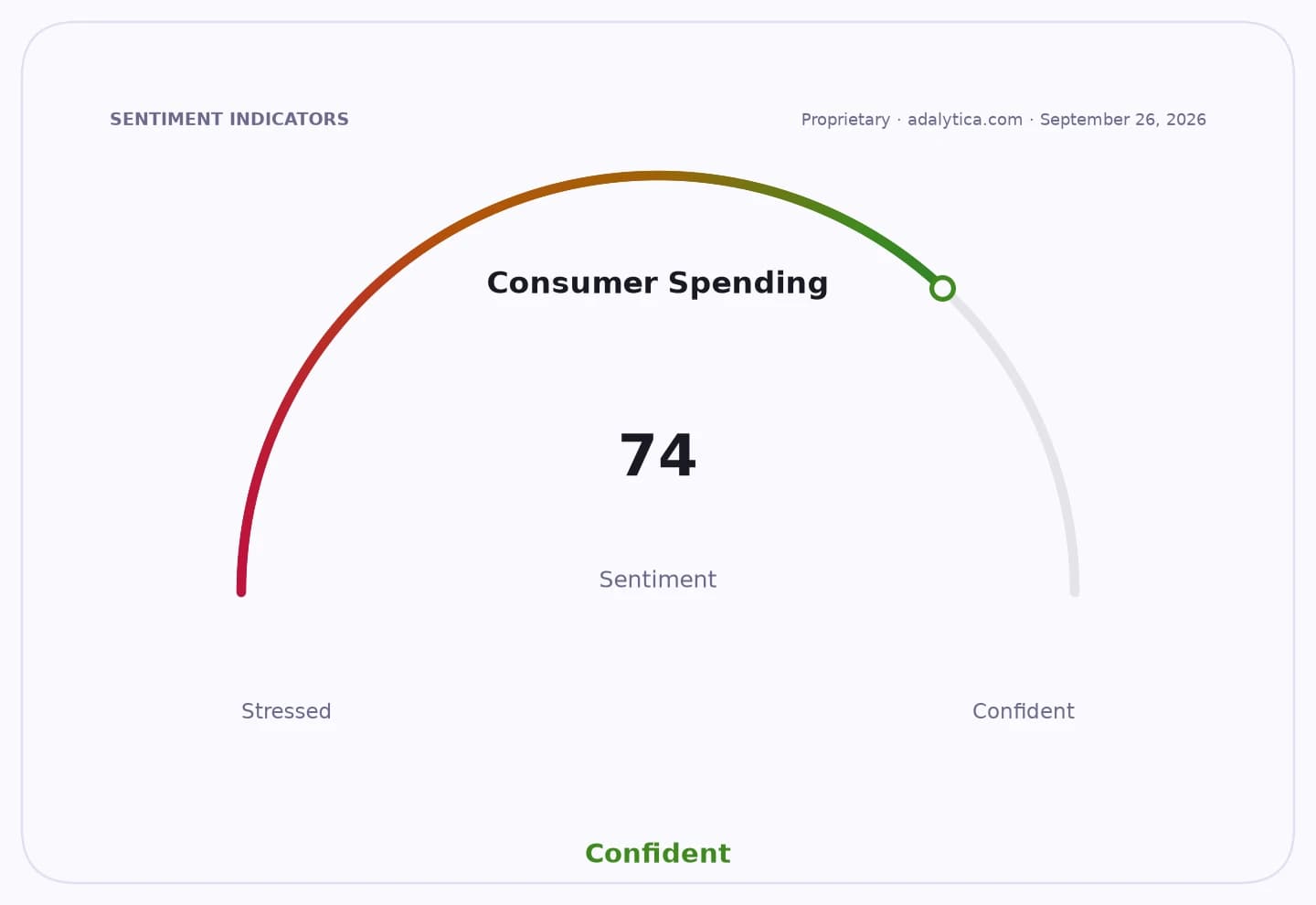
Turkey’s consumer confidence slumped to its weakest level since January after last month’s turmoil in investment funds shook household perceptions of financial security and sent savers toward gold, foreign exchange and bank deposits.
Turkey consumer confidence falls after fund turmoil
Consumer Confidence
The relative confidence index fell 7.7% in October to 84.8, the sharpest monthly drop since August 2023, according to the Turkish Statistical Institute. Readings below 100 indicate pessimism, underscoring how quickly a market-side shock has spilled into the real economy.
Sentiment Indicators
The decline matters because consumer confidence is one of the earliest gauges of how households will spend, save and borrow. In Turkey, where inflation history and currency volatility already make confidence fragile, a crisis that blocks investors’ access to part of their assets can alter behavior well beyond the funds industry. The latest reading suggests the damage is not confined to portfolio losses: it is eroding trust in the broader financial system.
That shift is showing up in savings preferences. A Koç University survey found the share of households planning to place savings in investment funds fell to 21% from 28%, the biggest monthly move among all asset classes surveyed. By contrast, more Turks are turning to traditional hedges such as gold, foreign currency and time deposits, a familiar pattern in an economy where households often flee to hard assets when confidence in financial products weakens.
For investors, the message is twofold. First, domestic demand could soften if households become more cautious, limiting the room for a consumer-led rebound. Second, the rotation away from funds may put further pressure on local risk assets and deepen demand for defensive stores of value, particularly gold and dollars. That is supportive for savers seeking preservation of capital, but negative for equity market participation and for fund managers trying to rebuild trust.
The episode also raises questions for policymakers and regulators. Restoring access, transparency and redemption confidence in the investment-fund industry will be essential if authorities want to prevent a temporary market disruption from becoming a broader loss of faith in financial intermediation. For now, the October data suggest the crisis has already left a mark on household psychology that could take time to repair.
| Entity | Gains | Losses |
|---|---|---|
| Gold buyers | ▲Safe-haven demand | ▼Miss equity upside |
| Foreign exchange holders | ▲Capital preservation | ▼Lira-risk exposure |
| Bank depositors | ▲Higher perceived safety | ▼Lower return potential |
| Turkish fund managers | ▲— | ▼Outflows and trust damage |