Turkey’s consumer confidence climbed to its strongest level since July 2018 in September, a signal that household demand may hold up better than many investors expect even as living costs remain a drag.
Turkey Consumer Confidence Hits 7-Year High
The consumer confidence index rose 1.3% on the month to 91.9, according to the Turkish Statistical Institute and the central bank, beating August’s 90.8 and marking the highest reading in more than seven years. The improvement matters because consumer sentiment is one of the earliest gauges of whether households are willing to spend on everything from durable goods to everyday essentials, and in Turkey it can translate quickly into retail sales, import demand and growth momentum.
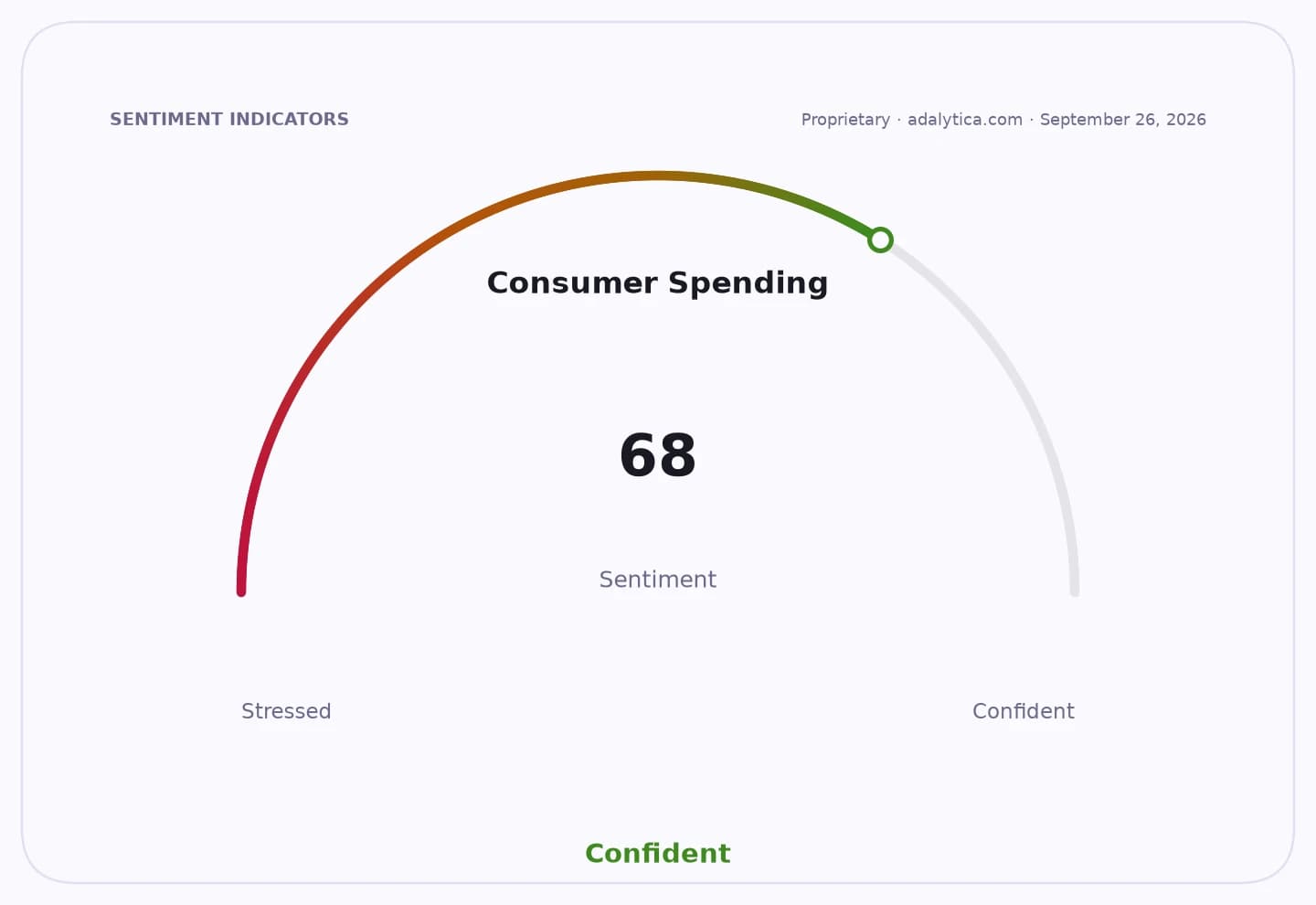
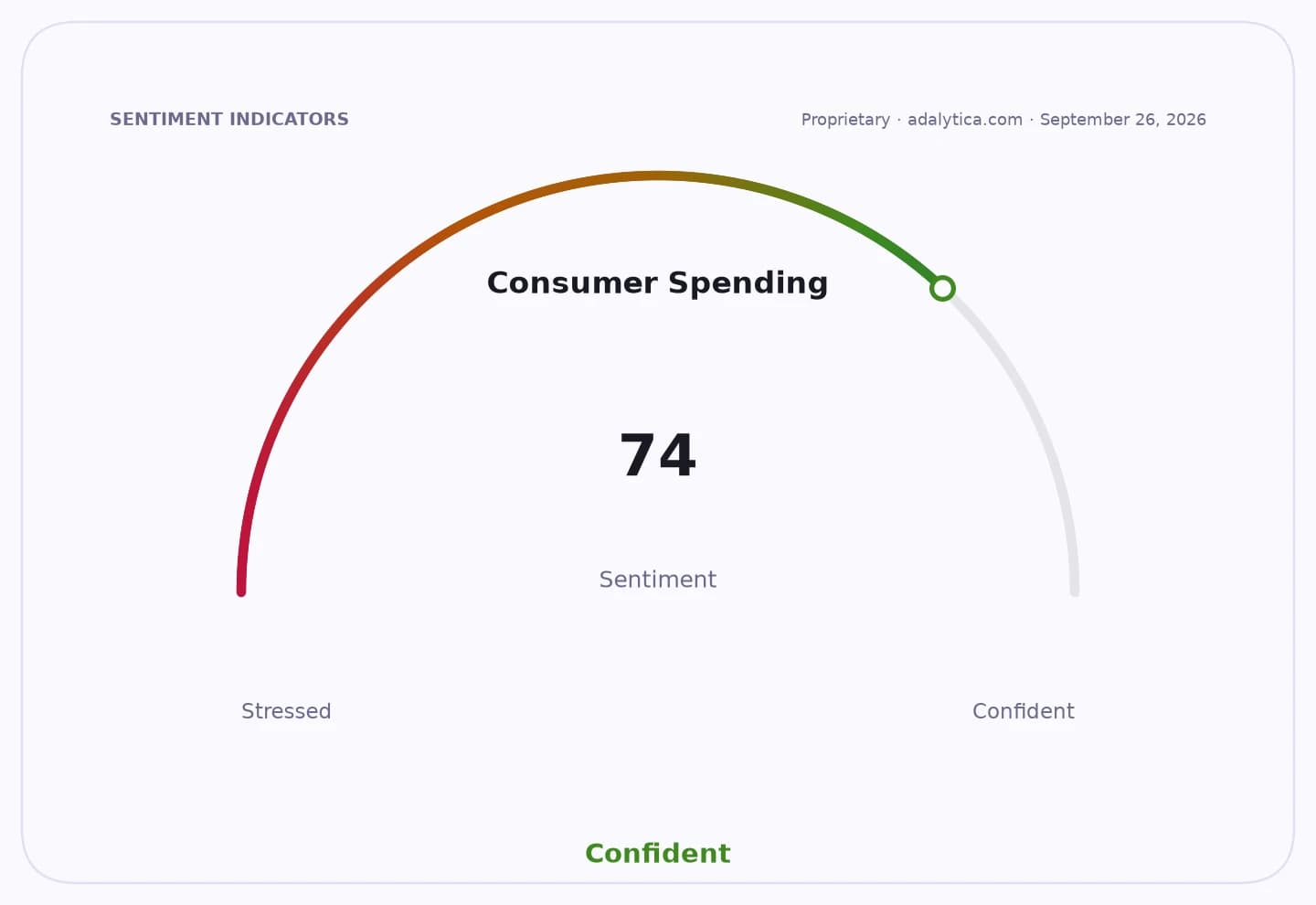
Sentiment IndicatorsⓘProprietary · adalytica.com · September 26, 2026
This is a snapshot — live sentiment, awareness and momentum for 130+ markets update continuously in the dashboard.Open AlphaPulse
The details were mixed, but the direction was constructive. Households were slightly less upbeat about their current finances, with that sub-index slipping to 75.3 from 75.4. But expectations improved for the next 12 months: the household financial outlook rose to 93.7 from 93.1, the broader economic outlook ticked up to 89.8 from 89.4, and the measure for spending on durable goods jumped 3.6% to 108.8 from 105.1.
That last reading is the most important for markets. Durable-goods intentions tend to lead discretionary spending and, by extension, credit demand, imports and retail activity. If households are more willing to buy appliances, electronics and other big-ticket items, consumer-facing companies can see a better sales backdrop even before the hard data catches up.
For investors, the message is that Turkey’s domestic-demand trade may be regaining traction. The move comes at a time when consumer-sensitive sectors such as retailers, consumer staples and discretionary names are looking for signs that pricing pressure is no longer crushing volumes. U.S.-listed consumer funds and global retailers with exposure to emerging markets are watching for any evidence that Turkish households are stabilizing after a long stretch of inflation stress.
The broader narrative is one of uneven recovery rather than a clean breakout. Household finances are still under pressure, which means the confidence gain does not erase affordability risks or guarantee a broad spending surge. But after years of volatility, a reading at a seven-year high suggests the market may be underestimating how much resilience is returning to domestic demand.
The next test is whether this sentiment improvement feeds through into actual retail turnover, bank lending and import volumes. If it does, Turkey’s consumer sector could become a more durable earnings story into year-end, and investors positioned early in the beneficiaries of firmer household spending may be paid before the consensus fully catches up.
| Entity | Gains | Losses |
|---|---|---|
| Turkish retailers | ▲Higher discretionary demand | ▼Margin pressure if inflation persists |
| Consumer discretionary stocks | ▲Better sales outlook | ▼Weak-income households |
| Turkish banks | ▲Stronger credit demand | ▼Delinquencies if spending outpaces wages |
| Importers of durables | ▲Volume pickup | ▼Local producers facing price sensitivity |