Turkey’s current account likely swung deeper into surplus in August, a shift that matters because a stronger external balance eases pressure on the lira, supports reserve accumulation and gives policymakers more room to manage inflation without leaning as heavily on tight financing conditions.
Turkey August Current Account Seen at $3.5B Surplus
Economists in an AA Finans survey expect the current account to post a $3.5029 billion surplus for the month, according to a poll of 14 participants ahead of the central bank’s balance-of-payments release on Oct. 13. Forecasts ranged from a $850 million surplus to a $4.5 billion surplus, underscoring broad agreement that the external account remained in positive territory after July’s marginal $36 million surplus.
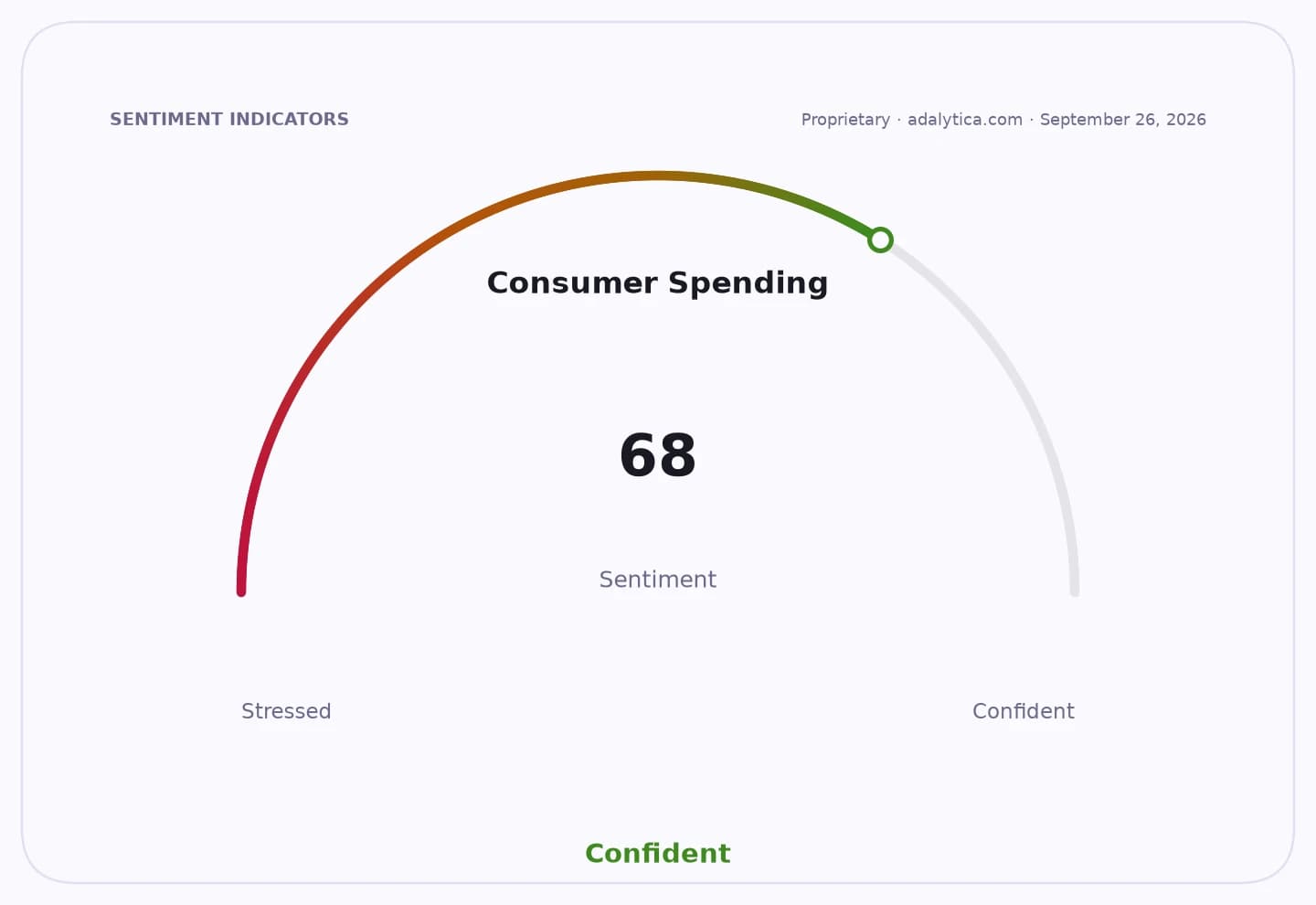
Sentiment IndicatorsⓘProprietary · adalytica.com · October 8, 2026
This is a snapshot — live sentiment, awareness and momentum for 130+ markets update continuously in the dashboard.Open AlphaPulse
The key investment implication is that Turkey’s financing needs may be easing at the margin. A sustained current account surplus reduces the amount of foreign capital the economy must attract to fund imports and domestic demand, which can help the central bank defend the currency and stabilize expectations. For investors in Turkish assets, that is relevant for both FX risk and the policy path: a narrower external gap can reduce one of the most persistent sources of macro volatility.
The forecast also reinforces the view that Turkey’s external adjustment is being driven less by a one-off monthly swing and more by a broader rebalancing in trade and domestic demand. Even so, the annual picture remains mixed. Economists in the survey still see a full-year current account deficit of $48 billion, with estimates spanning $35.8 billion to $54 billion. That would be wider than the monthly surplus suggests and points to an economy that may be improving on the margin but is not yet structurally free of external funding pressure.
The central bank’s forthcoming data will therefore matter not just as a point estimate, but as a test of whether August marked a durable improvement or only a temporary benefit from seasonal and import dynamics. July’s annualized current account deficit stood at $40.7 billion, so any August reading materially better than that would support the case that Turkey is moving into a more manageable phase of external adjustment.
For markets, the direction is as important as the headline number. A surplus in excess of $3 billion would likely be read as supportive for the lira, constructive for reserve metrics and mildly positive for local bonds by lowering near-term balance-of-payments stress. The main risk for investors is that a single strong month does not eliminate the longer-run need for external financing, leaving Turkish assets still sensitive to shifts in energy prices, domestic demand and global dollar conditions.
| Entity | Gains | Losses |
|---|---|---|
| Turkey’s lira | ▲Lower FX pressure | ▼If surplus disappoints |
| Central bank | ▲Easier reserve management | ▼If external deficit widens |
| Local bonds | ▲Better macro backdrop | ▼Higher risk premium |
| Import-dependent sectors | ▲None | ▼Stronger external rebalancing |