Turkey’s stock market started the week higher, but the advance came with a cautious tone as weaker US labor data boosted expectations that the Federal Reserve will avoid further tightening while Middle East tensions continued to curb risk appetite.
BIST 100 Rises Ahead of Turkey Inflation Data

The BIST 100 rose 0.84% at the open to 12,373.11 points after closing Friday up 0.17% at 12,270.18. Banking shares led the gainers with a 0.81% rise, while the holding index slipped 0.39%. Among sectors, banks posted the strongest performance and financial leasing and factoring was the weakest, falling 6.76%.
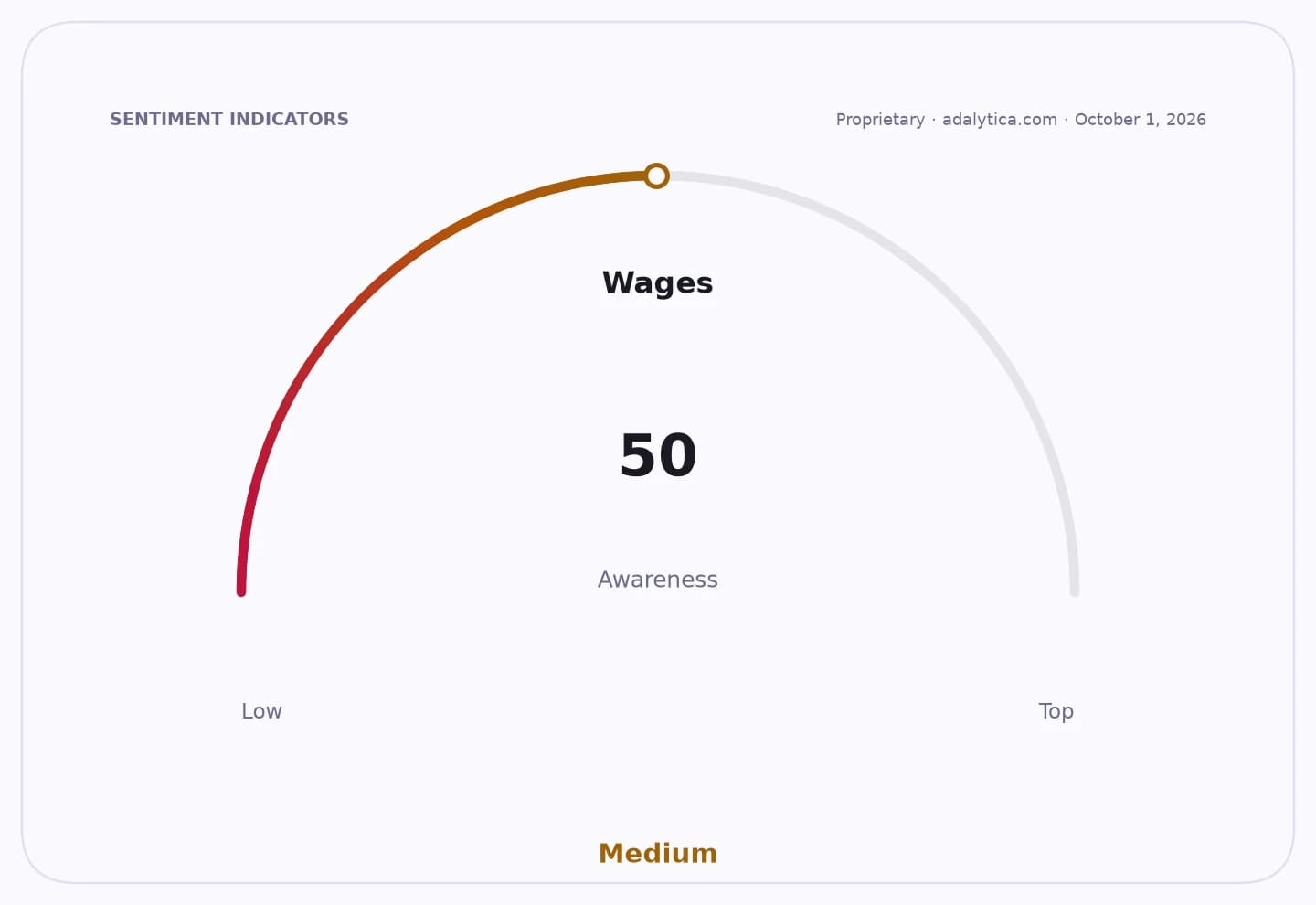
Sentiment IndicatorsⓘProprietary · adalytica.com · October 5, 2026
This is a snapshot — live sentiment, awareness and momentum for 130+ markets update continuously in the dashboard.Open AlphaPulse

The move matters because Turkish equities are trading against a global backdrop that is still supportive for duration-sensitive assets, even as geopolitical stress keeps investors selective. Softer-than-expected US jobs figures have reinforced the view that the Fed is unlikely to add more restraint this month, a shift that typically helps emerging-market assets by easing pressure on the dollar and global funding conditions. But that tailwind is being offset by the market’s reluctance to embrace broad risk-on positioning while conflict risk in the Middle East remains elevated.
For Borsa Istanbul, the immediate focus is domestic inflation data due later in the day. Economists polled by AA Finans expect consumer prices to rise 2.18% in September, which would slow annual inflation to 30.16% from 31.51% in August. That print is crucial for policy expectations and for the valuation of Turkish financial assets. A softer reading would support arguments that real rates and monetary tightening are beginning to bite, potentially improving sentiment toward banks and other cyclical names. A hotter number would do the opposite, reviving concerns that inflation remains sticky enough to keep borrowing costs elevated for longer.

That tension helps explain the market’s early split. Banks usually benefit when investors see a clearer path to disinflation and eventual policy normalization, while financing-heavy businesses remain sensitive to funding costs and economic growth risks. The decline in leasing and factoring stocks suggests traders are still skeptical that the domestic macro backdrop has turned decisively constructive.
Technically, analysts see 12,200 and 12,100 as support for the BIST 100, with 12,500 and 12,600 as resistance. Those levels matter less as chart points than as markers of whether the market can sustain the early-week bounce or whether it remains trapped in a range defined by inflation uncertainty, global bond moves and geopolitical headlines.
For investors, the key question is whether today’s inflation data confirms that Turkish assets can extend the rebound on improving macro credibility, or whether the market will keep fading rallies until it gets clearer evidence that price pressures are cooling and external risk sentiment is stabilizing.
| Entity | Gains | Losses |
|---|---|---|
| BIST 100 | ▲Early-week rebound | ▼Cautious sellers |
| Turkish banks | ▲Better macro hopes | ▼Funding-cost sensitive sectors |
| Financial leasing/factoring stocks | ▲— | ▼Sharp sector decline |
| Risk assets | ▲Fed easing expectations | ▼Middle East tensions |