The worst of the panic may be fading in Borsa Istanbul, but investors are not out of the woods yet.
Turkey Stocks Fall as Inflation and S&P Review Near
A temporary payout plan of up to 1 million lira for investors hit by the fund liquidation dispute has helped calm the market, while the banking sector’s steady stance has kept the episode from turning into a broader financial accident. Even so, the BIST 100 still fell 4.88% on the week, and the next big drivers of capital flow are now the inflation reading due Monday and S&P Global Ratings’ Oct. 16 credit review.
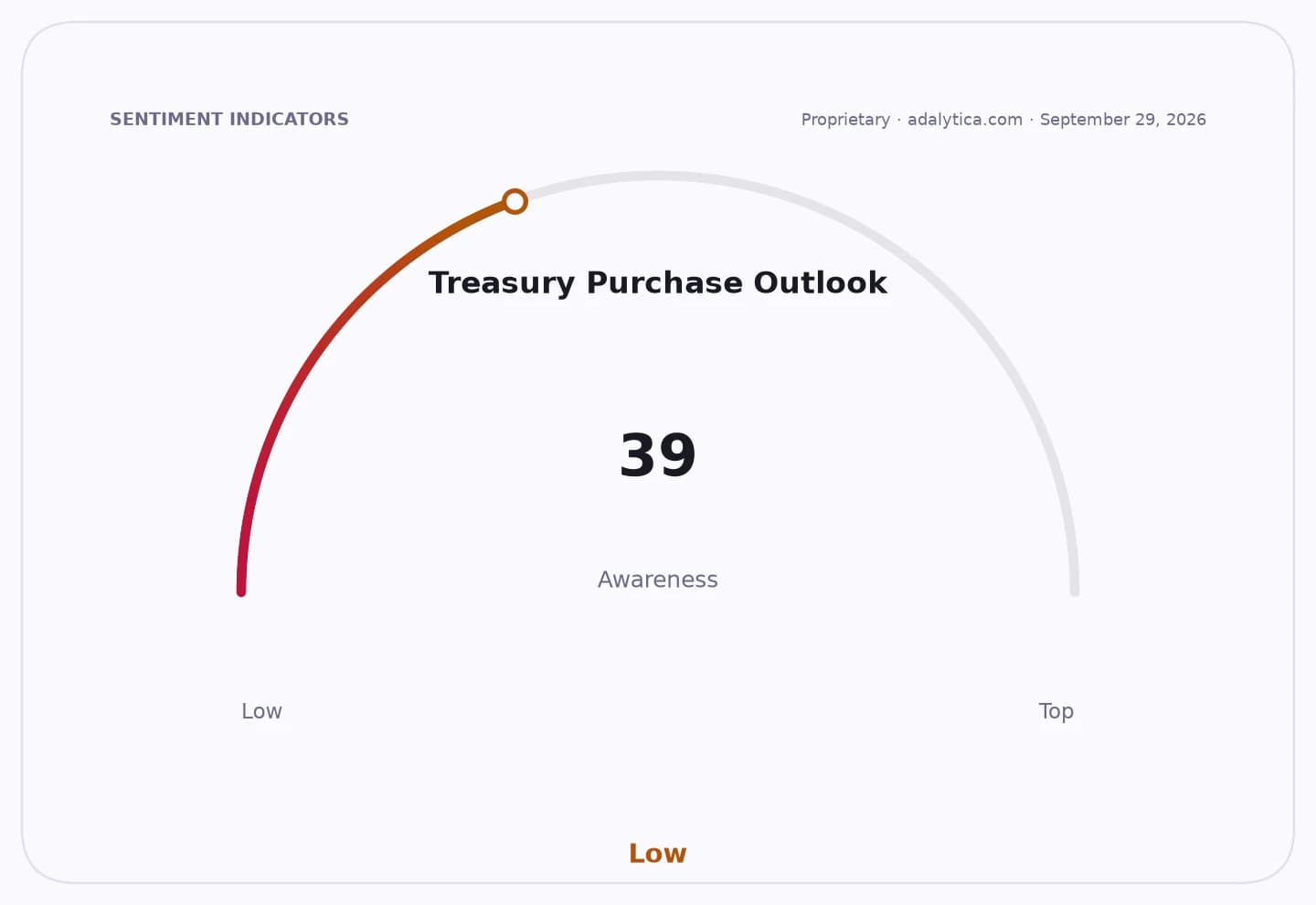
Sentiment IndicatorsⓘProprietary · adalytica.com · October 4, 2026
This is a snapshot — live sentiment, awareness and momentum for 130+ markets update continuously in the dashboard.Open AlphaPulse
That combination matters because markets do not need a full-blown banking crisis to stay under pressure. They only need uncertainty, forced selling and a reason to sit on cash. That is exactly what has been happening in Turkey, where investors have been shifting toward deposits and other low-risk instruments as fund liquidations hit smaller and more speculative shares hardest.
The BIST 100 briefly slipped below 12,000 before ending the week at 12,270, down 12.67% for the month. The broader BIST All-100 dropped 9.87% on the week, and the damage was concentrated in the kind of names that often suffer most when liquidity disappears. Shares in finance leasing and factoring plunged 33.79% weekly, led by Destek Finans Kiralama’s 40.89% drop, while brokerage stocks lost 17.55% as Tera Yatırım came under continued pressure after being moved to the watchlist market.
That kind of price action tells investors two things. First, the market is still working through a liquidation shock rather than a standard earnings-driven correction. Second, valuation only matters if buyers are willing to step in, and right now many are waiting for clarity on inflation and credit conditions before committing fresh capital.
The encouraging part is that officials and ratings firms appear to see the problem as contained for now. S&P’s Karen Vartapetov said the intervention was fast and convincing, and that no downward pressure on the sovereign rating should emerge if the issue stays isolated. S&P financial institutions director Regina Argenio also said there has been no unusual deterioration in banking liquidity, with the main impact concentrated in share valuations. That is important for long-term investors because it suggests the selloff is painful, but not necessarily system-wide.
Still, “contained” does not mean “over.” Overpriced names are still vulnerable, and the broad market is likely to remain uneven until the inflation print and S&P’s review pass. The 12,000 level on the BIST 100 is now a psychological marker as much as a chart point, and the market will probably keep rewarding balance-sheet strength, liquidity and defensiveness over speculation.
There were a few signs of resilience. Turkish Airlines finished the week in positive territory, and names such as Emlak Konut REIT, Migros and Sabancı Holding fell only modestly. Tourism also held up, helped by TAB Gıda’s rise. But the bigger message for investors is that in a week like this, capital preservation beats heroics.
For long-term investors, this is less a moment to chase a bottom than to watch whether the selloff stays isolated, inflation cools enough to support policy credibility, and credit agencies remain comfortable with Turkey’s financial stability. If those pieces fall into place, the market could eventually rebuild confidence. Until then, patience and selectivity still look like the winning strategy.
| Entity | Gains | Losses |
|---|---|---|
| Investors in deposits and safe assets | ▲capital preservation | ▼equity upside |
| Banks and the financial system | ▲stability narrative | ▼noneconomic panic |
| Speculative small-cap and financial leasing names | ▲selective rebounds | ▼forced selling |
| Long-term buyers of quality large caps | ▲lower entry prices | ▼short-term volatility |