Turkey’s financial services sector grew more upbeat in September, with the central bank’s confidence index climbing 8.0 points to 158.4, a sign that banks, insurers and other financial firms are seeing firmer demand and better operating conditions even as the broader economy still faces inflation, rate and credit risks.
Turkey financial services confidence rises in September
That matters because financial services confidence often acts as an early read on the health of lending, payments, insurance and capital-market activity. When firms in the sector report stronger business conditions and rising demand, it can point to more active credit creation and a healthier flow of money through the economy — both important for growth. For investors, it suggests the sector may be entering the autumn with improving momentum, which can support earnings expectations for lenders, insurers and fee-driven financial firms.
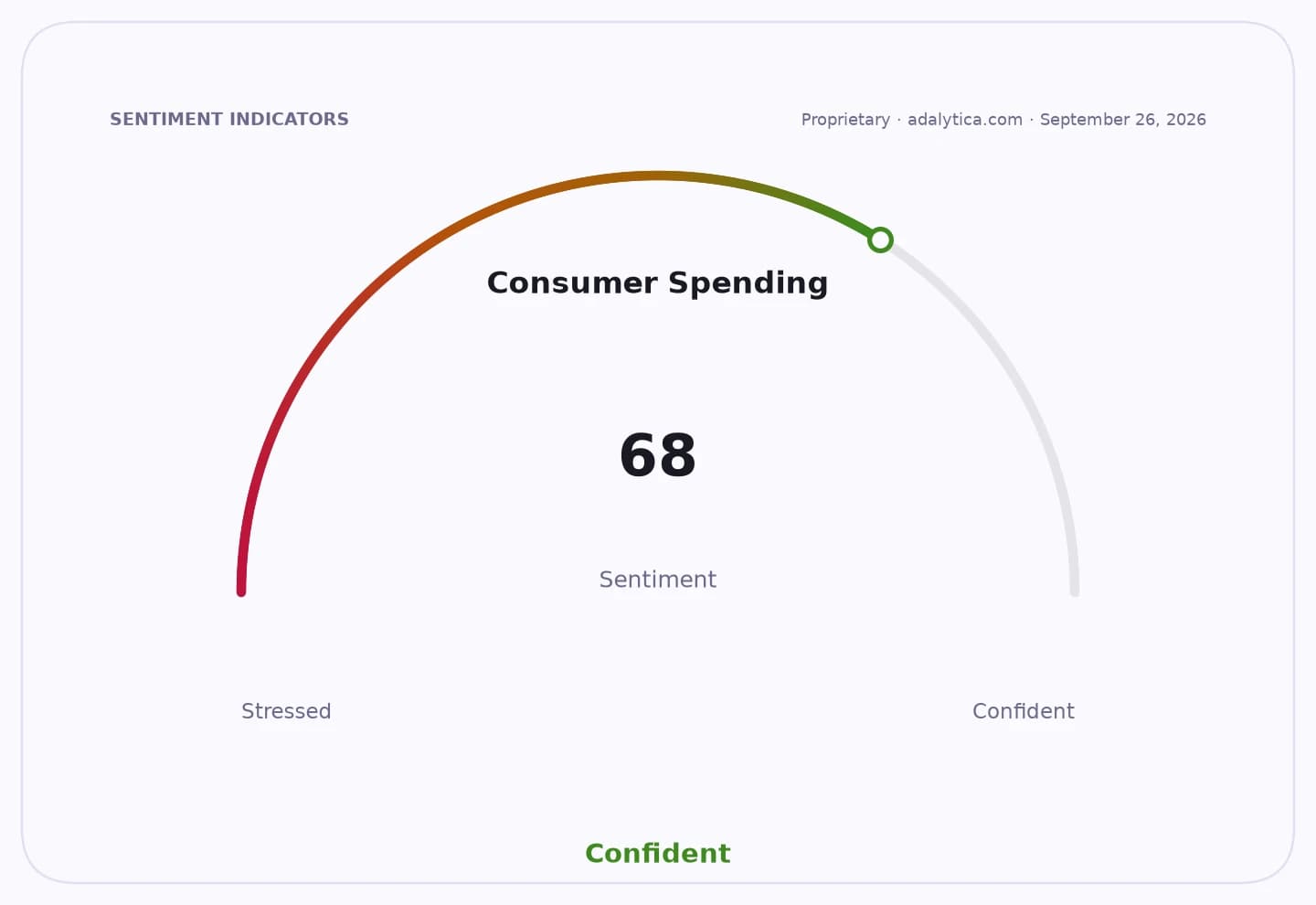
Sentiment IndicatorsⓘProprietary · adalytica.com · September 27, 2026
This is a snapshot — live sentiment, awareness and momentum for 130+ markets update continuously in the dashboard.Open AlphaPulse
The Turkish central bank said the index was based on responses from 150 institutions and that all of the main subcomponents helped lift the headline reading. Views on business conditions over the past three months improved, while firms also reported stronger demand for financial services in recent months and more optimistic expectations for the next three months.
The confidence gain was broad-based across the industry. The financial services sub-sector excluding insurance and pension funds rose 7.4 points, insurance, reinsurance and pension funds jumped 15.8 points, and auxiliary financial activities increased 4.9 points. That breadth suggests the improvement was not just a one-off boost in one corner of the market, but a more general pickup in sentiment.
Employment signals were a little more mixed. More firms said hiring had increased over the past three months, but expectations for hiring over the next quarter weakened. That is worth watching because confidence can improve before staffing does, especially if companies are testing whether demand is durable before committing to more headcount.
For long-term investors, the bigger message is that Turkey’s financial sector appears to be stabilizing at a high level of confidence rather than rolling over. If demand holds up, that could support bank lending volumes, insurance premium growth and wider activity in financial intermediation. The key question now is whether this stronger sentiment turns into sustained earnings growth, or fades if macro conditions tighten again. For investors with a multi-year horizon, Turkish financials remain a sector to keep on the watchlist.
| Entity | Gains | Losses |
|---|---|---|
| Turkish financial firms | ▲Stronger demand outlook | ▼Margin pressure if conditions cool |
| Banks and insurers | ▲Better business sentiment | ▼Cautious hiring plans |
| Borrowers and customers | ▲Easier access to services | ▼Less if optimism fades |
| Equity investors | ▲Improving earnings backdrop | ▼Cyclical volatility |