Turkey has ruled out any natural gas or electricity price increase in October and November, easing immediate household cost pressure even as the government keeps energy subsidies above 50% and prepares for a bigger shift in its supply model.
Turkey keeps gas and power prices unchanged
Energy Minister Alparslan Bayraktar said there was no planned tariff change for the next two months and stressed that gas storage was already full well before winter. That removes one of the most politically sensitive inflation risks in a country where utility bills feed directly into consumer price expectations and broader cost-of-living concerns.
Sentiment IndicatorsⓘProprietary · adalytica.com · October 22, 2026
This is a snapshot — live sentiment, awareness and momentum for 130+ markets update continuously in the dashboard.Open AlphaPulse
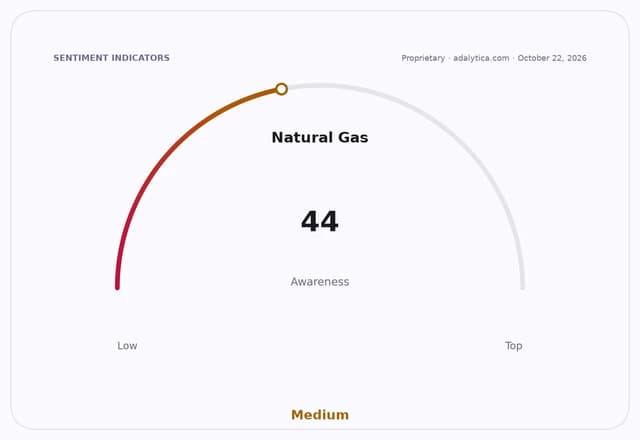
The timing matters because global gas markets remain tight and volatile. Benchmark natural gas sentiment in Adalytica’s signal framework is still in “Extreme Greed,” while broader energy markets have been driven by geopolitical risk and supply anxiety. In that environment, Turkey’s decision to hold domestic prices steady suggests the state is still absorbing a large part of the shock rather than passing it on to consumers.
For investors, the key question is less about the next two months than about the sustainability of the subsidy regime. Bayraktar said the government is tracking budget conditions, and that support for high-consumption electricity users will be trimmed further after the 2025 threshold was cut to 4,000 kilowatt-hours from 5,000. That points to a gradual tightening of support, even if headline tariffs are left unchanged for now.
The policy choice also reflects Turkey’s growing confidence in local supply. Bayraktar said the floating production platform Osman Gazi should lift Black Sea output to 20 million cubic meters a day and eventually help push daily production to 45 million cubic meters when a second platform comes on stream. He said the platform could generate about $3.5 billion to $3.6 billion a year from 2027, underscoring the government’s bet that higher domestic production will reduce import dependence over time.
That longer-term narrative is important for markets because it links today’s price restraint to tomorrow’s energy balance. Turkey remains exposed to imported gas and the euro-priced LNG market, but fuller storage, rising Black Sea output and new nuclear and oil projects are meant to narrow that vulnerability. If that strategy works, it could ease pressure on the current account, limit imported inflation and give policymakers more room to manage household tariffs without widening fiscal strain.
Still, the bull case for consumers and rate-sensitive sectors is not the same as the bull case for the budget. Keeping prices down supports demand and helps avoid a fresh inflation impulse, but it also prolongs the cost of subsidies at a time when Ankara is trying to shift toward more targeted support. The market implication is that Turkey is choosing near-term stability over immediate fiscal relief, with the durability of that stance likely to depend on winter demand, the lira and global gas prices.
| Entity | Gains | Losses |
|---|---|---|
| Turkish households | ▲Stable winter utility bills | ▼Less direct price subsidy targeting |
| Turkish government | ▲Short-term inflation relief | ▼Higher subsidy burden |
| Gas consumers | ▲Predictable tariffs | ▼Fewer price pass-throughs to market levels |
| Fiscal accounts | ▲Potential future output gains | ▼Near-term budget pressure |