Higher oil and gas prices are feeding through into consumer bills again, reviving inflation across Europe and complicating the outlook for central banks, households and energy-intensive businesses.
Europe Energy Prices Lift Inflation Again
The immediate issue is not just that energy is more expensive, but that the latest surge is arriving after years of already elevated prices, leaving consumers with less room to absorb another shock. Eurozone inflation rose to 3.8% in September in the latest read cited in the data, while wholesale electricity prices jumped 57% in one quarter and natural gas climbed to 90 euros per megawatt-hour. That combination tightens margins for households and raises the odds that the current price wave becomes embedded in broader inflation measures rather than fading quickly.
Oil market moves reinforce that risk. WTI crude has climbed from about $85 in late September to $102.53 in the latest forecast for Oct. 15, after touching $101.91 on Oct. 14. Energy stocks have responded accordingly: the XLE energy ETF has rallied to $67.97, up from $55.84 in mid-April, with its 50-day moving average now well above the 200-day average and RSI readings near 80, typically a sign of a strong but stretched trend. USO, the oil ETF, has been even stronger, trading at $160.61 versus $120.49 in late July and remaining close to recent highs.
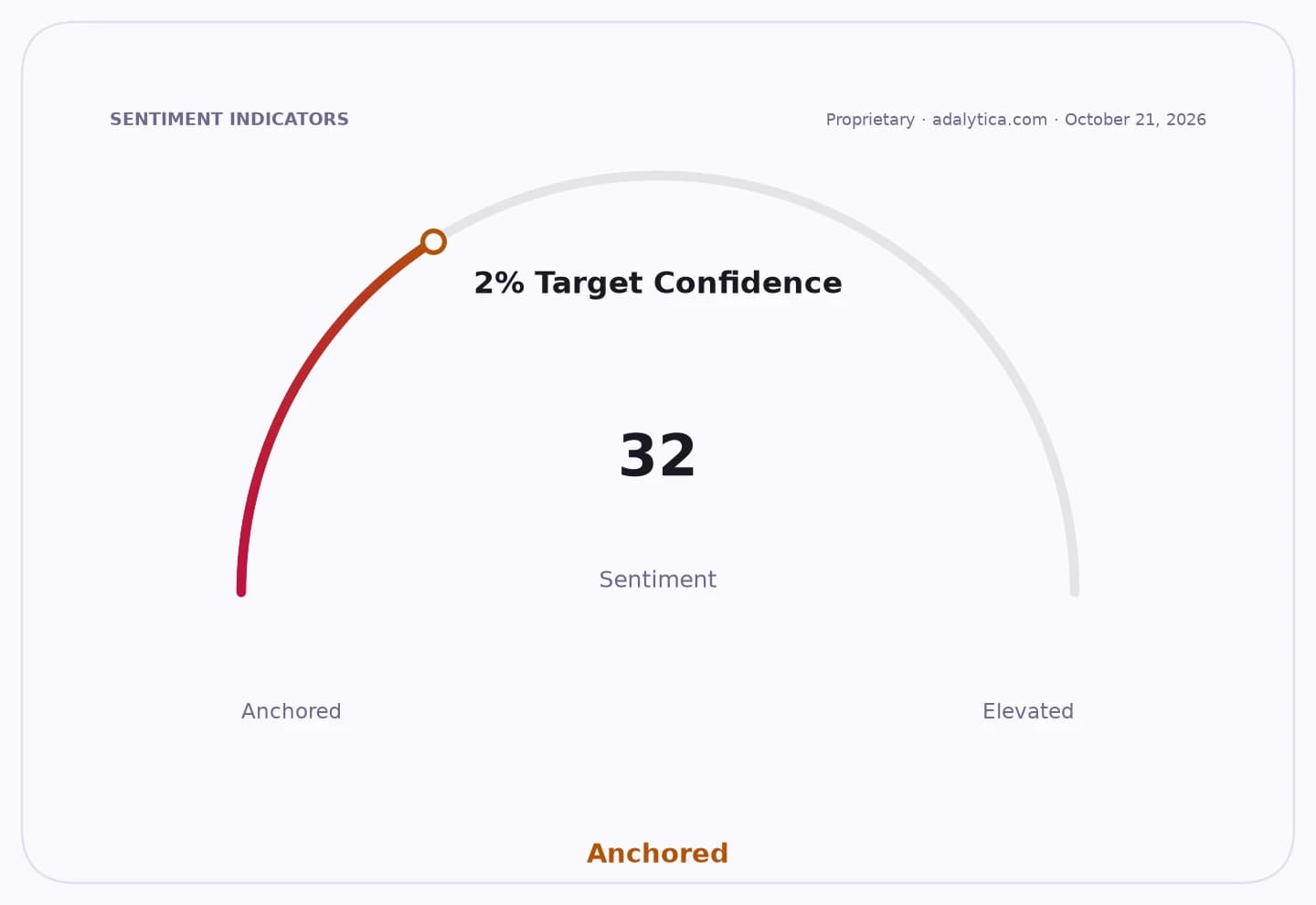
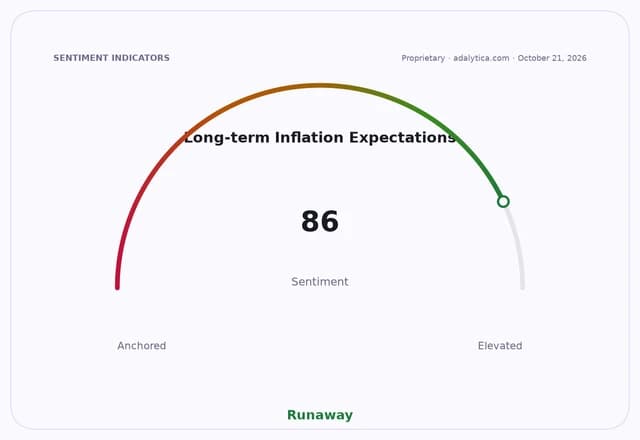
The market is effectively pricing a second-round inflation impulse. Adalytica’s long-term inflation expectations sentiment stands at 86, or “Extreme Greed,” while confidence in the Fed’s 2% inflation target has fallen to 32. That matters because energy-led inflation can seep into wages, transport, food and industrial costs if the price shock persists. The danger is not only higher headline inflation, but a deterioration in inflation credibility that makes it harder for central banks to ease policy even if growth slows.
DCOILWTICO vs CPIAUCSL — macro contextadalytica.com
Explore this data interactively — full history, time series and cross-market comparisons.Open AlphaPulse
For investors, the split is clear. Energy producers and related service firms benefit from stronger realized prices and wider cash flows, as reflected in recent filings from Chevron and ConocoPhillips showing earnings and operating cash flow closely tied to commodity prices. Consumers, importers, airlines, utilities and other fuel-intensive sectors face the squeeze. In Europe, the pressure is amplified by the expiration of some subsidies, including Greece’s PPC “blue constant” support, which raises the risk of a sharper pass-through to retail bills just as political tolerance for higher living costs is thin.
That leaves policymakers with an uncomfortable trade-off: extend subsidies and absorb the fiscal cost, or allow prices to rise and risk a deeper public backlash. With geopolitical tensions in the Middle East still driving volatility in oil and gas markets, the most important catalyst for inflation now is not domestic demand, but whether energy prices stabilize quickly enough to prevent another broad-based inflation surge.
| Entity | Gains | Losses |
|---|---|---|
| Energy producers | ▲Higher realized prices | ▼Lower-cost demand sensitivity |
| Consumers | ▲None | ▼Higher utility and fuel bills |
| Central banks | ▲Stronger inflation signal clarity | ▼Less room to ease rates |
| Energy-intensive firms | ▲None | ▼Margin compression |