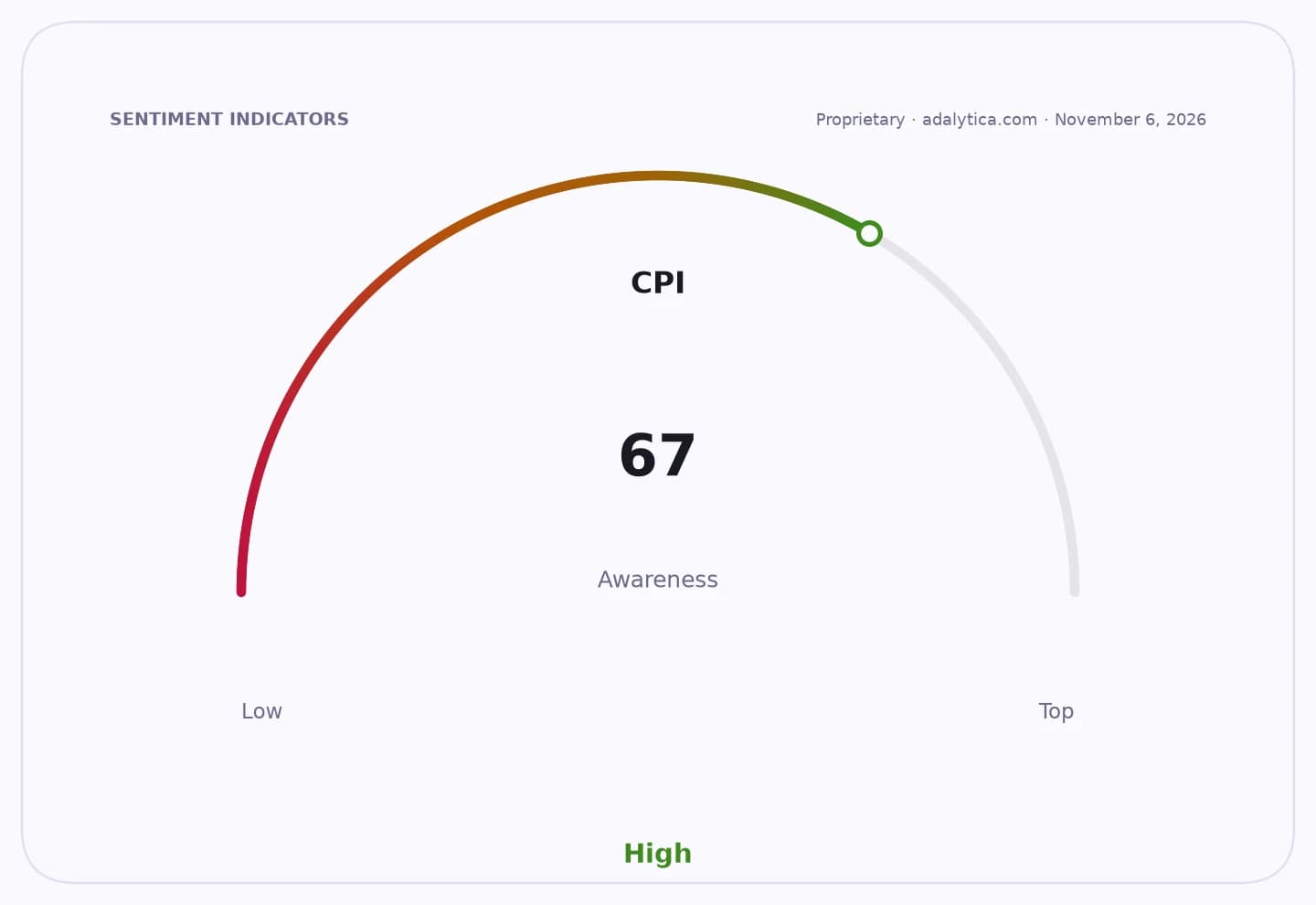
Turkey’s annual inflation in October inched higher to 29.77%, interrupting a months-long downtrend and reinforcing expectations that the central bank will keep cutting rates, but only cautiously, as energy and food costs keep price pressures sticky.
Turkey inflation rises to 29.77% in October

The monthly reading of 2.58% came in above both market expectations and the central bank’s own forecast path, driven mainly by unprocessed food, energy and clothing. While the uptick is modest, it matters because Turkey’s policy outlook has hinged on proof that inflation is easing fast enough to justify further monetary easing without reigniting price instability.
Sentiment Indicators

Core inflation offered some comfort. CPI-C rose 2.1% from September, but its annual rate slipped to 28.3%, suggesting that underlying demand pressures remain contained. The services component continued to cool, with annual services inflation easing to 36.6%, while rent kept normalising after a prolonged period of adjustment. That gives policymakers room to argue that the disinflation process is intact even if headline progress has become uneven.
The problem for the central bank is that Turkey remains vulnerable to shocks outside its control. A 1.7% average monthly lira depreciation in October was not enough to swamp the inflation data, helped by the bank’s tight grip on the currency, but a sharper move would quickly feed through to prices. Global oil prices are now a key near-term risk, especially with Middle East tensions raising the odds of higher transport and input costs. Food, clothing and housing together accounted for much of the monthly rise, underscoring how seasonal and imported pressures can still overwhelm the disinflation trend.
For investors, the reading is less a warning of renewed overheating than a reminder that Turkey’s disinflation path is fragile. The central bank has signalled that the pace and timing of future moves matter more than a wholesale change in direction, which leaves the December rate-cut narrative intact for now. But the margin for error is narrow: if oil prices stay elevated or the lira weakens more sharply, the room for easing could shrink quickly.
The next key test will be the central bank’s inflation report on Nov. 12, which should show whether October was a one-off seasonal bump or the start of a more stubborn plateau. Until then, Turkey’s policymakers are likely to keep balancing a fragile disinflation story against the need to support growth and preserve market confidence.
| Entity | Gains | Losses |
|---|---|---|
| Turkish central bank | ▲Room to keep easing cautiously | ▼Less conviction on faster disinflation |
| Borrowers in Turkey | ▲Lower-rate backdrop remains possible | ▼Rate-cut pace may stay limited |
| Lira bears | ▲Currency still vulnerable to shocks | ▼No sharp inflation breakout yet |
| Consumers and importers | ▲Some core inflation relief | ▼Food, energy and clothing costs stay elevated |