Turkish equities tumbled more than 3% after MSCI said it would freeze certain index changes, a move that dents the immediate prospect of fresh benchmark-driven inflows and leaves a market already under pressure more vulnerable to outflows.
Turkish Equities Fall After MSCI Freezes Index Changes
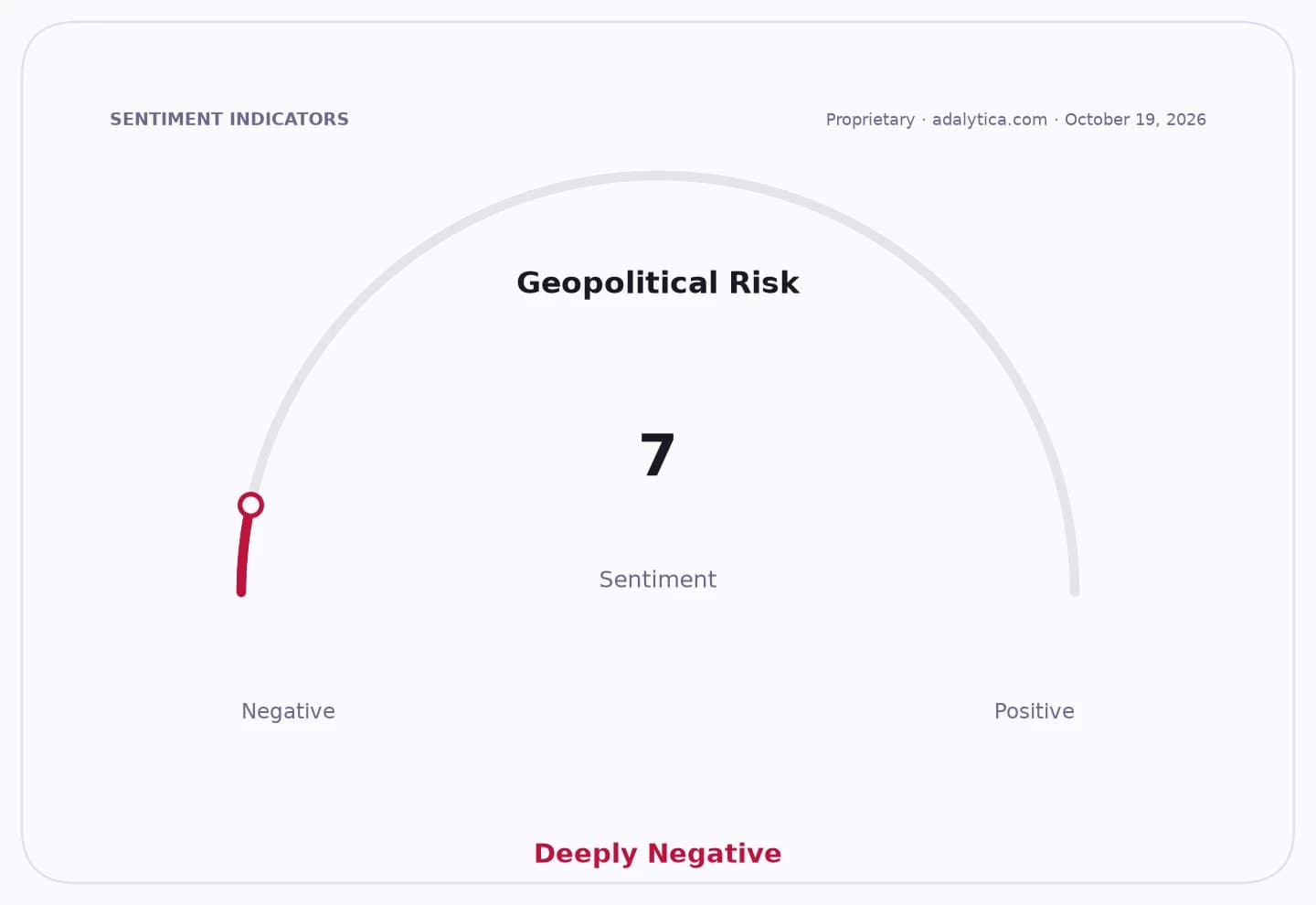
The Borsa Istanbul slump matters because index inclusion and exclusion decisions are not just technical housekeeping: they influence how much foreign capital is forced into or out of a market. When MSCI delays or freezes changes, it can choke off passive demand at the margin and raise the risk premium for investors who were positioning for reweighting-related buying.
Sentiment IndicatorsⓘProprietary · adalytica.com · October 19, 2026
This is a snapshot — live sentiment, awareness and momentum for 130+ markets update continuously in the dashboard.Open AlphaPulse
The MSCI decision lands at a fragile moment for Turkish assets. The local benchmark tracked by the TUR ticker has fallen to 32.47 from 41.04 in early February, with the latest close sitting below both the 50-day and 200-day moving averages, a sign the downtrend has regained control. RSI readings around 26 point to heavy selling pressure, while the MACD remains negative, underscoring weak momentum even after brief rebounds.
The selloff also comes against a broader backdrop of risk aversion. Adalytica’s Global Stability Sentiment gauge is in “Extreme Fear,” while US equity and dollar trade signals also show elevated caution. That combination is important for emerging markets: when global risk appetite fades, markets that depend on foreign portfolio flows tend to underperform first, especially if a catalyst such as MSCI index action is removed.
For investors, the immediate issue is not only the drop itself but the loss of a potential support mechanism. A freeze on index changes can reduce turnover and delay any portfolio rebalancing that might have helped Turkish shares. It also raises the bar for a sustained recovery, which would likely need either clearer policy support, a stronger macro backdrop or renewed confidence that Turkey can attract foreign capital on its own fundamentals.
The bear case is that passive and benchmark-sensitive investors stay sidelined, extending pressure on valuations and liquidity. The bull case is that the market has already priced in a great deal of bad news, and any clarification from MSCI or improvement in domestic conditions could spark a short-covering rally. For now, though, the message from the market is that MSCI’s pause has removed a source of support just as Turkish stocks were testing important technical levels.
| Entity | Gains | Losses |
|---|---|---|
| MSCI | ▲More time to review changes | ▼Short-term market confidence |
| Turkish short sellers | ▲Momentum trade opportunity | ▼— |
| Turkish equities | ▲— | ▼Foreign inflow expectations |
| Passive/global funds | ▲Less immediate rebalancing risk | ▼Potential return support |